
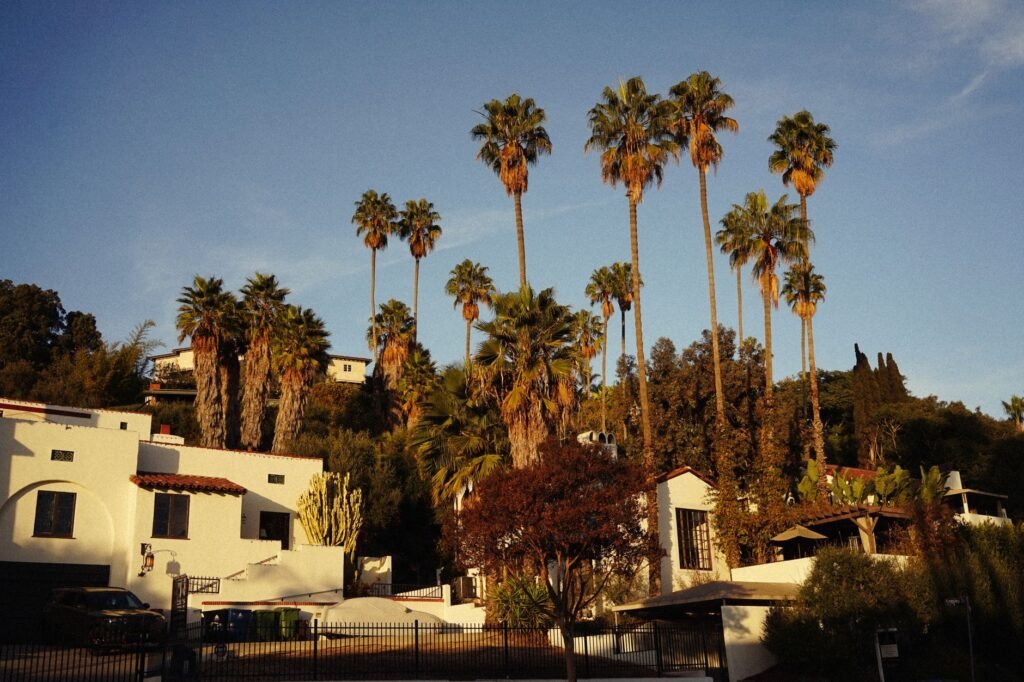
Partly. The people are invented, the conditions are documented. Franklin Saint, his family and the CIA officer who keeps crossing his path were created for the series. The world they move through, South Central Los Angeles as crack cocaine arrived in the early 1980s, and the Nicaraguan supply line that ran alongside it, comes from the historical record.
John Singleton’s series and its stated setting
| Question | Answer |
|---|---|
| Based on a true story? | Partly, fictional characters in a documented setting |
| Based on a book? | No |
| Created by | John Singleton, Eric Amadio and Dave Andron |
| Network | FX |
| Lead cast | Damson Idris, Carter Hudson, Sergio Peris-Mencheta, Michael Hyatt, Amin Joseph |
| First shown | 5 July 2017 |
| Setting | Los Angeles, from 1983 |
Fictional people, documented conditions
Snowfall ran six seasons on FX, ending in April 2023, and it never carried a based on a true story card. It carries created by, which is the credit a series gets when the story is original. What the creators built instead is a braided timeline: a young South Central dealer, a Mexican wrestler pulled into a cartel, and an intelligence officer funding a war he is not supposed to be funding. Three invented lives, one real moment.
The moment is not in dispute. Crack cocaine spread through Los Angeles in the early and mid 1980s, and the resulting arrests, sentencing disparities and neighbourhood collapse are among the most heavily documented episodes in modern American urban history. The series starts in 1983 because that is when the drug was becoming visible in the city, not because something specific happened to a real Franklin Saint that year.
The Freeway Rick Ross question
This is where most searches actually land. Ricky Donnell Ross, known as Freeway Rick Ross, ran a genuinely enormous cocaine operation in Los Angeles through the 1980s, bought his supply from a Nicaraguan exile named Danilo Blandon, was sentenced to life under three strikes in 1996, got the sentence reduced on appeal and was released in 2009.
Ross has said publicly that his life and his suspected proximity to the Iran Contra affair heavily influenced the character of Franklin Saint. He has also said he and John Singleton had discussed making a film together before the series existed. Singleton died in 2019 without confirming that account, and the show has never credited Ross.
So the honest position is this. There is a real man whose career overlaps the character’s in outline, who says his story fed the show, and there is no credit or acknowledgement establishing it. Treat the resemblance as a claim by one party, not as a settled fact, and note that the detail diverges quickly once you go past the outline.
Teddy McDonald and the Nicaragua thread
The strand that sends people looking for a true story is not really Franklin at all. It is Teddy McDonald, the CIA officer who starts moving product to finance Contra operations in Nicaragua. That storyline sits on top of a real and still contested piece of American journalism.
In 1996 the San Jose Mercury News published Gary Webb’s Dark Alliance series, which connected the Los Angeles cocaine trade to Nicaraguan traffickers with Contra ties. The reporting was attacked hard by other newspapers and by the agency, Webb’s own paper backed away from parts of it, and the argument over what it did and did not establish has never fully closed. Teddy is not Webb, is not a named officer, and is not a dramatization of a particular case. He is a character built in the space that reporting opened.
How the series signals its own invention
There is a simple structural tell. Real events in Snowfall happen at a distance and are usually background: a news broadcast, a policy shift, a rising body count. The things that happen to the leads are unverifiable by design, because they involve people who do not exist. Series that dramatize a real case do the reverse, putting the documented incident at the center and inventing only the connective scenes.
That is also why the finale lands the way it does. A show adapting a real life has to arrive where that life arrived. Snowfall was free to choose an ending, and it chose one that reads as a verdict on the era rather than a record of anyone’s fate.
What to take from it as history
Use it for texture and not for facts. The economics of the street trade, the speed at which the drug moved, the way federal priorities and local policing collided, all of that is rendered with care and matches the documented picture. The specific deals, betrayals and deaths are authored. If you want the record itself, read about the crack epidemic and about the Dark Alliance controversy separately, and keep the two apart from the series while you do it.