
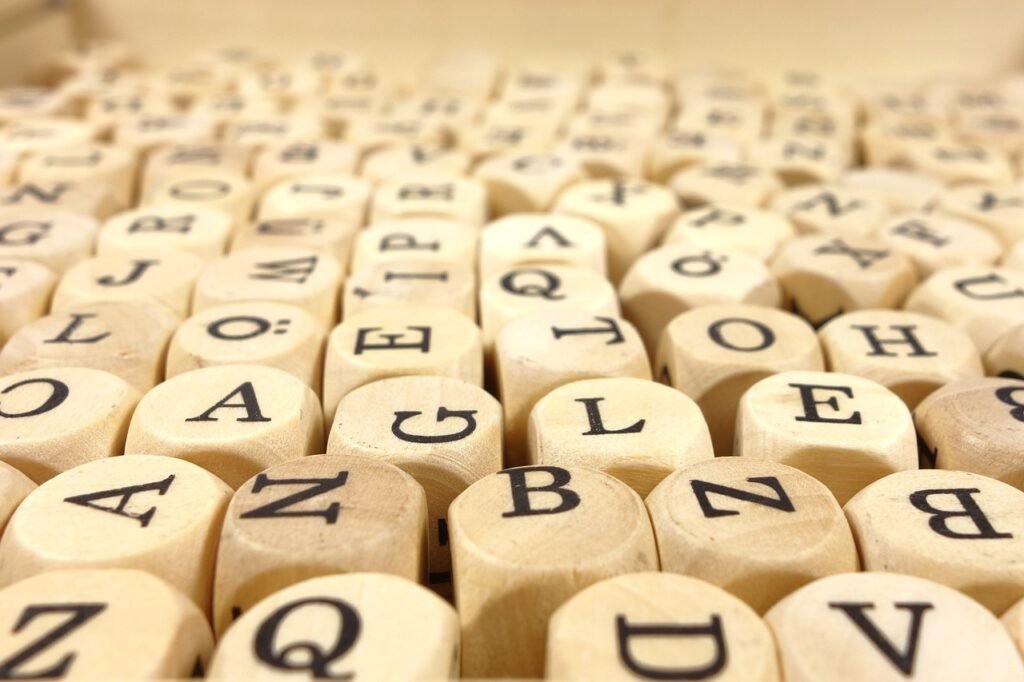
The answer is ABCS, four letters. Grids ignore punctuation and capitals, so the ABCs of a subject goes in as four plain letters. BASICS covers six squares and ELEMENTS eight, while GERMS can take five when the clue means early beginnings rather than first principles.
Four letters that refuse to look like a word
ABCS stalls solvers because of how it looks, not what it means. Three consonants in a row, B, C and S, look wrong in a grid, and a solver with the right idea can easily talk themselves out of it because the string looks impossible. It is not. Crossword convention strips out apostrophes and spacing, so an initialism with a plural ending is written like any other entry, one letter to a square. ABCS also answers clues such as Basics and School basics, so it pays to recognize the letter string on sight.
The sense itself is old. By the late fourteenth century, English was already using ABC to mean the rudiments or fundamentals of a subject. The logic is simple: the alphabet is the first thing a reader learns, so it stands in for the first layer of any skill. If a clue elsewhere mentions school basics, the same idea can show up as THREERS, the three Rs of reading, writing and arithmetic.

Rudiment, rude and erudite share a Latin root
Rudiment comes from Latin rudimentum, early training, a first experience or a beginning, which was built on rudis, meaning unlearned or untrained. The same rudis gave English rude, which first described rough, unfinished surfaces and coarse, unschooled people. The modern sense of bad manners grew out of that older one, so a rude person was once simply an untaught one.
The most satisfying relative is erudite. Latin erudire meant to educate, teach or polish, and it was formed from ex, out of, plus rudis. To be erudite is, quite literally, to have been brought out of the rough. The clue word and the compliment sit at opposite ends of the same road, one naming the starting point and the other the finish.
Rudiments answers by the number of blanks
| Letters | Answer | When it fits |
|---|---|---|
| 4 | ABCS | The default, first principles of anything |
| 5 | GERMS | Undeveloped beginnings, as in the germ of an idea |
| 6 | BASICS | The plain modern synonym |
| 7 | THREERS | Only when the clue specifies school |
| 8 | ELEMENTS | Formal register, as in a textbook title |
| 12 | NUTSANDBOLTS | Basics wording in a long slot |
The relationship also runs backward. Puzzles use RUDIMENTS as the answer to a clue like Basics, so if the word looks familiar as a fill, you have met the same pairing from the other side.
Why drummers still drill rudiments
Music keeps the word in everyday use. A drum rudiment is a standard sticking pattern, a short sequence of strokes that works like a letter in a drummer’s alphabet. The Percussive Arts Society publishes 40 International Drum Rudiments, a list copyrighted in 1984 that combines the traditional 26 with drum corps, orchestral, European and contemporary patterns. They fall into families such as rolls, paradiddles, flams and drags.
The idea is that they are drilled until they disappear into real playing, the way a fluent reader stops noticing individual letters. That is exactly the relationship the clue describes. The rudiments are not the finished skill, only the parts it is built from.
The second sense, beginnings that have not grown up
Rudiments has another meaning that trips people up, and it explains the five-letter answer. Since the sixteenth century the word has also described anything in an undeveloped state, the first form of something that has not reached its finished shape. The rudiments of a plan are its rough early outline, and a rudimentary shelter is one that barely qualifies. In that reading the clue sits closer to seeds than to lessons, which is why GERMS, as in the germ of an idea, can fill five squares.
If the rest of the clue mentions a plan, a design or growth, lean toward that sense. If it mentions a subject, a class or a skill, stay with ABCS or BASICS.