

It means holding a short passage of scripture in your attention and going over it repeatedly until it works into how you think. The biblical vocabulary points to murmuring, rehearsing and turning something over, closer to chewing than to clearing the mind.
The two Hebrew words behind the English
English flattens two distinct verbs into one word. Hagah appears in Psalm 1 and Joshua 1:8, and elsewhere describes a low sound: a lion over its prey, a dove, someone muttering. Siach, used across the Psalms, carries the sense of musing, complaining aloud, or rehearsing a matter.
Both are noisy words. Neither suggests stillness or emptiness. Whatever else biblical meditation is, it is described as an active, verbal, repetitive thing, and the content is always specified.
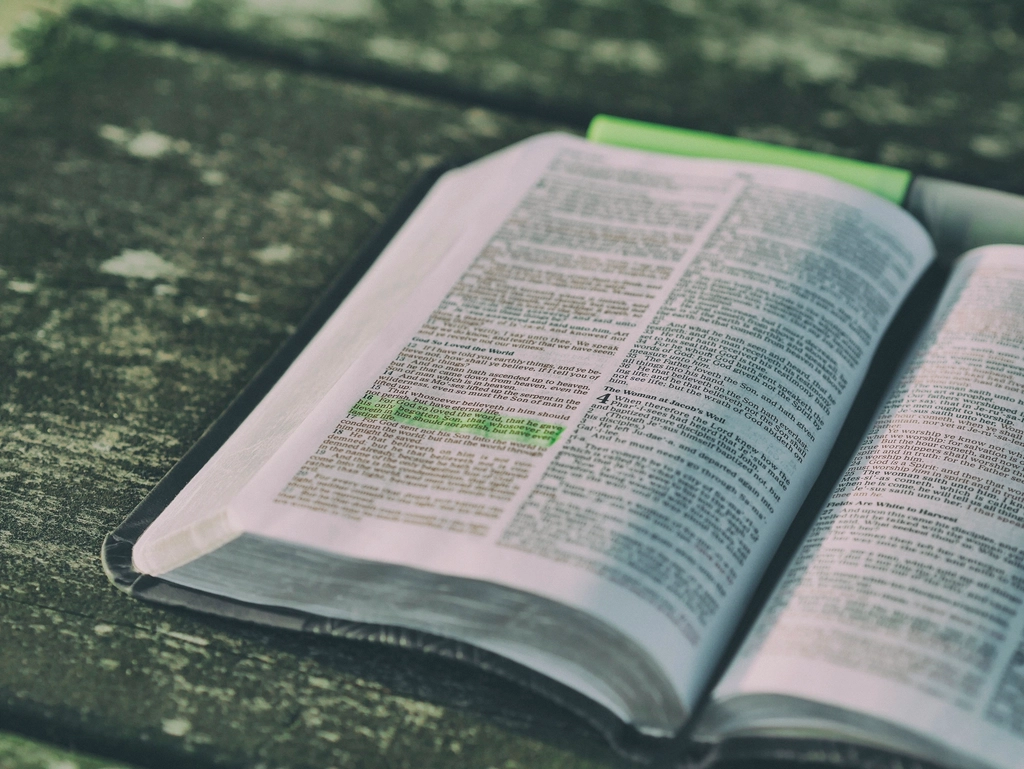
How it differs from the other things people do with scripture
| Practice | Central question | Typical scope |
|---|---|---|
| Reading | What does this say? | Chapters at a time |
| Study | What did this mean, and to whom? | A passage plus context and cross references |
| Memorization | Can I recall this exactly? | Verses held word for word |
| Meditation | What does this press on in me? | One verse or phrase, revisited |
| Prayer | What do I say back? | Response, in your own words |
The older writers used a digestion image for this. Reading takes the food in, study cuts it up, meditation chews it, and prayer is what comes out of the whole process. It is a crude metaphor and it has lasted because it describes the sequence well.
The classic passages people point to
- Psalm 1:2. The blessed one delights in the law and meditates on it day and night. The phrase day and night is where the idea of continual return comes from.
- Joshua 1:8. The book of the law should not depart from your mouth, which is one of the clearest indications that speech was involved.
- Psalm 119. The longest psalm circles the same theme repeatedly, tying meditation to statutes, precepts and promises.
- Philippians 4:8. Often cited as the New Testament parallel, directing thought toward whatever is true, honorable and just.
What it looks like when someone actually does it
Descriptions across traditions converge on something fairly plain. A person picks a short passage, often a single verse. They read it several times, sometimes emphasizing a different word on each pass. They sit with the phrase that catches, ask what it means for the day in front of them, and return to it later, in the car, in a queue, before sleep.
Nothing about that requires special training, a particular posture, or a quiet room, which is probably why the instruction in the text assumes it can be done day and night rather than at an appointed hour.