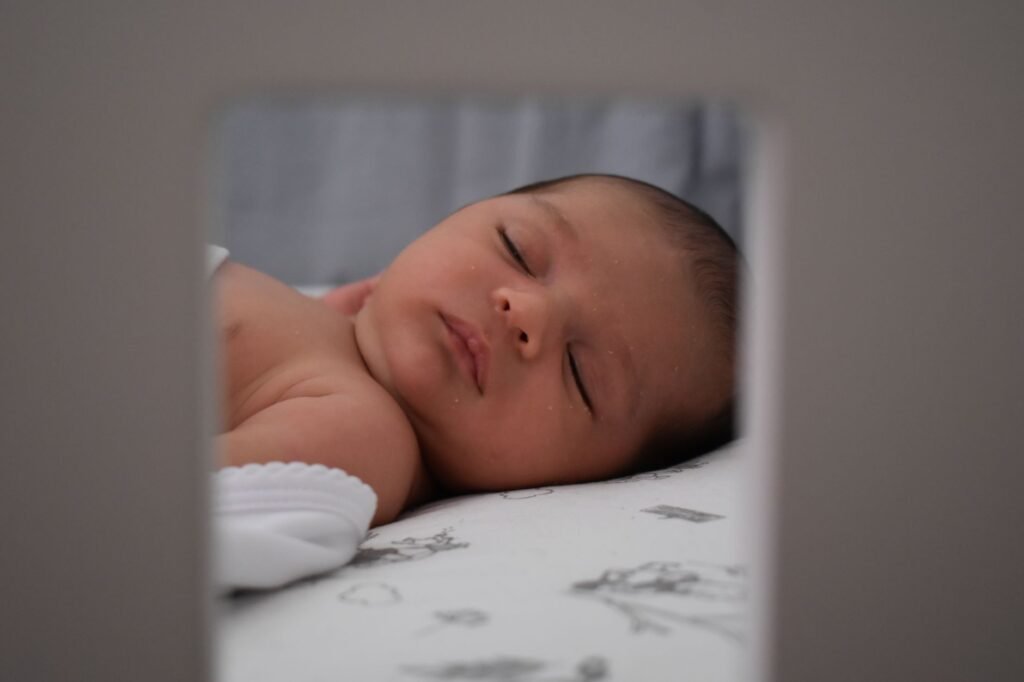
Babies have very small nasal passages, so even a little congestion or swelling narrows them enough to make noise. Most baby snoring is nasal, comes and goes with colds and dry air, and settles as the airway grows. Snoring that is loud, nightly, and constant is worth raising with your pediatrician.
The common causes parents run into
- Narrow passages. A baby’s nose is tiny, and the channel air travels through is correspondingly small.
- Ordinary congestion. Colds, especially in a house with older siblings, swell the lining and cut the space further.
- Dry indoor air. Heated rooms in winter dry and irritate the nasal lining.
- Milk or spit up residue. A small amount at the back of the nose or throat changes the sound for a while after a feed.
- Sleep stage. Babies spend a lot of time in active sleep, where muscle tone is low and tissue is at its floppiest.

Why a small nose makes a big noise
Air moving through a narrow channel speeds up, and faster air over soft tissue makes more vibration. Scale that down to an infant and the effect is dramatic. A layer of mucus that an adult would not notice can take a meaningful share of a baby’s nasal space, which is why a baby with a mild cold can sound alarming at two in the morning while being entirely comfortable.
It is also why the noise changes so quickly. Most parents notice their baby is loud one week and silent the next, tracking colds and dry spells rather than anything permanent.
The corollary is that noise which never changes, week after week, cold or no cold, is the version to raise. Constancy is more informative than volume here, and it is easy to miss precisely because you get used to it.
What not to try at home
The instinct to fix it is strong, and this is the one area to resist it. Do not reposition a sleeping baby off its back, do not add pillows, wedges, or positioners to the crib, and do not put anything in a baby’s nose, including saline, without asking your pediatrician first. Safe sleep guidance does not bend for snoring.
What you can do is observe. Note whether the noise happens every night or only with a cold, whether your baby feeds well, and whether breathing looks easy and even between the sounds.
What to bring up with your pediatrician
- Snoring most nights for more than a few weeks, with no cold to explain it.
- Pauses in breathing, gasping, or your baby seeming to struggle.
- Breathing that looks like effort, with the chest or ribs pulling in.
- Feeding difficulty, poor weight gain, or a baby who tires quickly during feeds.
- Any bluish color around the lips, which means seek help immediately rather than waiting.
A short video of your baby asleep is the single most useful thing to bring to that appointment. Assessing infant breathing is a job for a clinician, not for a search result.