
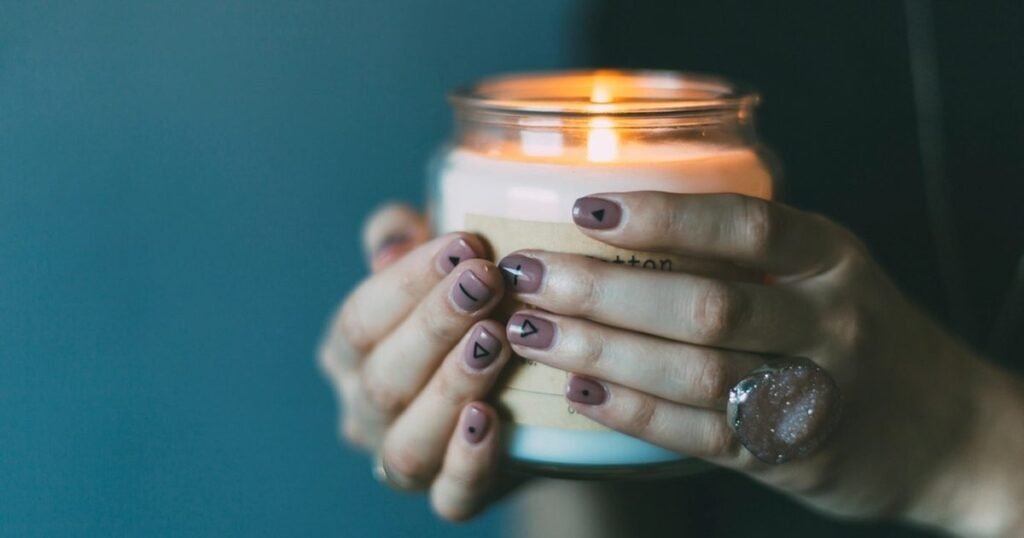
Skip orange and black and the whole thing stops looking like a costume. Oxblood, moss, charcoal and bone read eerie and stay wearable into winter.
Palettes that work
| Palette | Effect |
|---|---|
| Oxblood and matte black | Gothic without being obvious |
| Bone white and charcoal | Skeletal, reads cold |
| Moss green and dark brown | Witchy and botanical |
| Deep plum and silver chrome | Modern, less literal |
| Gray and clear negative space | Ghostly, very low effort |

By effort level
- No tools. Matte topcoat over black with one glossy accent nail. Full oxblood. A milky gray with clear tips.
- Dotting tool only. Scattered small dots as distant eyes on a dark base. Drips from the cuticle rather than the tip, which is the less obvious direction.
- Fine brush. Bare branches reaching from the cuticle. Thin cracks in a pale base. A single spider web in one corner rather than across the whole nail.
- Patient. A full moon gradient with a silhouette across two nails, read as a scene rather than a repeated motif.
The matte and gloss trick
The single highest impact technique here needs no art skill at all. Paint the whole nail one dark color, apply matte topcoat everywhere, then use a fine brush to paint a shape back in with glossy topcoat. The design appears purely as a change in finish, which looks far more considered than it is.
It works because the eye reads sheen difference before it reads color difference. A glossy web on a matte black nail is legible from across a room while being technically just two topcoats.
Dark pigment stains, and base coat is the only thing that stops it
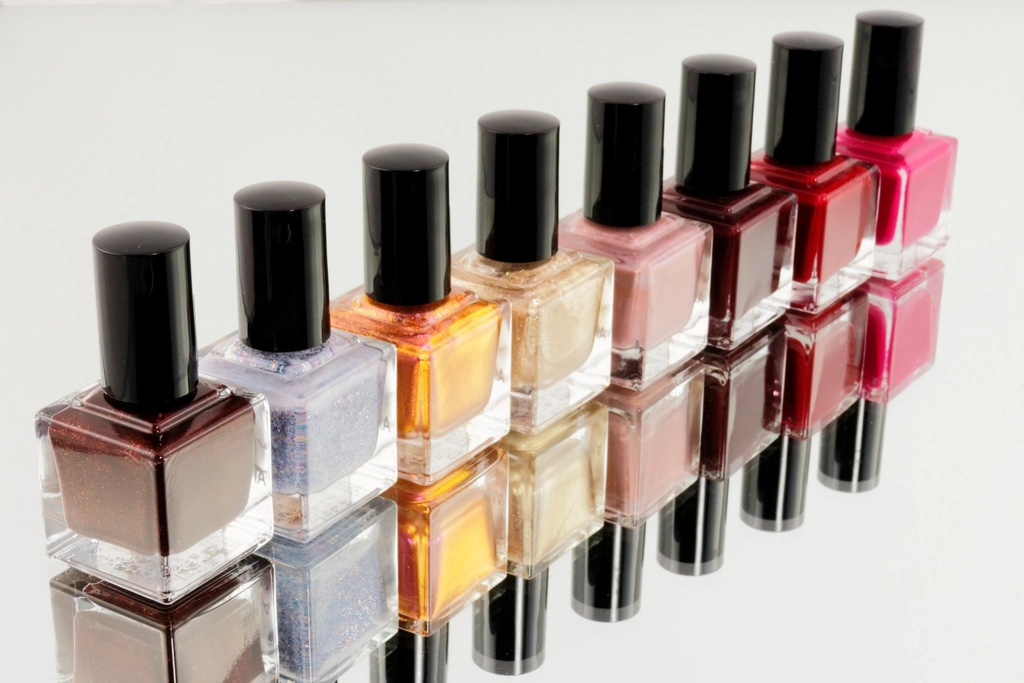
Oxblood, plum and true black leave a yellow or amber cast on the nail plate once they come off. The surface is porous keratin, and concentrated pigment settles into it within a day or two of wear. Buffing the stain away works, but it thins the nail, a poor answer to a problem that is trivial to prevent.
Clear base coat is the whole fix. It sits between the pigment and the nail and leaves with the color. Apply it to a clean, dry nail carrying no oil or hand cream, since either stops it bonding and lets polish creep underneath. Where a stain has already happened, going bare for a week or two grows it out.
Making it last
- Cap the free edge with topcoat on every layer, which matters more than the design itself for chip resistance.
- Keep detail away from the tip. Art near the cuticle survives days longer.
- Matte topcoat scuffs where glossy does not, so a matte manicure looks worn sooner. Plan for four or five days rather than a week.
- Let art dry fully before sealing. Smearing at the final step is the most common way a good design is ruined.
Choosing by where you are wearing it
| Setting | What holds up | What to skip |
|---|---|---|
| Office or client facing | Oxblood, plum, one matte accent | Blood drips, literal characters, novelty |
| Photographed close up | Fine lines, sheen contrast, negative space | Heavy glitter, which swallows detail |
| A long night out | Shorter nails, deep color, art near the cuticle | Delicate tips that chip and read as damage |
| Costume for one evening | Press ons over your own polish | Anything slow to remove in the morning |
Sorting by setting rather than by difficulty is the useful move, because the design that photographs best is rarely the one that survives a full shift at work.
Nail shape changes the read
Almond and stiletto shapes carry sharp, gothic designs naturally because the shape is already pointed. Short square nails suit blocky designs, drips and color blocking better than fine line work, which gets cropped by the small surface. Choosing the design to suit the shape you already have beats forcing a photograph you saw on longer nails.
Taking it off without wrecking the nail
Dark and matte finishes need more soaking than a sheer color does, and the temptation is to scrape. Press an acetone soaked pad flat onto the nail, hold it while you count slowly to twenty, then wipe in one direction rather than rubbing back and forth. Repeat on the stubborn ones instead of attacking them harder.
Two cautions go with that. Acetone is flammable and strips oil from skin, so keep it away from a lit candle, crack a window, and never use or store it alongside bleach based cleaners. Then put something back with cuticle oil or thick hand cream. Skipping that is the real reason nails feel brittle after a season of dark polish, and the polish takes the blame instead of the remover.