Yes, but only after a quick boil and an ice bath. A raw sprout keeps working chemically even in deep cold, and what it produces over time is bitterness and a sulfur smell. Two to five minutes in boiling water shuts that process down and buys you close to a year of good eating.
Bitterness is the thing blanching prevents
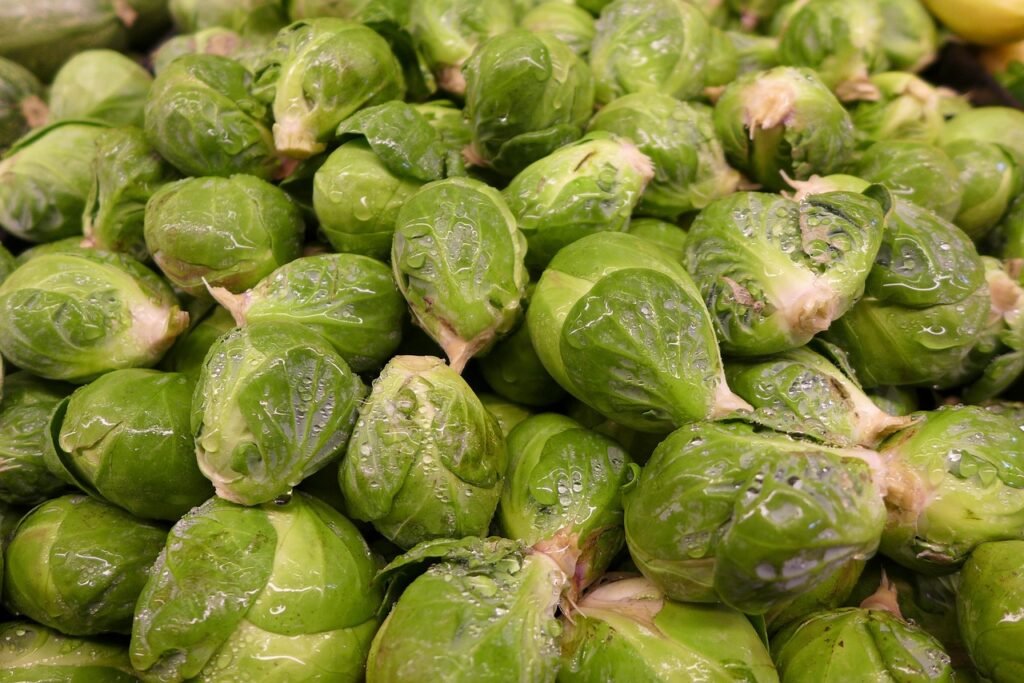
Brussels sprouts belong to the cabbage family, and everything in that family carries compounds that break down into sulfur when the vegetable is damaged or stored badly. Freezing damages cell walls. That is unavoidable. Blanching matters because it disables the enzymes that would otherwise take advantage of the damage and keep converting flavor into smell for months.
Pick your sprouts before you bother with any of it. Tight, heavy, deep green heads freeze well. Ones that are already loose, yellowing at the outer leaves, or spongy when squeezed will come out worse, and no technique rescues them. Peel off the ragged outer leaves and trim the stem end flat without cutting so deep that the sprout falls apart.
Uniform size is the other thing worth fixing at this stage. A bag holding marbles and golf balls together will always cook unevenly, so halve the big ones and leave the small ones whole.
Three minutes, four minutes, five minutes
| Size or cut | Time in boiling water | Then |
|---|---|---|
| Halved or quartered | About 3 minutes | Ice bath the same length |
| Small whole, under an inch | About 3 minutes | Ice bath the same length |
| Medium whole | About 4 minutes | Ice bath the same length |
| Large whole, over an inch and a half | About 5 minutes | Ice bath the same length |
| Shredded for slaw or hash | About 90 seconds | Ice bath, then squeeze dry |
The ice bath is not optional and it is not a rinse. The sprouts need to go from boiling to genuinely cold fast, which means real ice in the water and enough of it that the bath stays cold when you dump hot vegetables into it. Sprouts left to cool on their own keep cooking and arrive at the freezer already soft.
Dry them properly or you freeze the water too
- Lift the sprouts out of the ice bath and spread them on a clean towel in a single layer.
- Roll them gently and let them sit until the surfaces look matte rather than wet. Ten minutes is usually enough.
- Arrange them on a tray so none of them touch, then freeze the tray until the sprouts are hard.
- Tip the frozen sprouts into a bag, flatten it to force the trapped air out, then seal. They will pour like marbles rather than arriving as one block.
- Write the date and the cut on the bag, since halves and whole sprouts want different cooking times later.
- Stack the bags flat and keep them toward the back of the freezer.
Roast them straight from frozen
Do not thaw them. A thawed sprout is limp before it ever sees heat, and everything you avoided by blanching properly gets undone in the sink. Tip them frozen onto a hot, oiled baking sheet, spread them out so they are not crowded, and roast hard until the cut faces brown. Frozen sprouts release more water than fresh ones, so a hotter oven and a bigger pan do most of the work.
A skillet works the same way. Get the pan hot, add the frozen sprouts cut side down, and leave them alone until a crust forms. Boiling and steaming are the two methods to avoid, because both add water to a vegetable that already has too much of it.
A blanched bag stays at its best for roughly a year. An unblanched bag is fading by about the six week mark. That gap has nothing to do with your freezer and everything to do with whether you spent three minutes at the stove, which is the clearest argument for doing it properly the first time.