
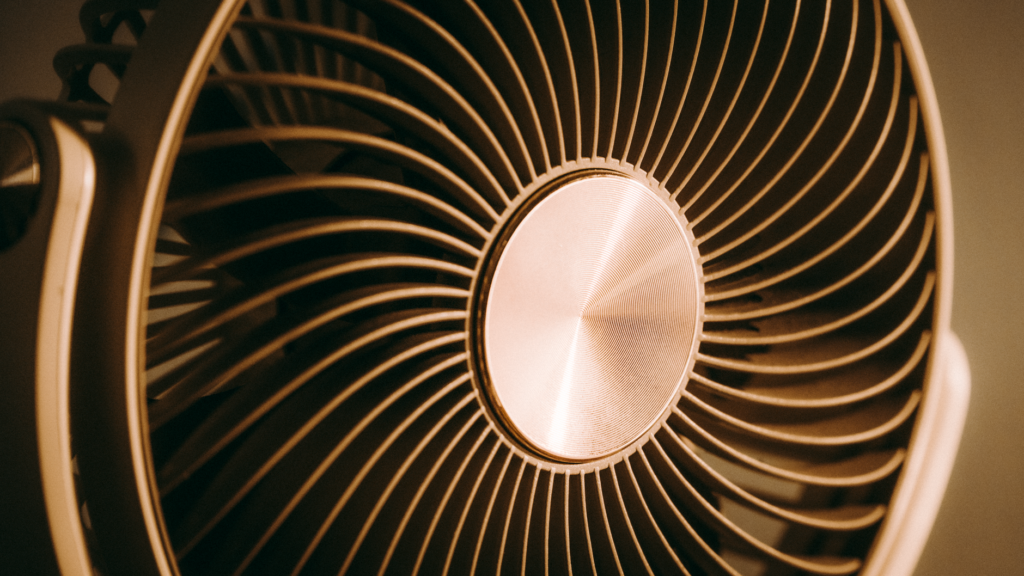
Unplug the fan, take off the front grille, wipe the blades and grille with warm water and a little dish soap, and vacuum the dust from the motor housing without getting it wet. Box, pedestal and tower fans come apart differently, so figure out which one you own before you reach for a screwdriver.
Unplugging comes before the grille comes off
Switching a fan off at its own button is not enough. Fan manuals from several makers say the same thing in slightly different words, which is to pull the plug before you remove a grille or start cleaning. A blade that spins up while your fingers are inside the cage is the one injury this job can cause, and it is avoidable.
The same manuals are firm about liquids near the motor. Water and cleaning spray should never get into the motor housing or its vents, and several warn against solvents, thinners and ammonia on any part of the fan. A squeeze of dish soap stirred into a bowl of warm water cuts the grime that builds up on blades and grilles, which is mostly dust stuck in a thin film of household oil.
Taking apart a pedestal or desk fan
- Unplug the fan and lay a towel on the floor to catch dust.
- Release the clips or screw around the rim of the front grille and lift it away.
- Unscrew the cap at the center of the blade. Some caps loosen in the opposite direction from a normal screw, so look for an arrow on the cap or check the manual before forcing it.
- Slide the blade off the motor shaft and unscrew the plastic nut that holds the rear grille.
- Wash the blade and both grilles in warm soapy water, rinse off the soap film, and let every piece dry fully.
- Vacuum the motor housing with a brush attachment and wipe the stand with a damp cloth.
- Reassemble in reverse order and give the blade a spin by hand before plugging in, to make sure nothing rubs.
Take a phone photo before you pull anything off. It saves guessing about which way the blade faces when it goes back on.
Box fans with grilles that stay put
Many box fans are built as a sealed frame, with the grilles held by a ring of small screws or not designed to come off at all. If yours has screws, remove them from the front panel only and keep them in a cup. If it has none, clean it in place.
Start with a vacuum and a brush attachment on both faces to lift loose dust. Then work a damp microfiber cloth or a soft bottle brush through the slats, wiping each blade you can reach. A pipe cleaner reaches the tight corners. Turn the fan face down and repeat from the back, keeping the cloth damp rather than wet so no drips run toward the motor.
Tower fans hide their dust behind the back panel
A tower fan has no open blades. Inside is a long drum shaped blower wheel that pulls air in through a rear intake grille and pushes it out the front slot. The dust builds up on that intake and on the wheel’s fins, which you usually cannot reach without taking the housing apart.
Don’t open the case. Vacuum the rear grille thoroughly with a brush attachment, then use short bursts of canned air through the front vents, with the fan unplugged, to push dust off the wheel. Some towers have a removable back panel or a washable filter, and the manual will say so. If yours does, wash the filter in soapy water and let it dry before it goes back in.
What each part of a fan can handle
| Part | Safe to use | Avoid |
|---|---|---|
| Plated metal grille | Mild dish soap, soft cloth | Dishwasher heat, which can strip the plating |
| Plastic grille | Warm soapy water, then a rinse | Solvents and abrasive scrubbers |
| Blades | Damp cloth, mild soap if greasy | Bending them while cleaning |
| Motor housing and vents | Vacuum brush, canned air | Any water or spray |
| Base and stand | Damp cloth | Soaking the cord or switch |
A fan near the kitchen may need a stronger household cleaner on the blades, since cooking grease holds dust tightly. Ceiling fans follow a separate routine with their own ladder and blade concerns.
Frequently asked questions
How often should I clean a fan?
Look at the blades every few weeks while the fan is in daily use. When you can see a gray film on the leading edges, it is time. Fans in kitchens, bedrooms with pets or dusty workshops collect grime faster, and a quick vacuum of the grille between deep cleans keeps buildup down.
Can I put fan parts in the dishwasher?
Check your manual first. At least one fan maker warns against putting a plated metal grille in the dishwasher because the heat can remove the plating. Handwashing the grille and blades in warm soapy water is the safe default, and the motor housing should never get wet at all.
Why is my fan louder after I cleaned it?
Usually something went back on slightly wrong. Check that the blade is fully seated on the shaft, the center cap is tight, and the grille clips are closed all the way around. A blade that was bent during cleaning can also wobble and rattle, so spin it by hand and watch for rubbing.