
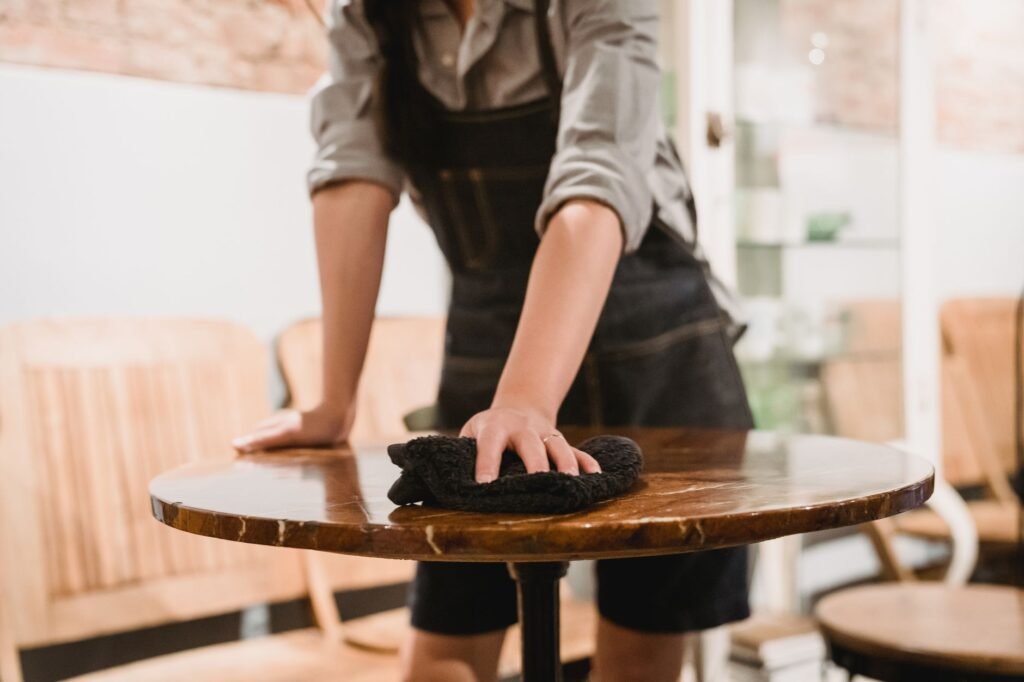
Clean the surface first, then apply a thin coat of polish with the grain using a soft cloth, and buff it dry within a minute. Most bad results come from skipping the cleaning step or leaving polish sitting long enough to turn cloudy and sticky.
Work out what finish you have
Polish sits on top of a finish. It does not feed the wood, and it will not repair damage underneath. So the first job is knowing what is actually on the surface.
Put a drop of water on a hidden spot. If it beads, the finish is intact and you only need cleaning and a light polish. If it soaks in and darkens the wood, the finish is worn through or the piece is raw or oiled, and polish will blotch. Next, rub a hidden area with a cloth dampened in denatured alcohol. If the surface turns tacky, you are probably looking at shellac, which is older and softer than modern lacquer or polyurethane and needs a gentler hand.

The five steps
- Dust dry first. Use a dry microfiber cloth. Grit dragged across a finish under a wet cloth is what puts fine scratches in it.
- Clean. Wring a cloth out in warm water with a drop of dish soap until it is barely damp, wipe with the grain, then go over it again with plain water on a second cloth.
- Let it dry completely. Give it fifteen minutes. Polish over damp wood is the usual cause of a milky white haze.
- Apply polish to the cloth, not the wood. A few drops on the cloth, worked across the surface with the grain, covers more than you expect. Pouring it onto the piece leaves heavy patches you then have to chase.
- Buff. Flip to a clean dry section of cloth and buff until the surface feels dry to the back of your hand. If your finger leaves a print, there is still polish sitting on top.
What to use on which finish
| Finish | Safe choice | Avoid |
|---|---|---|
| Lacquer or polyurethane | Standard furniture polish or paste wax | Anything with silicone if you may refinish later |
| Shellac | Paste wax, applied thinly | Alcohol based cleaners, they dissolve it |
| Oiled wood | The same oil the maker used | Spray polish, it sits on top and looks patchy |
| Painted or antiqued | Dry dusting, damp cloth only | Polish that adds gloss and changes the look |
| Veneer over particle board | Barely damp cloth, dried fast | Standing water, it swells the core |
Mistakes that leave streaks and haze
- Too much product. Polish that is not buffed off stays soft, grabs dust, and builds into a gummy layer within a few rounds.
- Paper towels. They are abrasive enough to dull a soft finish and they shed lint into it. Old cotton t-shirts and microfiber are better.
- Working in circles. Going with the grain hides the fine marks you leave behind. Circles show them off.
- Polishing in sunlight. A warm surface flashes the solvent off before you can spread it, which is what makes it streak.
How often is enough
Dust weekly, clean when the surface feels grubby, and polish two or three times a year. Antiques and anything with a hand rubbed finish do better with paste wax once a year and nothing in between. If a piece looks dull a week after polishing, the problem is usually buildup rather than a lack of product, and the fix is a proper clean rather than another coat.