

Photo: rawpixel · CC0
Steep coarsely ground coffee in cold water at roughly one part coffee to four parts water for twelve to eighteen hours, then filter it twice. That produces a concentrate you dilute at serving time, usually one to one with water or milk over ice.
Ratios decide strength, not steep time
Weigh your coffee if you can. Volume measures for coffee vary wildly with grind size and roast, which is why two people following the same scoop count get different results.
| Coffee to water by weight | Result | Dilute at serving |
|---|---|---|
| 1 to 4 | Strong concentrate | 1 to 1 or more |
| 1 to 5 | Standard concentrate | 1 to 1 |
| 1 to 8 | Ready to drink | None |
| 1 to 3 | Very strong, syrupy | 1 to 2 or more |
Steep time changes the character rather than the strength. Shorter steeps taste brighter and thinner, longer ones taste rounder and heavier. Past roughly twenty four hours most batches turn woody.
The method, step by step
- Grind coarse. Aim for something like coarse sea salt or breadcrumbs. Fine grounds slip through filters and make the batch muddy and bitter.
- Weigh coffee and water. A kitchen scale beats measuring cups here by a wide margin. Filtered water if your tap water tastes of chlorine.
- Wet all the grounds first. Pour a little water, stir until there are no dry pockets, then add the rest. Dry clumps simply do not extract.
- Cover and steep. Twelve to eighteen hours. Room temperature extracts faster and tastes slightly sweeter; the refrigerator is slower and cleaner. Pick one and stay consistent while you dial it in.
- Do not stir during the steep. Agitation increases extraction unevenly and adds fines to the liquid.
- Strain coarse, then fine. First through a mesh sieve or French press screen to remove the bulk, then through a paper filter or a clean cloth for clarity. Let it drip. Squeezing the grounds pushes bitterness through.
- Bottle and refrigerate. A sealed glass jar, labeled with the date and your ratio, so the next batch can be adjusted rather than guessed.
Gear you do not have to buy
- A large jar and a sieve do everything a dedicated cold brew maker does.
- A French press works as both vessel and first filter, though the metal screen alone leaves silt.
- A nut milk bag or clean cotton cloth filters faster than paper and is reusable.
- Paper coffee filters give the cleanest cup but drip slowly. Rinse them with water first if you taste paper.
Any of these beat brewing hot and chilling it, which is a different drink. Cold water extracts fewer of the acidic compounds, which is why cold brew tastes smoother even at high strength.
Dialing in your own batch
Change one variable at a time and write it down. If the result is bitter and heavy, shorten the steep by three hours or grind slightly coarser. If it is thin and sour, extend the steep or add coffee. Medium and dark roasts are the usual choice because chocolate and caramel notes survive cold extraction well, while delicate light roasts can come out flat.
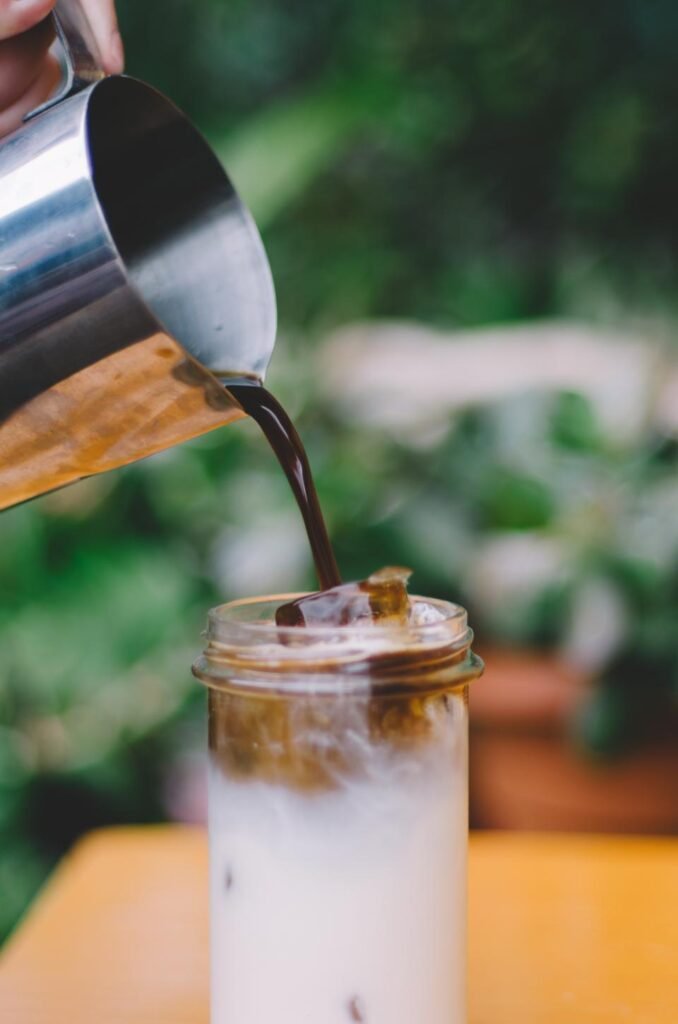
For serving, fill the glass with ice first, then pour concentrate to about a third, then top with water or milk. Salt in very small amounts softens bitterness. Any syrup should be simple syrup rather than granulated sugar, which never dissolves properly in a cold drink.