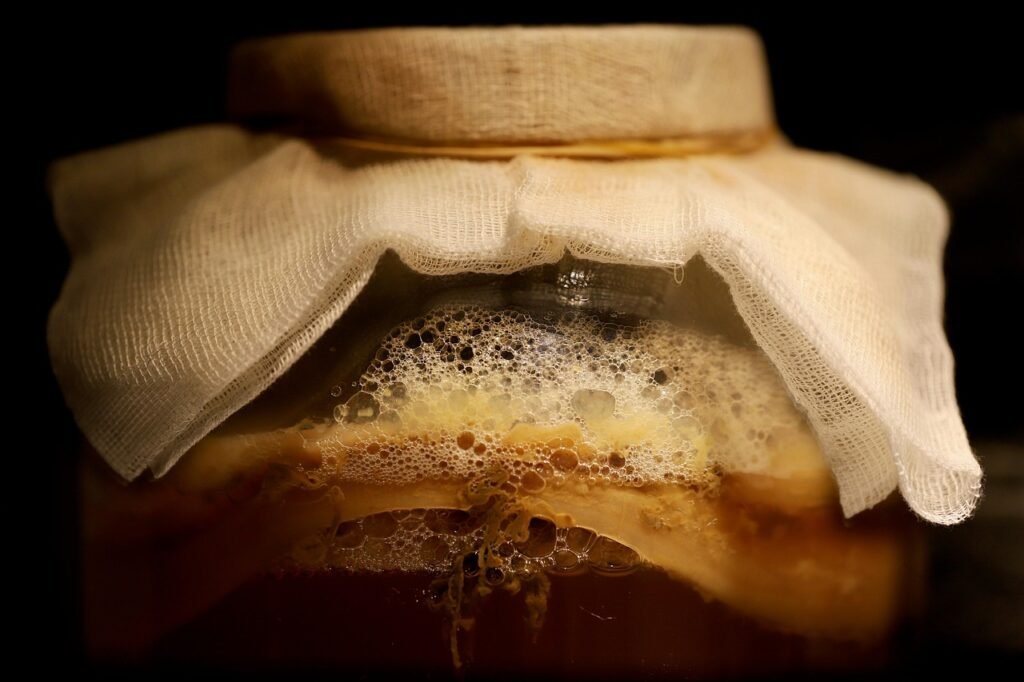
To brew kombucha, steep black or green tea, dissolve sugar in it, let it cool, then add a SCOBY and some finished kombucha, cover the jar with cloth and ferment it at room temperature for about a week. Test that the brew has turned acidic before you drink or bottle it.
Kombucha equipment, and the containers to leave out
You need a large glass jar, a tightly woven cloth or coffee filter, a rubber band, a pot for making tea, and a SCOBY. The acronym stands for symbiotic culture of bacteria and yeast, the rubbery disk that does the fermenting. It comes with some liquid from a previous brew, called starter tea.
Container choice is a safety question. Kombucha becomes quite acidic, and acid can pull toxic metals out of the vessel holding it. A 1995 CDC report on kombucha advised against preparing or storing the tea in ceramic or lead crystal containers for that reason. Skip glazed crocks, pottery and lead crystal. Food grade glass is the safest choice, and Virginia Tech’s food safety guidance also calls for a nonmetallic container.
Clean everything that touches the tea with hot soapy water, and rinse off every trace of soap. Wash your hands before handling the SCOBY.
The first fermentation, step by step
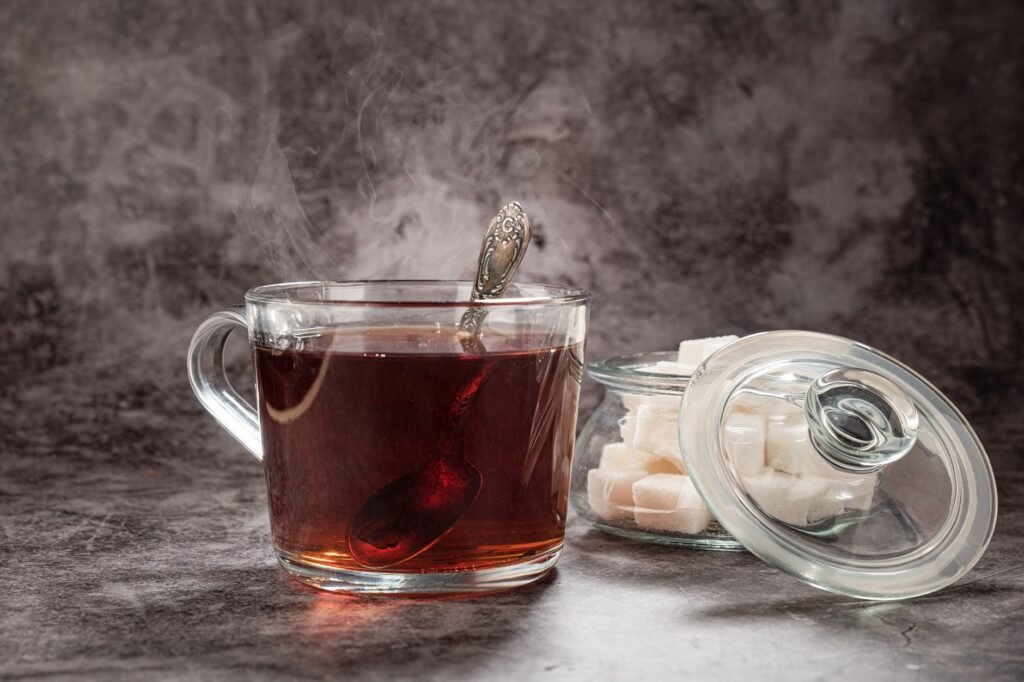
- Brew sweetened tea with unflavored black or green tea, dissolving white sugar while the tea is hot. Follow the tea and sugar ratio supplied with your culture, since recipes vary and the culture needs the sugar to ferment.
- Let the tea cool. Colorado State University’s guidance says 68°F or below before the SCOBY goes in, because heat can harm the culture.
- Pour it into the clean glass jar and add starter tea. Virginia Tech’s guidance uses 10 percent inoculum, roughly one part finished kombucha to nine parts sweet tea.
- Slide in the SCOBY, cover with the cloth, and secure it with a rubber band to keep fruit flies out.
- Set the jar at room temperature, away from direct sun, and leave it undisturbed.
- Start tasting and testing after about a week. Virginia Tech’s guidance points to 7 to 10 days.
The tea turns less sweet and more tart as the days pass. A warm room speeds this up and a cool one slows it down.
Testing kombucha acidity with strips or a meter
Acidity keeps harmful microbes out of kombucha, so testing is the most useful safety habit a home brewer can build. Virginia Tech’s kombucha guidance sets the target at pH 4.2 or lower during fermentation, and no lower than 2.5. Colorado State University gives the same 2.5 to 4.2 range for finished kombucha.
| Reading | What it means | What to do |
|---|---|---|
| Above 4.2 after a week or more | Not acidic enough yet | Keep fermenting and retest, and discard it if it stays high |
| 2.5 to 4.2 | Inside the recommended range | Taste, then bottle or refrigerate |
| Below 2.5 | More acidic than the guidance allows | Discard, and ferment the next batch for less time |
A calibrated digital pH meter is the most accurate tool, and narrow range test strips are a cheaper option. A 2025 study in the journal Food Protection Trends pointed out that consumer kombucha recipes had not been evaluated by extension food safety specialists, which is one more reason to measure rather than guess.
Mold on a SCOBY versus normal new growth
A healthy SCOBY looks strange. New layers form as a smooth, pale film across the surface. Brown stringy strands hanging underneath are yeast.
Mold looks different. It sits on top of the surface, looks fuzzy or powdery and dry, and appears in spots of color. Colorado State lists black, gray, brown, green or blue, and Virginia Tech’s guidance also warns about unusual odors. If you see fuzzy spots, throw out the whole batch, SCOBY and liquid included, and clean the jar. Scraping the mold off and carrying on is not safe.
Bottling, flavoring and pressure in the second fermentation
Once the brew tests and tastes right, lift out the SCOBY with clean hands, keeping enough liquid to start your next batch. Pour the rest into bottles. Many brewers add fruit or juice and give the sealed bottles a day or two at room temperature to build fizz.
That fizz is pressure, and sealed bottles left warm too long can build enough to burst glass. Open one carefully to check, and refrigerate them all once they reach the fizz you like. Colorado State advises keeping finished kombucha refrigerated.
Colorado State’s guidance also says pregnant or breastfeeding women, children, and people with weakened immune systems or liver or kidney disease should avoid kombucha. If you have a health condition, check with a doctor before drinking it.
Frequently asked questions
Can I use less sugar when brewing kombucha?
The sugar is food for the yeast and bacteria, not only flavor, and much of it is used up during fermentation. Cutting it sharply can leave the culture underfed, so the brew may acidify slowly. Stick with the ratio that came with your culture and let a longer ferment reduce the sweetness instead.
Do I need a SCOBY to make kombucha?
You need a culture of some kind. Most people get a SCOBY with starter tea from a supplier or another brewer. Some grow one from unflavored, unpasteurized bottled kombucha, which takes longer and is less predictable. Either way, the starter liquid is what makes the new batch acidic quickly.
Can I make kombucha tea in a metal pot?
Heating the water and steeping the tea in a stainless steel pot is fine, since the tea has not fermented yet. Ferment in food grade glass, though. Virginia Tech's guidance calls for a nonmetallic fermentation container, and the CDC has warned against ceramic and lead crystal vessels.
Does kombucha have caffeine?
Yes. Kombucha is brewed from black or green tea, and the FDA lists tea among the well known sources of caffeine, so some of it carries into the finished drink. Black tea typically has more caffeine than green tea, according to FDA figures, so the tea you choose and how strong you brew it change the amount.
Does kombucha contain alcohol?
Yes, some. As the sweet tea ferments, yeast turn part of the sugar into alcohol, and the federal Alcohol and Tobacco Tax and Trade Bureau notes that kombucha can reach 0.5 percent alcohol by volume or more. Time and temperature affect the amount, and fermentation can continue in sealed bottles, one more reason to refrigerate them.