The fastest way to remove pet hair from a couch is to drag a damp rubber glove or a rubber squeegee across the fabric, which rolls the hair into clumps, then vacuum with an upholstery brush. A lint roller handles quick touch-ups between cleanings.
Why pet hair weaves itself into couch fabric
Pet hair is fine and light, and its surface is slightly rough, so it snags on fabric fibers. Textured weaves, chenille and loose tweeds give those hairs plenty to grip. Static electricity adds to the problem in dry indoor air, especially in winter, pulling hair toward synthetic upholstery and holding it there.
That is why a vacuum alone often disappoints. Suction lifts hair resting on top, but not hair that has worked its way into the weave. You need something that drags across the surface and pulls hair out first, then something to collect it.
Pet hair removal tools for couches, compared
| Tool | Works best on | Watch out for |
|---|---|---|
| Damp rubber glove | Most woven fabrics, curved arms and backs | Keep it just damp, never dripping |
| Rubber squeegee or rubber broom head | Large flat cushions | Use light pressure on delicate weaves |
| Lint roller | Quick touch-ups, velvet, dark fabric | Goes through sheets fast on heavy shedders |
| Pumice style fur stone | Tough, tightly woven fabric | Can pill or snag loose weaves, so test first |
| Vacuum with upholstery or motorized brush | Collecting clumps and deep hair | Use the gentlest setting on velvet |
| Slightly damp sponge | Microfiber and synthetic blends | Check the care tag before wetting fabric |
Most people end up using two of these, one to loosen hair and one to collect it. A glove and a vacuum cover nearly every fabric, and a lint roller by the couch handles daily fluff.
A full pet hair cleanup, cushion by cushion
- Pull off every removable cushion and pillow. Hair collects in the gaps and along the back seam.
- Vacuum the crevices with a crevice tool before you loosen anything else into them.
- Put on a rubber glove, dampen it lightly, and sweep your hand across each surface in one direction. The hair gathers into rolls.
- Pick up the rolls by hand, or vacuum them with the upholstery brush.
- Finish with a lint roller on the arms, the piping and the front edge of the seat cushions, where hair collects from legs and clothing.
- Flip and rotate the cushions before putting them back, so wear and hair spread evenly.
A deep pass like this about once a month, with quick glove or roller sessions in between, keeps a heavy shedder’s favorite spot under control.
Leather, velvet and microfiber couches need different handling
Leather and faux leather are the easy ones. Hair does not grab smooth surfaces, so a dry microfiber cloth wiped over the leather or the vacuum’s brush attachment does the job. Skip the wet glove there, since water can mark some leathers.
Velvet has a pile that crushes and shows marks. Use a lint roller or a soft brush moving with the direction of the nap, and keep the vacuum on low suction. Stiff rubber tools and fur stones do not belong on velvet.
Microfiber handles a damp sponge or glove well, but read the care tag first. Many upholstery tags carry a cleaning code that tells you whether water based cleaning is safe, and a fabric meant for solvent cleaning only can water spot. With no tag, test on a hidden spot at the back.
Keeping less pet hair from reaching the couch
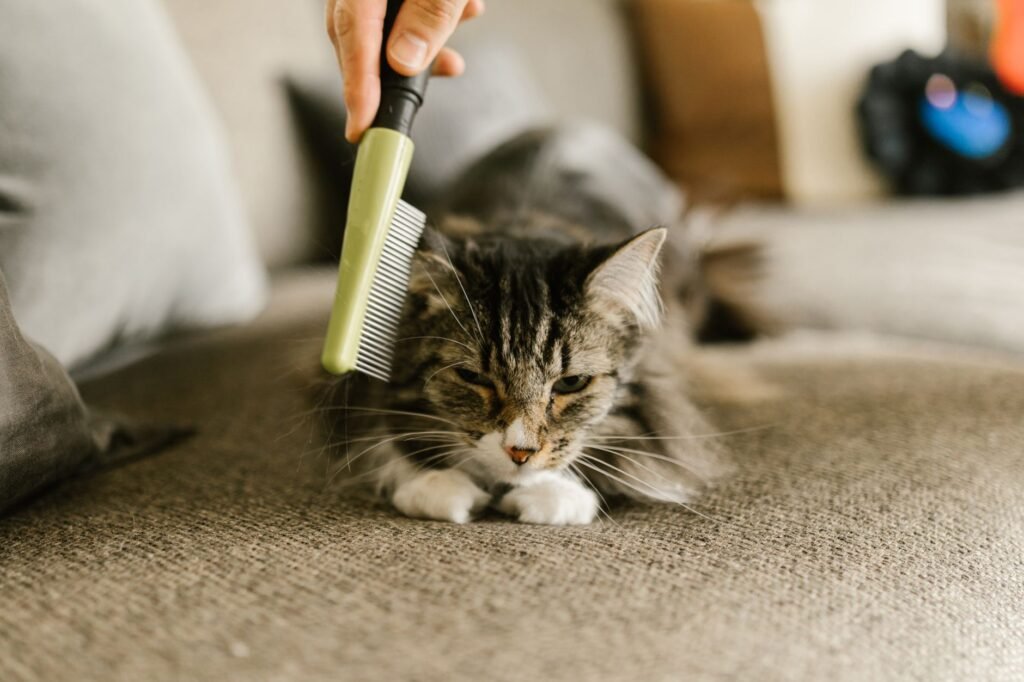
Brushing your pet regularly removes loose coat before it drops on the furniture, and doing it outdoors or in one easy to sweep room keeps it off the sofa. Double coated breeds tend to shed heavily in seasonal bursts, so step up brushing during those weeks.
A washable throw or fitted cover on your pet’s favorite cushion catches most of what falls. Shake it outside, run it through the washer without other laundry, and clean the dryer lint trap afterward. Couch hair ends up on your clothes as well, and removing dog hair from clothes gets its own guide on this site.
If shedding suddenly increases or you notice bald patches or irritated skin, check with your veterinarian, since that can point to a problem beyond normal shedding.
Frequently asked questions
Do dryer sheets remove pet hair from a couch?
Some people rub a dryer sheet over upholstery to cut static so hair lets go more easily. It may help a little on synthetic fabric, but it can leave residue and fragrance behind. A damp rubber glove or a lint roller removes hair more reliably without adding anything to the fabric.
What couch fabric is best for homes with pets?
Smooth, tightly woven fabrics and leather tend to release pet hair most easily, since there is little texture for hair to grab. Loose weaves, chenille and textured tweeds hold hair and can snag on claws. A fabric color close to your pet's coat also hides whatever you miss.
How often should I remove pet hair from the couch?
For a pet that sleeps on the couch, a quick pass with a glove or lint roller every few days keeps hair from building up. Add a deeper clean with the cushions off and a vacuum through the crevices about once a month, or more often during heavy shedding seasons.
How do you remove pet hair from carpet?
Loosen the hair before you vacuum. Drag a rubber broom, a squeegee or a damp rubber glove across the carpet in short strokes to pull embedded hair into clumps, then vacuum slowly with the brush roll on, making overlapping passes in two directions. Empty the bin or bag often, since a full one loses suction.
Do air purifiers help with pet hair?
Not much with the hair on your couch. Shed hair quickly settles onto furniture and floors, while an air purifier can only catch particles still floating in the room. The EPA stresses that filtration does not replace controlling the source, which here means brushing your pet and cleaning the couch regularly.