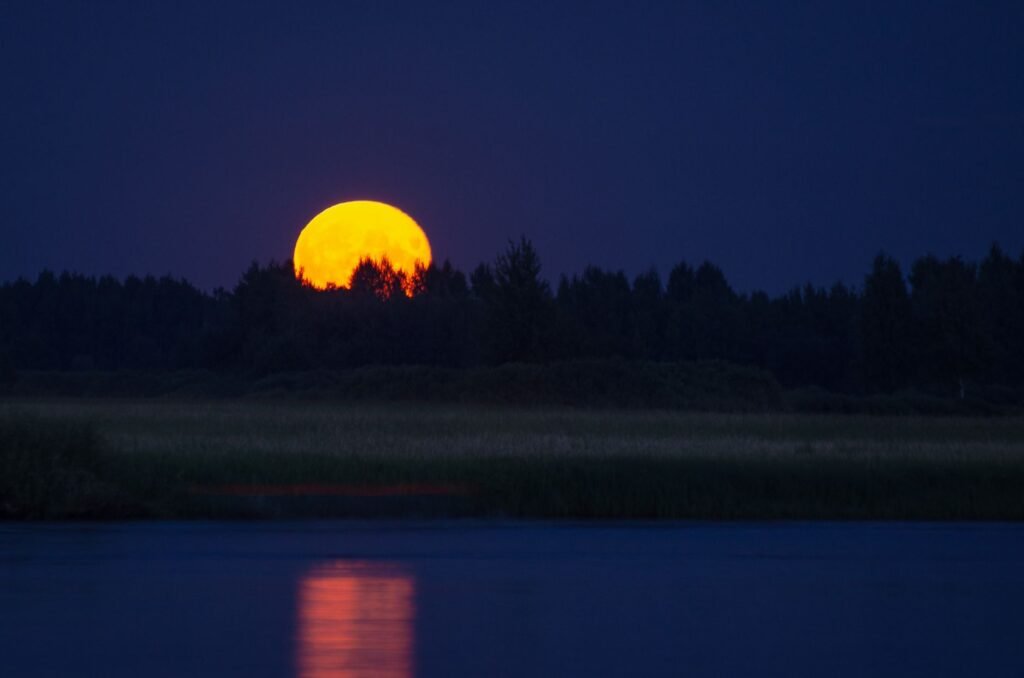
A harvest moon is the full moon that falls closest to the September equinox, the start of fall in the Northern Hemisphere. It usually lands in September and sometimes in early October. For a few evenings around it, the moon rises soon after sunset, which gives extra light at dusk.
The equinox rule behind the harvest moon name
Most traditional full moon names are tied to a month. The harvest moon is different. It is picked by its distance from the September equinox, when the sun sits directly above the equator and day and night are close to equal around the world. Whichever full moon falls nearest that date gets the name, whether it arrives before or after.
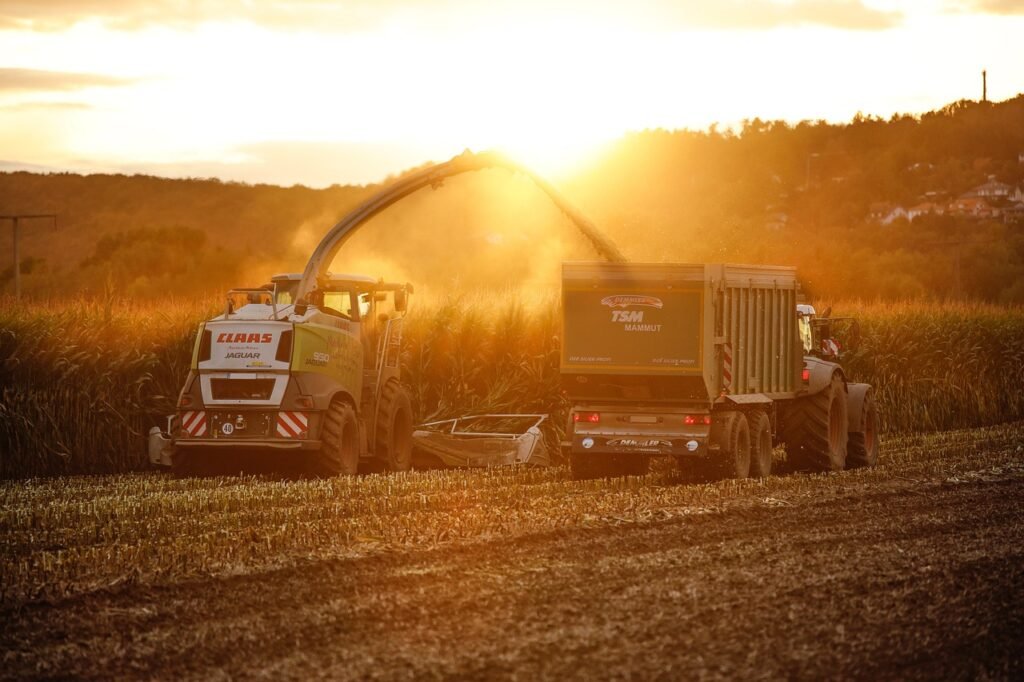
The name comes from farming. Before electricity, bright moonlight in the early evening let farmers keep bringing in crops after sunset during the busiest weeks of the fall harvest. NASA’s Space Place explains the name exactly that way.
Because the rule hangs on the start of autumn, the harvest moon is a Northern Hemisphere idea. South of the equator, the September equinox marks the start of spring instead.
Why moonrise barely shifts for a few nights
On average the moon rises about 50 minutes later each night. Around the harvest moon, that gap shrinks. According to NASA, it narrows to roughly 25 to 30 minutes across the northern United States and to only 10 to 20 minutes in parts of Canada and Europe.
The reason is geometry. Near the fall equinox, the moon’s evening path meets the eastern horizon at an unusually shallow angle. The moon still moves the same distance along its orbit each day, but at that shallow angle less of the movement carries it below the horizon, so it comes up sooner than usual.
The practical result is several evenings in a row with a bright, nearly full moon rising around dusk, with no long dark gap between sunset and moonrise. For farmers without electric lights, that stretch of evening light was the whole appeal.
September or October, depending on the year
Full moons do not line up with the calendar, so their dates drift from year to year. Most years the full moon nearest the equinox falls in September. Every few years the October full moon sits closer, and it takes the name.
| Year | September equinox | Harvest moon | Month |
|---|---|---|---|
| 2025 | September 22 | October 6 to 7, depending on time zone | October |
| 2026 | September 22 | September 26 | September |
For 2026, NASA’s September 2026 skywatching guide placed the equinox on September 22 and the harvest moon on September 26, rising in the east shortly after sunset near Saturn. The full moon after the harvest moon is traditionally called the hunter’s moon.
The orange color and oversized look near the horizon
Photos often show the harvest moon huge and deep orange. Neither trait belongs to it alone. Any full moon near the horizon looks warmer in color because its light passes through more of Earth’s atmosphere, which scatters away more blue light and lets reds and oranges through. The same effect colors sunsets.
The larger look is mostly the moon illusion, a trick of perception that makes the moon seem bigger beside trees and rooftops than high in an empty sky. Because people usually watch the harvest moon right at moonrise, it gets credit for both effects.
Some years the harvest moon is also a supermoon, meaning full moon lands near the moon’s closest approach to Earth. That happened in 2025, and it makes the moon slightly larger and brighter than an average full moon, though the difference is hard to spot by eye.
Finding the next harvest moon date yourself
- Look up the September equinox for the year you want. Most years it comes on the 22nd or 23rd of September.
- Check a full moon calendar from a reliable source, such as NASA’s monthly skywatching posts or the US Naval Observatory’s moon phase data.
- Compare the September and October full moons, and pick the one closer to the equinox.
- Look up moonrise for your own town, since it varies with location, and plan to face east around sunset.
A clear eastern horizon, such as a field, a lake shore or a hilltop, gives the best view as the moon comes up.
Frequently asked questions
Is the harvest moon always in September?
No. It is defined as the full moon nearest the September equinox, so it usually falls in September but sometimes lands in early October. That happened in 2025, when the October full moon sat closer to the equinox than the September full moon did.
What is the difference between a harvest moon and a hunter's moon?
The hunter's moon is the traditional name for the full moon that follows the harvest moon, so it arrives about a month later, in October or occasionally November. Like the harvest moon, it is tied to the fall calendar in the Northern Hemisphere rather than to one fixed month.
Can you see the harvest moon from the Southern Hemisphere?
You can see that full moon from anywhere it is night, but the name belongs to the Northern Hemisphere, where the September equinox marks the start of fall. South of the equator that equinox begins spring, so the harvest label does not fit the season there in September.
What is a corn moon?
Corn moon is a traditional name for the September full moon. The Maine Farmer's Almanac, which published a list of full moon names in the 1930s, said Algonquin peoples of the Northeast used it for the time of gathering corn. When the September full moon sits closest to the equinox, it usually takes the harvest moon name instead.