
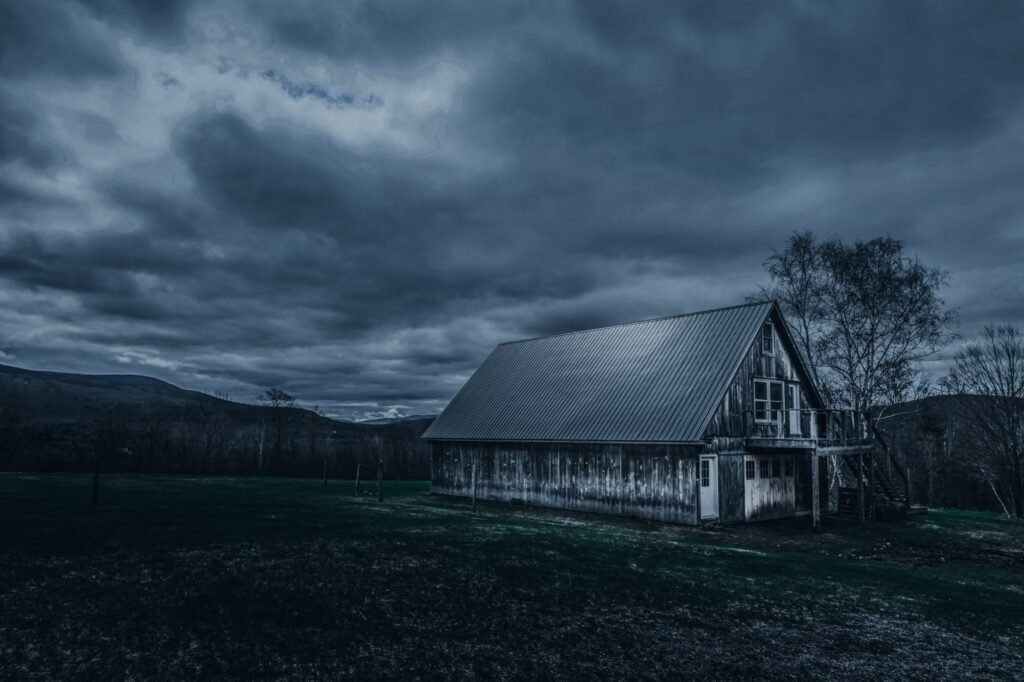
Partly, and the real version is thinner than the film implies. The Strangers opens by telling you it was inspired by true events, which is a claim with almost no weight behind it. Writer and director Bryan Bertino has said the film came from a memory of his own childhood and from thinking about the Manson family murders, not from a single case you could look up in a file.
The verifiable facts about the film
| Question | Answer |
|---|---|
| Based on a true story? | Loosely inspired by several sources, not one case |
| Based on a book? | No, original screenplay |
| Written and directed by | Bryan Bertino |
| Lead cast | Liv Tyler, Scott Speedman |
| Released | 2008 |
| Opening claim on screen | Inspired by true events |
Everything in that table is checkable. The claim on the sixth row is the one people arrive looking for, and it is worth being precise about what it does and does not assert. The film does not say it dramatizes a particular crime, name a victim you can find in a news archive, or point at an investigation. It says it was inspired, which in horror marketing is close to a free move.
What that opening title card is doing
The film begins with narration stating it was inspired by true events, followed by an FBI figure of roughly 1.4 million violent crimes a year in the United States, and then a specific date, February 11, 2005, attached to two characters. Those two characters are the film’s own leads. There is no case report behind them. Stacking a real statistic next to an invented date is what makes the sequence feel evidentiary when it is not.
The device is borrowed, and openly. The Texas Chain Saw Massacre opened the same way in 1974, presenting itself as an account of a real tragedy. That film was not a case study either. Both use the framing for the same reason: telling an audience that something happened removes the escape hatch of dismissing it as a story.
The knock on the door really happened
The one piece of genuine autobiography is small and domestic. Bertino has described it plainly: as a kid he lived in a house on a street in the middle of nowhere, and one night while his parents were out, somebody knocked on the front door and his little sister answered it. He has also pointed to break-ins around his childhood neighborhood. Nothing violent happened to him. What stayed with him was the ordinary version of the moment the film then extends for ninety minutes.
That is a real origin, and it is also the entire real content. The film’s structure, a couple returning from a wedding reception to an isolated house, is not a reconstruction of his family or anyone else’s night.
The Tate murders shaped the mood, not the plot
Bertino has said he was thinking about the Tate murders while writing, and that what drew him was the idea of telling the victims’ side without explaining what the killers wanted. That is a real influence on approach rather than on events. Nothing in The Strangers reproduces the Manson case. There is no cult, no leader, no ideology, no aftermath and no arrests. What the film takes is a refusal to supply motive, which is why its most quoted line answers the question of why with nothing more than the fact that the victims were home.
The Keddie theory came from journalists, not the filmmaker
Search for this question and you will quickly hit the Keddie cabin murders, an unsolved 1981 case in Keddie, California, presented as the film’s hidden true source. That connection was drawn by writers and critics noticing similarities after the fact. Bertino did not cite it, and there is no production evidence tying the screenplay to the case. It is a plausible-sounding attribution that has been repeated until it reads like sourcing, which is a common fate for horror films with an inspired by card.
Treat it the way you would treat any secondhand claim. If the only support for a link is that two stories share a rural house and a violent night, that is a genre resemblance, not a source.
How to weigh an inspired by true events card
Three questions settle most of these. Does the film name a real person, place or date that exists outside the screenplay? Does the writer describe a specific case in interviews, or only a mood and a memory? Is there a credit line pointing to a book, an article or a court record? For The Strangers the answers are no, a memory, and no. That does not make the film dishonest. It makes the card a tone-setting device, and the honest description of the film is loosely inspired rather than based on.