
The answer is RAISE, five letters. It is the one fill that covers both halves of the clue, bringing up a child and bringing up a subject, which makes it the safest first guess. REAR takes four squares when the clue means children, and MENTION, CITE and BROACH take over when it means conversation.
Raise and rear are one verb in two copies
English ended up with two versions of the same Germanic verb. REAR is the native one, from Old English ræran, to lift or set upright. RAISE arrived around 1200 from a Scandinavian source such as Old Norse reisa. Both go back to a Proto-Germanic verb meaning to cause something to rise, so the pair relate to rise roughly the way set relates to sit, and for a while they shared many of their meanings.
The child sense turned up first in REAR, recorded by the early 1400s. RAISE took it on much later, by 1744, and not without comment. In 1816 John Pickering, compiling a vocabulary of words thought to be peculiar to the United States, noted that raise was used of people in the sense of brought up and added that it was never used that way in the Northern States. Two centuries later, the LA Times used RAISE for this exact clue in 2026.
Children or conversation decides the fill
Once you know which sense the setter wants, the list shrinks fast. The upbringing sense gives RAISE, REAR, PARENT and NURTURE. The conversational sense gives MENTION, CITE, BROACH, INVOKE and the two-word POINT OUT. Grids have also used EVOKE when the thing brought up is a memory, DREDGE when the clue is printed as Bring (up) with the particle in parentheses, and HIKE or BOOST when it means to increase something.
A bare Bring up gives no hint whether it means children or conversation, so the crossings have to settle it. The New York Times has used this exact wording for MENTION, CITE and INVOKE, all from the conversational side, while the LA Times has used PARENT, which only works for children. If the first letter you have is M, C or I, think talk. If it is N, or P in a six-square slot, think family.
Bring up answers from four squares to thirteen
Count the blanks, then run down this list.
| Letters | Answer | When it fits |
|---|---|---|
| 4 | REAR | Children, the upbringing sense |
| 4 | CITE | Mention as support or evidence |
| 4 | HIKE | Increase, as with prices |
| 5 | RAISE | The default for either sense |
| 5 | EVOKE | Memories or feelings |
| 5 | ELATE | Only with a question mark |
| 6 | PARENT | Children, used as a verb |
| 6 | BROACH | Opening an awkward subject |
| 6 | INVOKE | Calling on a rule or authority |
| 7 | MENTION | The plain conversational sense |
| 7 | NURTURE | Care as well as upbringing |
| 8 | POINTOUT | Two words run together |
| 13 | MAKEMENTIONOF | Three words, long slots |
Broach began with a tapped barrel
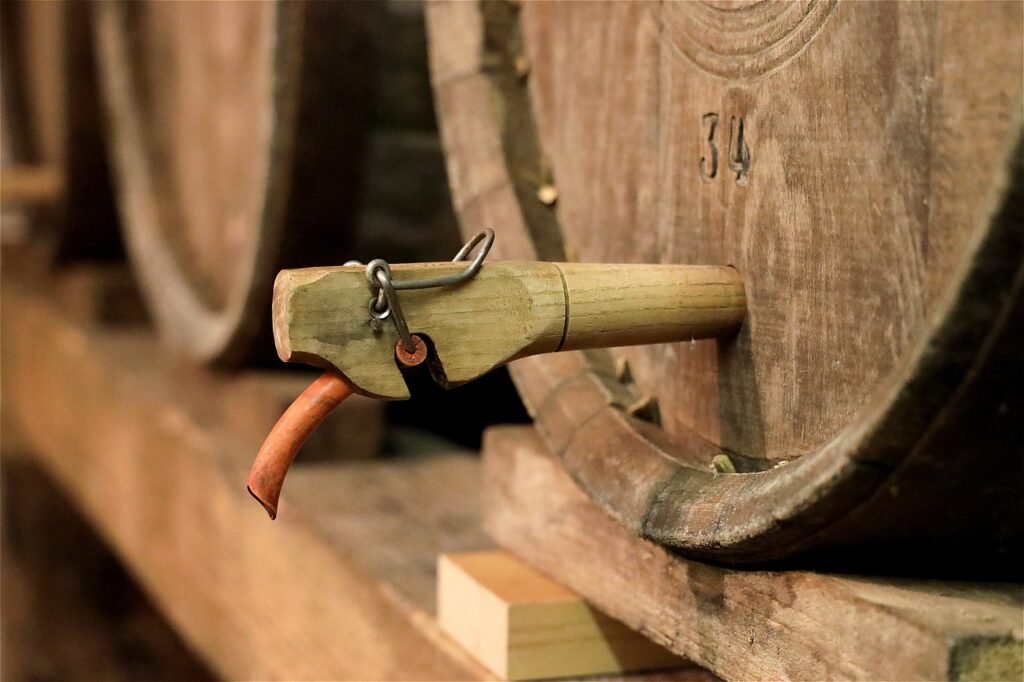
BROACH is the fill that surprises people, and its history explains it. The noun was a pointed tool, from the Old French broche, a roasting spit or an awl. As a verb it meant to pierce, and to broach a cask was to pierce it so the drink inside could be drawn off. The sense of starting to talk about something appears in the 1570s, and etymologists connect it to that image of tapping a cask, with spurring into action as the other candidate.
The barrel image still fits the way the word is used. Dictionaries define broaching a subject as starting to discuss something difficult or embarrassing, and the picture of opening something that has been kept sealed suits that shade well. When a clue hints at tact or reluctance and the slot has six squares, BROACH is the strong bet.
A question mark turns it into a mood
One puzzle clued ELATE as Bring up?, and the punctuation is doing real work. A question mark at the end of a clue is the standard signal that a pun or some other wordplay is involved, and here it shifts the meaning from raising a subject to raising someone’s spirits. Without the question mark, stick with the literal senses, so with five squares and clean punctuation RAISE is a better first guess than ELATE even though both fit.
Frequently asked questions
Is the answer RAISE or REAR?
Both are standard, so count the squares. RAISE takes five and works for children and for topics, which makes it the safer guess. REAR takes four and covers only the upbringing sense, so a four-square slot with a clue about children points straight at it.
What does broach mean in a crossword?
BROACH means to raise a subject for discussion, usually one that is awkward or difficult. It started as a word for piercing a cask to draw off the drink inside, and the conversational sense appears in the 1570s. It fits six squares and answers this clue in its talking sense.
Why would bring up be clued as ELATE?
Only when the clue ends in a question mark. The punctuation signals wordplay, so bring up shifts from raising a topic to raising someone's spirits. Without the question mark, stick to literal fills such as RAISE, REAR or MENTION and let the crossings choose among them.