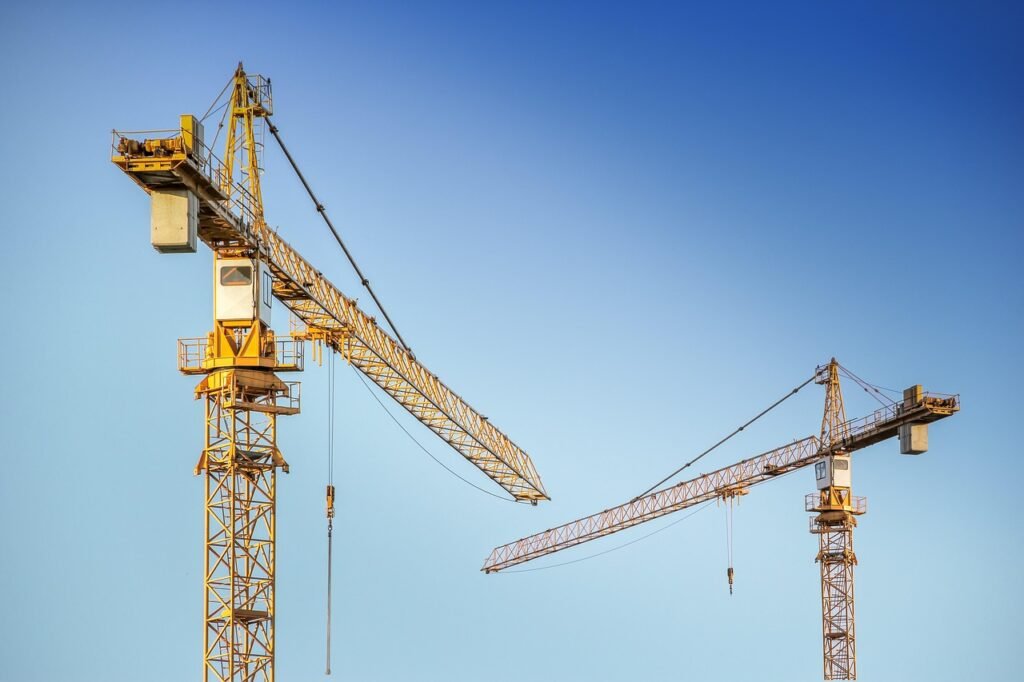
The answer is HOIST, five letters. It is lift in the heavy, mechanical sense, raising a load with a rope, tackle or crane, and HOIST is the fill a Telegraph quick puzzle ran for this one-word clue. RAISE and STEAL are also five letters long, so wait for a crossing before you ink one in.
Hoist is a word from the rigging
HOIST is a sailor’s word. It appears in English in the 1540s, and the earlier form was hoise, which came from the late 1400s hysse, probably from the Middle Dutch hyssen. Etymologists describe it as a nautical term found across Europe, from French hisser to Spanish izar, without being certain which language coined it. You hoist sails and flags, and the word still carries that sense of hauling on a line rather than simply picking something up.
The older form survives in a famous line from Hamlet, where Hamlet calls it sport to see the engineer hoist with his own petard. There hoist is the past participle of hoise, and a petard was a small bomb used to blow in doors and gates. The engineer is lifted, which is to say blown up, by his own device, and that is why the phrase means caught in your own trap.

Lift is a ride, a theft and an elevator
Lift carries a lot of meanings for four letters, and grids use nearly all of them. The physical sense gives HOIST, RAISE, HEFT, HEAVE and ELEVATE. The dishonest sense gives STEAL, PILFER, SWIPE and COP. A trip in someone else’s car gives RIDE. The British lift that carries people between floors, a sense recorded from 1851, gives ELEVATOR, and elevator, as the name of a machine, first meant one for raising grain, in 1787. A mood boost gives ELATE, CHEER and BOOST, and lifting a ban gives RESCIND or REVOKE. The Guardian’s quick crossword even wanted BUOYANCY, the upward force, for eight squares.
The LA Times once built a whole theme on this problem. In 2016 it clued three long entries with the single word Lift and made them a skier’s transport, a Brit’s elevator and a hitchhiker’s ride. It is the clearest proof you will find that the clue word alone settles nothing, and that the letter count and crossings have to do the choosing.
Lift fills sorted by size and sense
Match your square count first, then the sense.
| Letters | Answer | Sense |
|---|---|---|
| 3 | COP | Slang for steal |
| 4 | RIDE | A trip in someone’s car |
| 4 | HEFT | Lift to judge the weight |
| 4 | TBAR | The ski slope kind |
| 5 | HOIST | Rope, tackle or crane |
| 5 | RAISE | The general upward sense |
| 5 | STEAL | Theft |
| 5 | ELATE | Spirits |
| 6 | PILFER | Petty theft |
| 7 | ELEVATE | The formal upward sense |
| 7 | RESCIND | Lifting a ban or order |
| 7 | HEELTAP | A layer in a shoe heel |
| 8 | ELEVATOR | What Britons call a lift |
| 8 | BUOYANCY | Upward force |
TBAR belongs to the ski slope. A T-bar pulls skiers uphill on a bar placed behind them while they glide on their skis, and the modern J-bar and T-bar mechanism was invented in 1934 by the Swiss engineer Ernst Constam, with the first lift installed at Davos.
The theft sense is older than shoplifting
Lift has meant to steal since the 1520s. In the 1660s shoplift was thieves’ slang for the person doing the stealing, and the verb shoplift followed in 1711. The New York Times has clued STEAL with the single word in quotation marks and PILFER with the bare word, so do not assume the theft reading belongs only to cryptics. Lift can also mean to copy someone else’s writing without credit, which is worth remembering when the clue sits near an essay or a term paper.
Shoemakers have lifts too
The oddest fill on the list is HEELTAP, seven letters. A heel is built up in layers, and each layer of leather in the heel of a shoe is called a lift, a sense English has had since the 1670s. A heeltap is the piece or wedge that raises the heel, so the two words overlap neatly. Heeltap has a second life as the small amount of drink left at the bottom of a glass. If a lift clue sits near cobbler or footwear vocabulary, this is where it is going.
Frequently asked questions
What is the five letter answer for lift?
HOIST, RAISE and STEAL all take five squares, and so do ELATE, BOOST, CHEER and HEAVE. HOIST is the mechanical sense, RAISE the general one and STEAL the slang one, so get one crossing letter in place before writing any of them into the grid.
Why is lift sometimes clued as ELEVATOR?
In British English a lift is the machine that carries people between floors, a sense recorded from 1851. British puzzles can clue ELEVATOR with the bare word, and one LA Times puzzle turned the idea around by making a Brit's elevator one of its answers for Lift.
Does lift really mean steal?
Yes. The theft sense dates to the 1520s and survives in the word shoplift. Grids have used STEAL, PILFER, SWIPE, COP and THIEVE for it, and the New York Times has clued STEAL with the single word placed in quotation marks.