
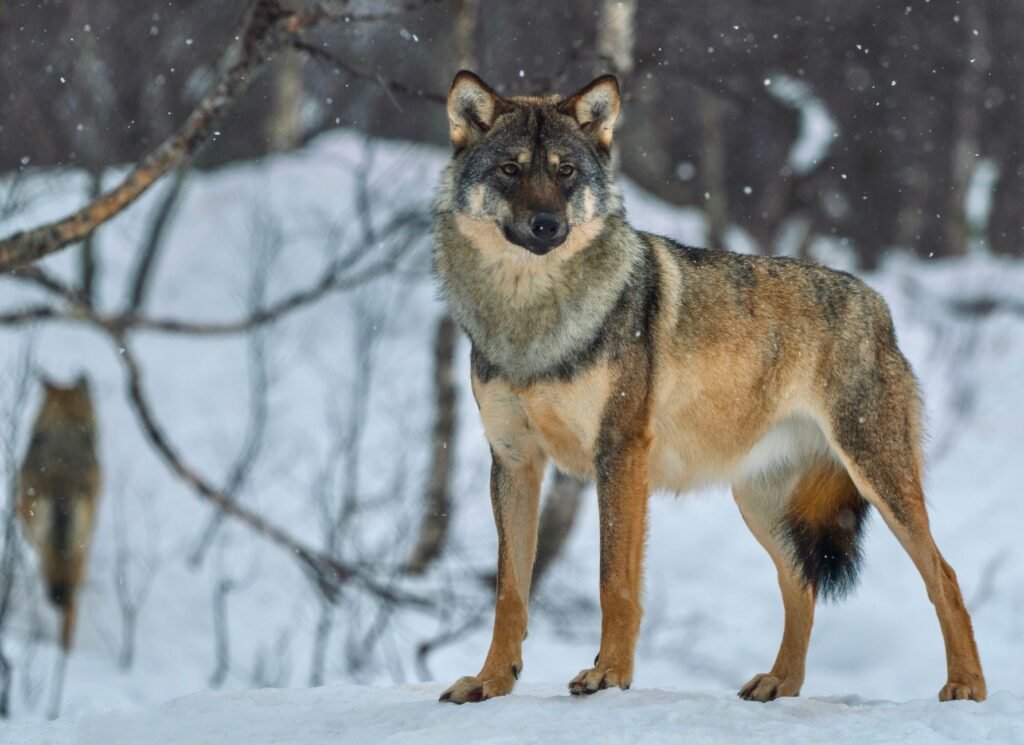
The answer is LOBO, four letters. It is Spanish for wolf and it has been a fixture in American grids for decades, largely because the letter pattern is so easy to build a corner around. Timber wolf is only one of several clue angles that all land on the same entry.
Timber wolf and gray wolf are the same animal
Timber wolf is a common name, not a species. It refers to the gray wolf, Canis lupus, and in North American usage it usually points at the forest dwelling populations of the northern United States and Canada rather than the tundra or plains animals. Naturalists have applied it loosely enough over the years that it now covers several regional populations rather than one tidy group.
That matters for solving in exactly one way. Because timber wolf is a nickname rather than a taxonomic rank, a setter can swap it for gray wolf, lone wolf or plain wolf without changing the answer. Prairie wolf is the exception worth flagging, since that old name belongs to the coyote and will send you somewhere else entirely.

Why the answer is LOBO and not WOLF
A crossword will not put the answer word in the clue, so a clue containing the word wolf cannot have WOLF as its answer. That single convention explains most of this entry. The setter needs a word meaning wolf that is not wolf, and Spanish supplies the shortest and most familiar one.
The letter pattern does the rest of the work. LOBO alternates consonant and vowel, both of its vowels are the same letter, and it ends on a vowel, all of which make it easy to cross in a tight corner where the down entries are already fixed. Constructors keep a mental shelf of short entries like this, and the wolf shelf is small, which is why the same four letters come round so often.
Where lobo entered American English
The word traveled north with Spanish in the Southwest and stayed. The Mexican wolf, the smallest gray wolf subspecies and the one native to that border country, is still widely called el lobo, and the name shows up in ranching history, in place names, and in the University of New Mexico’s teams, who are the Lobos. That regional attachment gives setters a second clue style: wolf, in Sonora, or wolf south of the border.
Spanish lobo descends from the Latin lupus, which is also the root behind lupine and sits inside the species name Canis lupus. The clue and the answer are cousins even when they look unrelated on the page.
The other wolf words grids keep on hand
Only LOBO answers this exact wording, but the rest of the wolf vocabulary appears often enough that memorizing it pays off:
| Letters | Entry | Typical clue |
|---|---|---|
| 4 | LOBO | Timber wolf; wolf, in Spanish |
| 4 | HOWL | Wolf sound |
| 4 | PACK | Wolf group |
| 5 | LUPUS | Wolf, in Latin |
| 6 | LUPINE | Wolflike |
LUPINE carries a trap of its own. It is also a garden flower, and the plant took its name from the same Latin wolf, so a clue about a tall spiked garden bloom and a clue about predator behavior both land on the same six squares. If a crossing gives you LUPINE and the clue seems to have nothing to do with animals, check whether you are in a garden rather than a forest.
When the clue means the basketball team
Written as one word, Timberwolves is the Minnesota NBA franchise, and a clue playing on that will signal it with a city, a league or a plural. If the wording hands you Minneapolis, the NBA or anything about a roster, you are not looking for an animal and no amount of wolf vocabulary will help.
The related trap is the plural itself. Timber wolves, two words, still wants the animal, and grids do use LOBOS at five squares. Read the capitalization and the spacing before you read the meaning, because in this clue those two details carry more information than the definition does.