
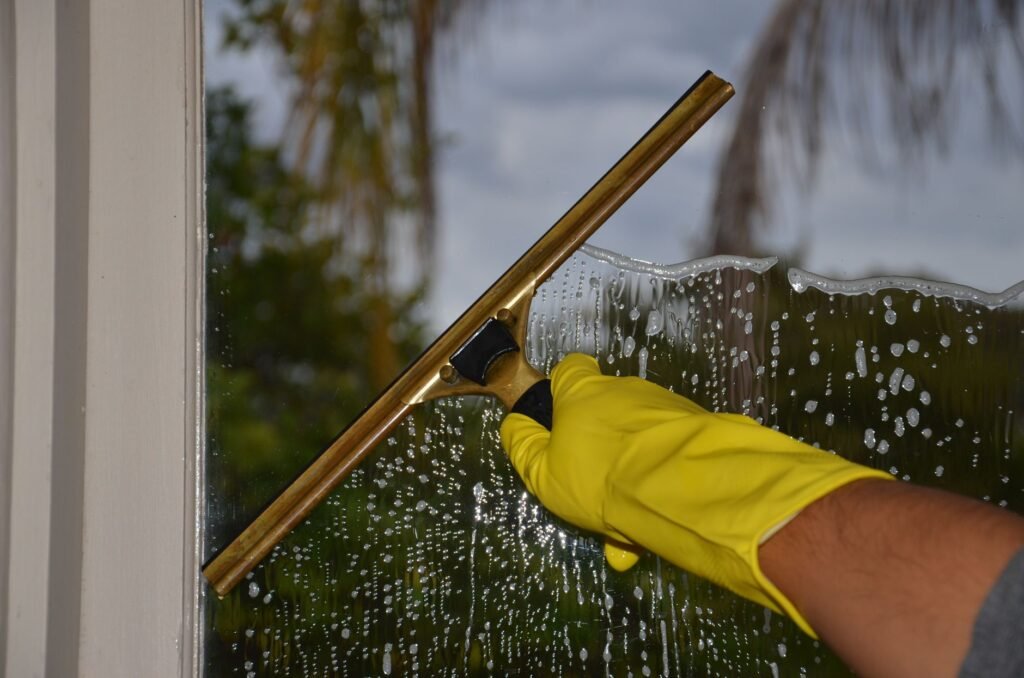
The best way to clean windows is to scrub the glass with warm water and a little dish soap, then pull it dry with a squeegee, wiping the blade after every stroke. Work on a cloudy day or while the glass is in shade, so the solution cannot dry into streaks before you remove it.
The squeegee method, pane by pane
Professional window cleaners rely on a scrubber and a squeegee because the rubber blade removes the water instead of smearing it around. The same kit works at home.
- Brush or vacuum loose dust and cobwebs off the frame and sill first, so they do not turn into mud.
- Run warm water into a bucket and add a modest squirt of dish soap. Too much soap leaves a film.
- Wet the glass with a sponge or a strip washer, scrubbing the corners and edges.
- Dry the top edge of the squeegee blade with a cloth, then pull across the top of the pane.
- Work down the glass in overlapping strokes, wiping the blade on a lint free towel after each one.
- Finish by wiping the edges and the sill with a microfiber cloth.
Match the squeegee width to your panes. A blade wider than the glass will not seal against it, which is where the missed stripes come from. Window screens are a separate job, and a sibling guide on this site covers them.
Picking a cleaner for the glass you have
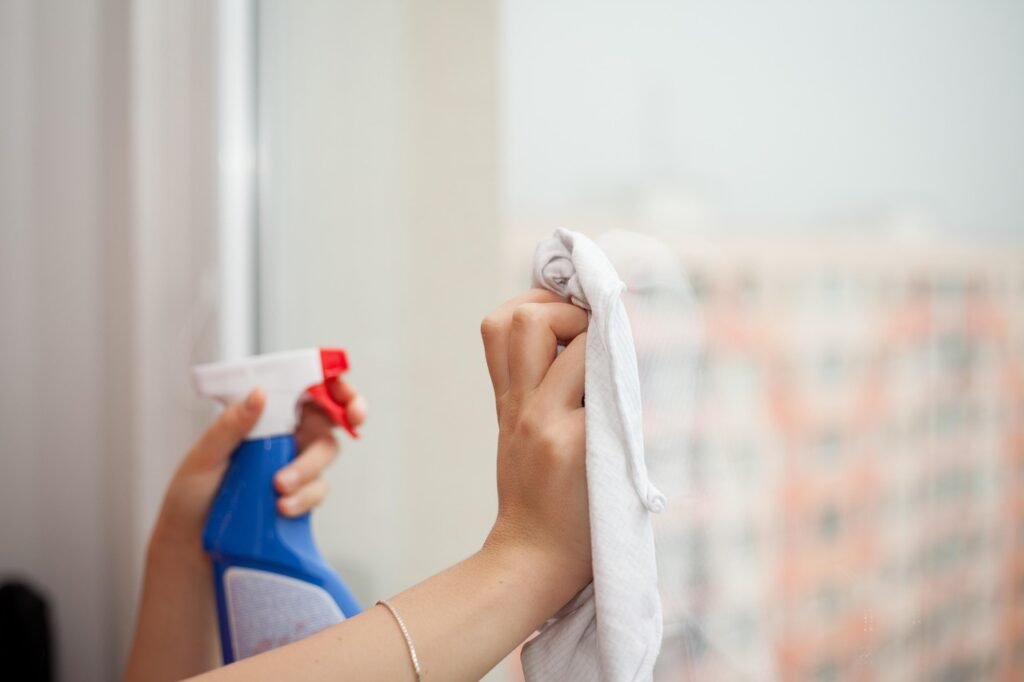
Most household glass does not need anything stronger than soapy water. The special cases are coated glass, tinted film, and windows that face hard water from sprinklers.
| Cleaner | Works well for | Watch out for |
|---|---|---|
| Warm water with a little dish soap | Routine cleaning, big windows, outside panes | Too much soap leaves a haze |
| White vinegar diluted in water | Light mineral film, inside glass | Keep it off natural stone sills |
| Store bought glass spray | Small panes, mirrors, quick touchups | Some contain ammonia, check film and coating instructions |
| Microfiber cloth with water only | Fingerprints and dust on clean glass | Cannot cut real grime |
If your windows have aftermarket tint or a factory coating, look up the care guide from the window or film maker before using anything with ammonia or an abrasive pad.
Why streaks show up once the glass dries
A streak is leftover residue. Either the cleaning solution dried on the glass before you removed it, or the tool left a trail of dirty water behind.
Sun is the most common cause, because warm glass evaporates water in seconds. A dirty or nicked squeegee blade is the second, since it skips over a line of water on every stroke. Heavy soap is the third. If you see streaks, wipe the blade, use less soap, and move to the shady side of the house, then come back to the sunny side later in the day.
Tell inside streaks from outside ones by wiping in different directions, sideways inside and up and down outside. You will know at a glance which side still needs work.
Hard water spots and paint specks that soap will not lift
White rings from sprinklers are mineral deposits. Soaking a cloth in diluted vinegar and laying it on the spot for a few minutes often softens them enough to wipe away.
Paint specks and stuck labels can come off with a razor scraper held at a low angle on wet glass. Before scraping, check the window maker’s instructions, since some tempered and coated glass can scratch, and a scratch cannot be buffed out.
Reaching upstairs and outside panes safely
An extension pole with a squeegee head handles most second floor glass from the ground. Tilt in sashes, common on double hung windows, let you clean the outside from indoors, so check whether yours release.
If you must use a ladder, set it on firm level ground, keep it away from power lines, and have someone hold it. Leave very high or hard to reach windows to a professional crew with the right equipment and insurance.
Frequently asked questions
Is newspaper good for cleaning windows?
Many people still use it for the final polish, and it can work on smooth glass. Modern newsprint ink and paper vary, though, and some leave gray smudges on frames or lint on the glass. A clean microfiber cloth or a squeegee gives more predictable results and can be washed and reused.
How often should you clean windows?
Most homes do a full inside and outside clean once or twice a year, often in spring and fall. Kitchen windows, glass doors and panes near the coast or a dusty road usually need extra attention. Spot clean fingerprints and pet nose marks whenever they start to bother you.
Are paper towels or microfiber better for windows?
Microfiber usually wins. It grabs dust and oils without leaving the lint that paper towels shed, and it can be washed and reused many times. Wash microfiber cloths without fabric softener, which coats the fibers and makes them smear instead of absorb.
How do you clean tinted windows?
Use a soft cloth with glass cleaner, or a squeegee with water and a few drops of dish soap, and follow the film maker's care guide. 3M's guide for its window films says not to wash newly filmed windows for 30 days while the adhesive bonds, and never to use knives, scrapers, brushes or abrasive pads on the film.
How do you clean window sills?
Vacuum or brush out loose dirt and dead insects first, then wipe the sill with warm water and a little dish soap and dry it well. For black mildew spots, the EPA says to scrub mold off hard surfaces with detergent and water and dry them completely. Keep vinegar off natural stone sills.