Yes, and the freezer is where a bagel belongs after day one. The one rule that decides everything is to slice each bagel before it goes in. A frozen bagel is a dense, unforgiving disc, and trying to force a knife through one is how people end up with a cut hand.
Slice them now, because you cannot slice them later
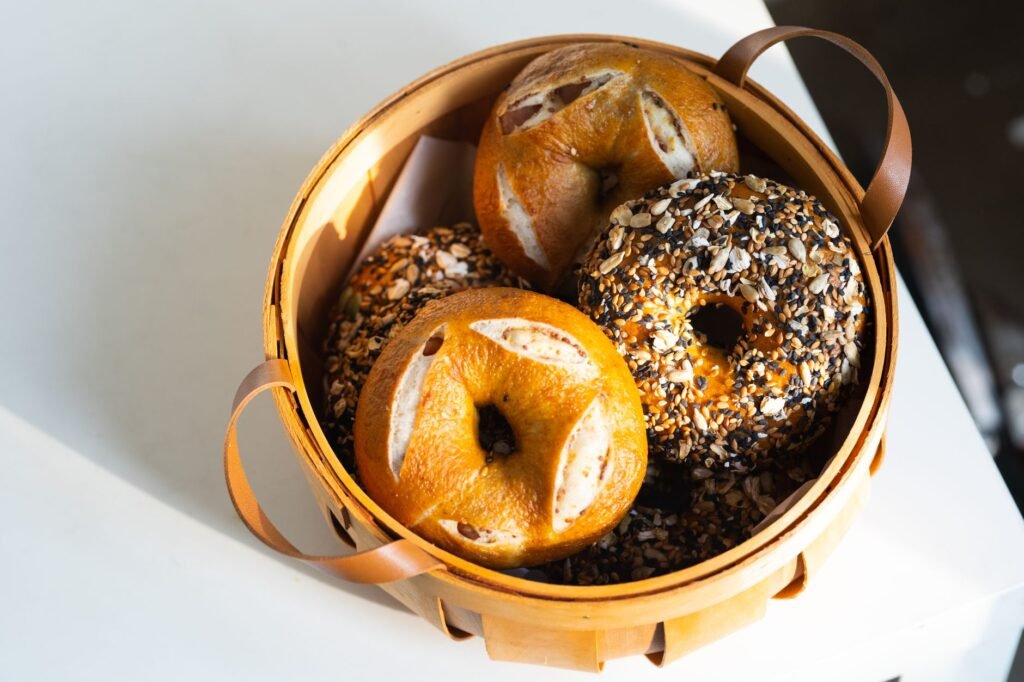
Bagels are boiled before they are baked, which gives them a tight, glossy skin and a crumb far denser than sandwich bread. That density is the whole appeal warm and the whole problem frozen. There is no soft interior for a blade to find.
Cut each bagel in half through the middle while it is still fresh, then freeze the halves together as a pair. Slicing costs you nothing at that stage and it means every future bagel goes straight from the bag into the toaster with no planning at all.
A bread bag on the counter is the alternative most people default to, and it is the worst option available. Bagels go stale faster than loaf bread because there is so little fat in them, and the refrigerator speeds that up rather than slowing it down. Anything you are not eating today is better off frozen.
Day one bagels and day three bagels are different problems
| Variety | How it freezes | Note |
|---|---|---|
| Plain, sesame, poppy | Excellent | Loose seeds shed, keep the bag sealed |
| Everything | Excellent | Garlic and onion scent travels, double wrap |
| Cinnamon raisin | Very good | Raisins stay soft, sugar helps the crumb |
| Egg bagel | Very good | Extra fat keeps it tender |
| Cheese topped | Good | Topping can slide off when toasted |
| Already stale, day three | Fair | Freezing preserves staleness, it does not cure it |
That last row is the one people misunderstand most. The freezer holds a bagel exactly where it was when it went in. A slightly dry bagel comes out a slightly dry bagel, so freeze them on the day you bring them home rather than after you have decided they are past it.
Wrapping so the cut faces stay clean
- Cut each bagel in half and press the two halves back together so the cut faces are touching.
- Wrap the pair in plastic film, snug against the crust with no loose pockets of air inside.
- Drop the wrapped pairs into a freezer bag and press it flat before sealing to force the last of the air out.
- Label the bag with the variety and the date. Frozen bagels all look alike under frost.
- Lay the bag flat toward the back of the freezer rather than in the door, where warm air gets in every time you open it.
Foil works instead of plastic film if you prefer it, and a vacuum sealer is better than either. What matters is that the two cut faces are protected, because those are the exposed surfaces where frost collects.
Toast from frozen, never thaw on the counter
Put the frozen halves straight into the toaster on a low to medium setting and run them through twice rather than once on high. The first pass drives the ice off and warms the crumb, the second pass browns it. One long blast on the highest setting scorches the cut face before the middle has caught up.
For a whole bagel you want soft rather than toasted, sprinkle it with a few drops of water, wrap it in foil, and warm it in the oven for about fifteen minutes. That reintroduces the steam the bagel lost and gets you closer to bakery texture than a toaster ever will.
The cut faces are also how you judge age, which is more useful than the date on the bag. As long as they still look like bread, the bagel toasts up well. Once you can see a pale, dried, slightly fuzzy patch of frost across the cut surface, the flavor has started leaving, and that usually shows up somewhere around three months. Bagels at that stage are still worth using, just not for breakfast. Blitz them into breadcrumbs, cube and bake them into croutons, or slice them thin for bagel chips.