
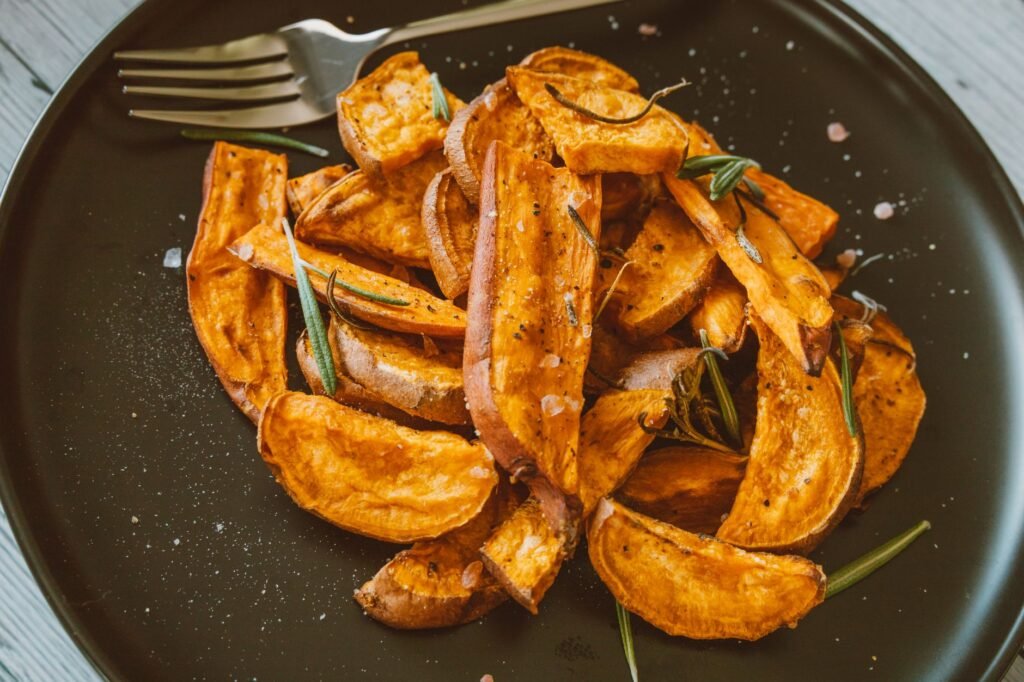
Yes, as long as you cook them before they go in. Raw sweet potato is the one form that fails outright, coming back gray, watery and grainy no matter how carefully you wrap it. Roasted, mashed, blanched in cubes or parcooked into fries, it holds up for close to a year.
Raw is the one form that fails
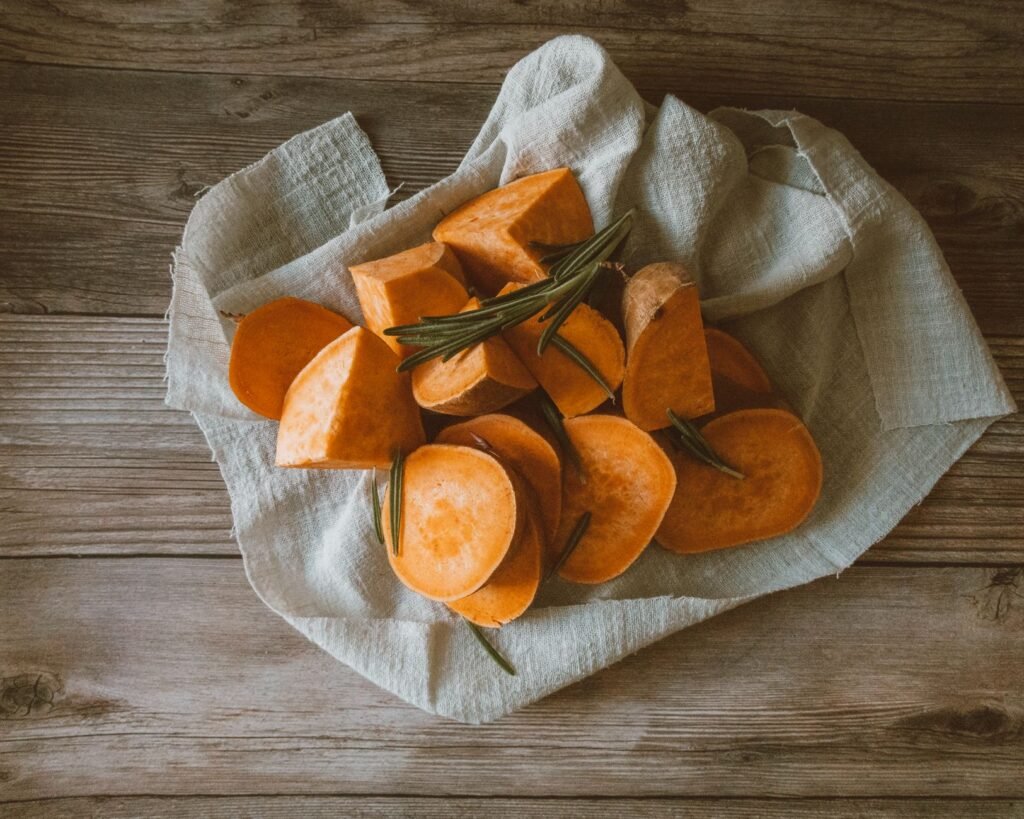
A sweet potato is mostly starch suspended in water inside rigid cells. Freeze that raw and the water expands into crystals that puncture the cell walls, and when it thaws the starch and the water go their separate ways. You get a pool of liquid and a chalky solid that will not come back together in any pan.
Heat changes the outcome completely. Cooking gelatinizes the starch, meaning it absorbs the water and holds onto it in a soft network that tolerates ice forming inside it. That is the entire reason a mash or a roasted cube freezes beautifully while a raw one does not.
The second raw problem is color. Cut surfaces go from orange to dull brown within minutes of hitting air, and the cold slows that reaction but never halts it. A bag of raw cubes left for a few months comes out looking distinctly unappetizing even before you taste the texture.
Mash, roast, cubes or fries, pick before you start
| Form | How it freezes | Best later use |
|---|---|---|
| Mashed, cooled | Excellent | Side dish, casserole, pie filling |
| Roasted wedges or cubes | Very good | Bowls, sheet pan dinners, salads |
| Blanched raw cubes | Good | Soups, stews, curries, hash |
| Parcooked fries | Good | Oven or air fryer, never thawed |
| Baked whole, skin on | Very good | Split, reheat and top |
| Raw, any cut | Poor | Skip this entirely |
Purée is the most flexible of the lot, because it reheats into a side dish, thins into soup, or goes straight into pie and bread batters with no adjustment. If you are freezing a big harvest and have no specific plan, mash is the safe choice.
The parcook and chill, step by step
- Peel and cut to the shape you actually want later, since a frozen piece cannot be recut.
- Cook it partway. Cubes go about three to five minutes in boiling water, fries about four minutes, and a mash gets cooked all the way through.
- Stop the cooking hard in a bowl of ice water, giving it roughly as long as the boil took, then drain.
- Dry the surfaces thoroughly on a towel. Surface water becomes frost, and frost is what welds pieces into a block.
- Cool a mash completely, and stir in a spoonful of citrus juice to hold the color.
- Spread pieces on a tray and freeze them separated, then bag them. Pack mash flat in bags with the air pressed out.
- Date and label every bag, including the cut, because cubes and fries want different cooking later.
Thawing, and the dishes that hide a softer texture
Cubes and fries never get thawed. Tip them frozen onto a hot oiled tray or into a hot skillet so the surface water flashes off before the inside softens. Thaw them first and they collapse into paste the moment they meet heat.
Mash is the opposite. Move it to the refrigerator overnight, then reheat it gently with a splash of milk or a knob of butter and beat it hard to bring the texture back together. Some liquid separating out is normal and stirring reabsorbs it.
Frozen sweet potato is at its best in dishes where softness is already the point: soups blended smooth, curries, shepherd’s pie toppings, muffins and quick breads, pancake batter, or baby food style purées. Save the crisp roasted wedge for fresh potatoes.
About timing, the thing that ends a bag of frozen sweet potato is usually not the calendar at all. Most modern freezers run a defrost cycle that warms slightly and then refreezes, and every one of those cycles pulls a little more water out of the food and deposits it as frost inside the bag. Ten months is a fair expectation in a tightly sealed bag, and much less in one that was half open. If you open a bag and find a solid ice sheet on top of the food, that cycle is what you are looking at.