
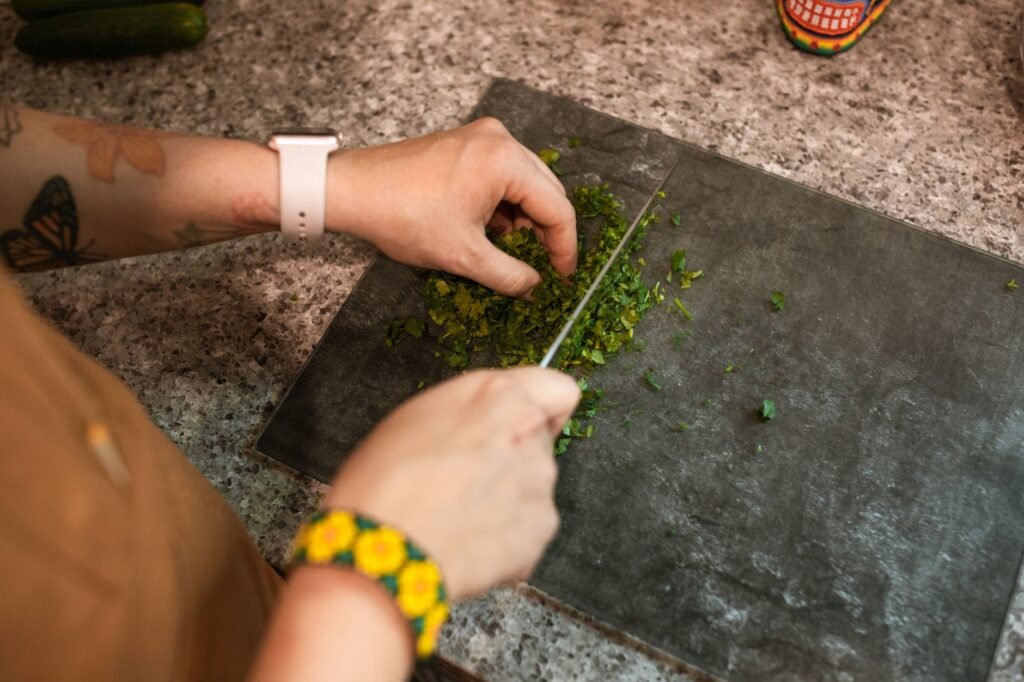
Yes, and it beats watching a bunch rot in the crisper, but frozen cilantro is a cooking herb, not a garnish. The leaves are thin and mostly water, so they darken and go floppy the moment they thaw. The flavor holds up far better than the looks.
Why Cilantro Goes Limp and Loses Punch

Two separate things happen in the freezer. First, the physical one: a cilantro leaf is a thin sheet of watery cells, and once ice crystals rupture those cells there is no structure left to spring back. That is why a thawed sprig droops instead of standing up on a taco.
Second, the chemical one. What you smell in fresh cilantro is a set of light, fast-evaporating compounds that drift away over time and vanish quickly with heat. Freezing slows that drift considerably, which is why a frozen cube still smells like the real thing, while dried cilantro smells like almost nothing.
Those two facts set the rules. Protect the leaves from air, skip any step involving heat, and plan to use the result somewhere its appearance does not matter.
Three Ways to Freeze It
| Method | How it works | Best for |
|---|---|---|
| Loose chopped leaves in a bag | Fastest, no equipment, leaves darken most | Soups, chili, rice, anything simmered |
| Cubes in oil or water | Liquid shields the herb from freezer air | Curries, sofrito bases, pan sauces |
| Blended paste, with garlic or lime | Cell walls already broken, so flavor releases fast | Marinades, chutney, dressings, chimichurri style sauces |
Oil beats water for anything you will cook in fat, since the cube melts straight into the pan with no splatter. Water cubes suit soups and broths, where the extra liquid disappears.
The Oil Cube Method Step by Step
- Wash the bunch and dry it thoroughly. Surface water builds frost inside the tray.
- Trim off the thick lower stalks. Keep the thin stems, which carry plenty of aroma.
- Chop coarsely, or pulse in a small processor if you want a paste.
- Pack the herb into an ice cube tray, filling each well about three quarters full.
- Pour a neutral oil over the top until the green is covered, then press down to release trapped air.
- Freeze solid, pop the cubes out, and store them in a labeled bag so the tray goes back to making ice.
Label the bag with the oil you used. Olive oil, neutral oil, and coconut oil each steer a cube toward different dishes, and once frozen they all look identical.
Cooking With Frozen Cilantro
Add it late. Those volatile compounds burn off in minutes at a simmer, so a cube dropped in at the start leaves you with vaguely green soup. Stir it in near the end, off the heat where possible, and you get most of the fresh aroma back.
Good homes for it include pozole, black bean soup, coconut curry, salsa verde that is going to be cooked, rice, marinades for chicken or fish, and any braise that wants a green lift at the finish. Keep a live bunch or a pot on the windowsill for the raw work, like topping tacos or finishing a bowl of pho.
On storage, nothing microbial grows in a solidly frozen cube, so the months you count are about aroma fading, not spoilage. Cubes stay vivid for a good while and then quietly turn generic, which is your signal to make a fresh tray.