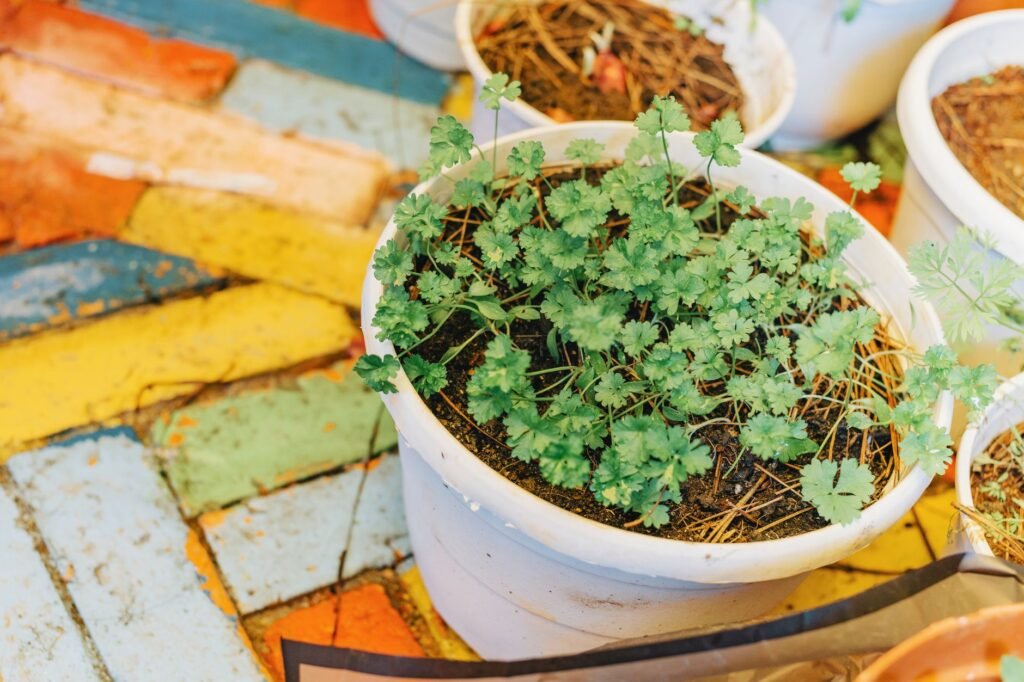
Grow cilantro by sowing seeds directly where they will stay, in a sunny spot during cool spring or fall weather, and sowing a fresh row every few weeks. The plant bolts into flowers quickly once days get long and hot, so getting the timing right and sowing again and again beat any fertilizer or trick.
Cool weather decides how long cilantro lasts
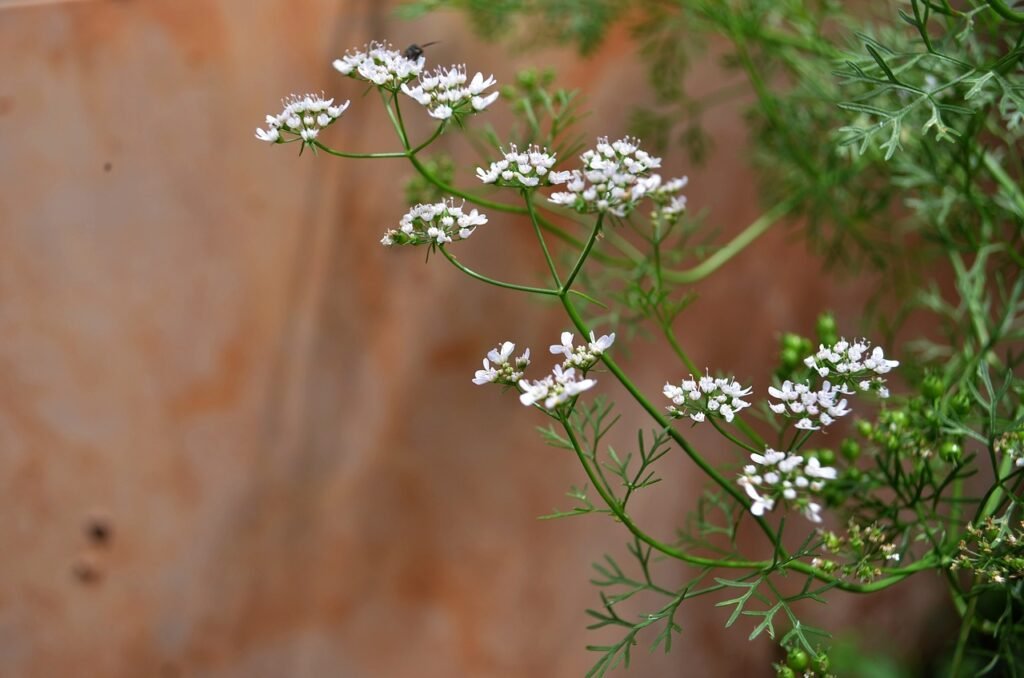
Cilantro is a short-lived annual. In cool weather with shorter days it can keep making leaves for weeks or months. In midsummer it rushes to finish its life cycle, and according to Oregon State University Extension it typically bolts into small white flowers and sets seed within four to six weeks. Once that tall flower stalk appears, new leaves become ferny and sharper tasting.
That’s why gardeners plant it early in spring and again in late summer or early fall, when temperatures cool and days shorten. Mature plants tolerate light freezes, which gives a fall sowing some breathing room as the weather turns.
Sowing cilantro seeds, step by step
Cilantro grows a long taproot, which makes it hard to transplant, so seed it right where it will grow.
- Pick a spot with full sun in cool seasons. In warm areas, choose a place with light afternoon shade.
- Loosen fertile, well-drained soil and rake it smooth.
- Sow 10 to 15 seeds per foot of row and cover them with about half an inch of soil.
- Keep the soil evenly moist until seedlings appear. OSU notes the seeds germinate at soil temperatures of 55 to 68 degrees Fahrenheit.
- Thin seedlings to about 8 inches apart, with rows 18 to 24 inches apart.
- Sow another short row every three to four weeks for a steady supply.
Those spacing and temperature figures come from OSU Extension’s cilantro guide. Many seed catalogs also sell slow-bolt varieties, which buy you extra time before flowering but don’t stop it.
Growing cilantro in a pot
Containers work well, especially if you want cilantro near the kitchen door. Choose a pot deep enough for the taproot, fill it with a good potting mix, and scatter the seeds directly on top rather than starting them in a tray. Keep the mix evenly moist, since pots dry out faster than garden beds and drought stress pushes the plant to flower sooner.
Move the pot into shade on hot afternoons. That flexibility is the big advantage of container growing, because you can chase cooler conditions as the season changes. OSU Extension recommends a cool or semi-shaded location for cilantro during the warm season, and a pot lets you find one without replanting.
Make sure the container has drainage holes. Water when the top of the mix starts to feel dry, and water deeply enough that some runs out of the bottom. Crowded seedlings compete for water and light, so thin a pot the same way you would a garden row, snipping extras at soil level and tossing them into your next salad.
Picking cilantro so the plant keeps producing
| Stage | What to harvest | How |
|---|---|---|
| About 6 inches tall | Outer leaves | Cut outer stems near the base and leave the center growing |
| Full bushy plant | Leaves and tender stems | Take a few stems from each plant so it can regrow |
| Flower stalk forming | Last good leaves | Harvest heavily, since flavor fades after bolting |
| Seed heads turning brown | Coriander seed | Cut stalks before seeds drop and dry them in a paper bag |
University of Illinois Extension suggests starting to cut leaves once plants reach about 6 inches tall. Young, tender leaves have the best flavor, so frequent small harvests beat waiting for a big plant.
What to do once cilantro bolts
Don’t rip it out right away. The seeds that form after the white flowers are coriander, the spice. Let the seed heads turn brown, then snip them off before they shatter, and dry them indoors. Some will fall anyway and may come up on their own when the weather cools.
Save a few dry seeds for your next sowing, and grind the rest for cooking. OSU Extension adds that the roots, used in some Thai cooking, are best dug in autumn.
Frequently asked questions
Can you grow cilantro indoors year round?
You can grow it on a bright, sunny windowsill or under a grow light, but indoor plants still bolt after a few weeks to a couple of months. Treat it like the outdoor crop and sow a fresh pot every few weeks so there is always a young plant ready to cut.
Why is my cilantro turning yellow?
Yellowing lower leaves often point to soggy soil, poor drainage or a plant that is aging toward flowering. Let the top of the soil dry slightly between waterings, make sure the pot drains freely, and pull older plants once they bolt. A fresh sowing is usually faster than rescuing a tired plant.
Is coriander the same plant as cilantro?
Yes. In the United States, cilantro usually means the fresh leaves and stems, while coriander refers to the dried seeds used as a spice. Both come from the same plant, so letting a bolted cilantro plant go to seed gives you a free harvest of coriander.
How long does cilantro take to grow?
Plan on roughly 45 to 70 days from sowing to a leaf harvest, the range NC State's school garden guide gives. Seeds usually sprout in 7 to 10 days at 65 to 70°F, according to Johnny's Selected Seeds, and you can start cutting outer leaves once plants are about 6 inches tall.
Is cilantro easy to grow?
Yes, in cool weather. University of Illinois Extension says cilantro is easily grown from seed sown right where it will stay, though its taproot makes it hard to transplant. Heat is the problem, since long, hot days push it to flower quickly, so sow a fresh batch every 3 to 4 weeks.