
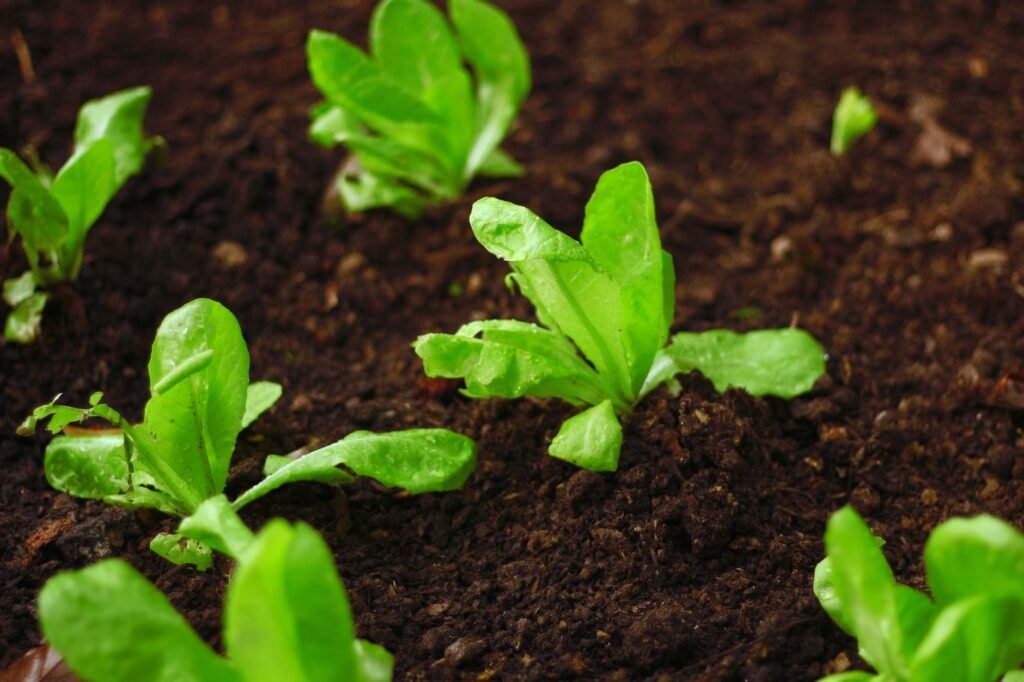
Grow lettuce in cool weather by sowing seed 1/4 to 1/2 inch deep in loose, moist soil, keeping it evenly watered, and picking leaves before summer heat makes the plants bolt. Leaf types are ready roughly 50 to 60 days from seed, while heading types take longer.
How a lettuce plant grows, from seed leaves to seed stalk
A cool season crop, lettuce spends most of its life as a low rosette of leaves. Leaf types stay open. Romaine, butterhead and crisphead types keep folding new leaves inward until they form a head. That leafy stage is the part you eat, and it lasts only as long as the weather stays mild.
As days lengthen and summer heat arrives, the plant switches to reproduction. A stem shoots up from the center, a change gardeners call bolting, and the leaves turn bitter and stop coming. North Carolina State Extension notes that high temperatures of 70 to 80°F and dry soil can both trigger it. Cold is less of a threat, and young plants handle temperatures down to 32°F without serious damage.
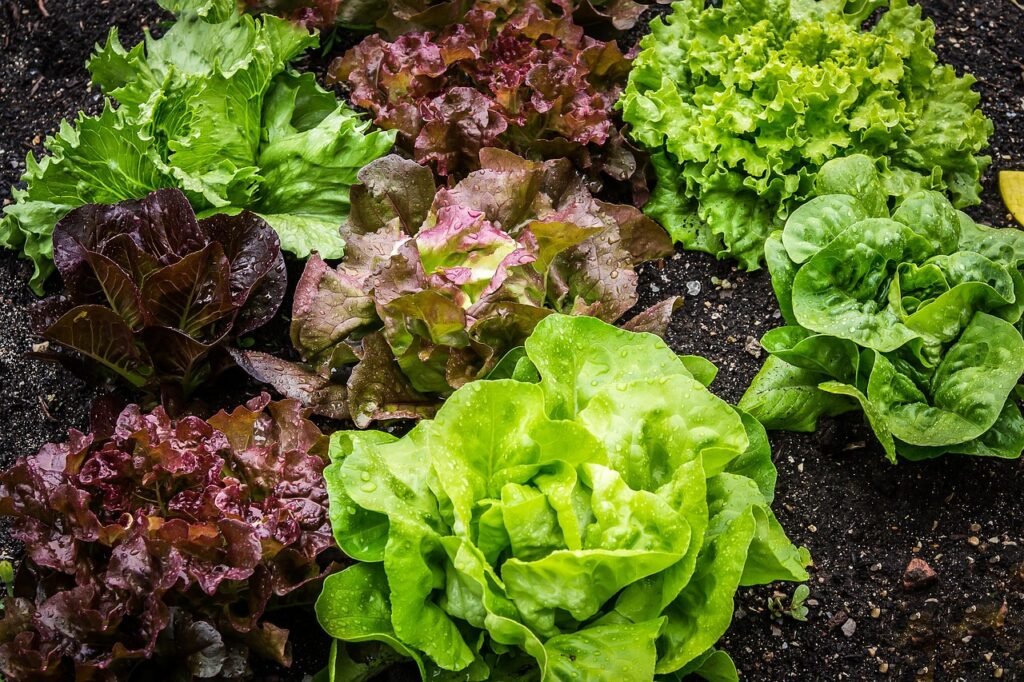
Lettuce types and their time to harvest
| Type | Also sold as | Growth habit | When to pick |
|---|---|---|---|
| Leaf | Looseleaf | Open rosette, no head | 50 to 60 days from seed, 30 to 45 from transplants |
| Romaine | Cos | Upright, elongated head | Early heading stage |
| Butterhead | Bibb, Boston | Loose, soft head | Early heading stage |
| Crisphead | Head lettuce | Firm, dense head | 70 to 80 days from seed, 60 to 70 from transplants |
Timings vary by variety, and the seed packet lists the days to maturity for the one you bought. The University of Maryland Extension lettuce guide puts the whole range at 40 to 80 days depending on type, which is why leaf lettuce is the easiest start.
Sowing lettuce where and when it will thrive
- Check the soil. Lettuce seed can germinate in soil as cool as 45°F, and Wisconsin Extension suggests reading a soil thermometer at 2 inches deep for seeds. Germination drops once soil passes 80°F.
- Sow outdoors about two weeks before your last spring frost, or start seed indoors six to eight weeks before it. The local frost date is available from your county extension office.
- Plant seed 1/4 to 1/2 inch deep and keep the surface moist. Seedlings usually emerge in 7 to 10 days.
- Thin once plants have three or four true leaves. Leaf, romaine and butterhead types need 4 to 10 inches between plants, crisphead 12 to 15 inches.
- Sow another short row every two weeks for a steady supply instead of one big glut.
- Sow again in late summer for a fall crop once the worst heat has passed.
Water, shade and heat stress in the lettuce bed
Shallow roots mean lettuce dries out fast. Utah State University Extension recommends 1 to 2 inches of water per week, and frequent light watering keeps growth quick and leaves tender. Mulch helps hold that moisture as the weather warms.
Lettuce tolerates partial shade, around 4 to 6 hours of direct light a day, and grows well in full sun in spring and fall. That flexibility is useful in late spring, when afternoon shade from taller crops or a shade cloth can delay bolting. Containers work too, as long as they hold at least 2 quarts and are 6 to 8 inches deep.
Picking lettuce leaf by leaf or all at once
Leaf lettuce can be picked as soon as plants reach 5 to 6 inches tall. Take outer leaves and let the center keep growing, or cut the whole plant a little above the soil at 6 to 10 inches tall and leave the base in place. That cut-and-come-again method usually gives a second harvest 2 to 3 weeks later.
Heading types are harvested whole. Crisphead is ready when the head feels firm, while butterhead and romaine are best in the early heading stage. Once you see a central stalk starting to stretch, harvest everything that is left, since the leaves only get more bitter from there.
Frequently asked questions
Does lettuce grow back after you cut it?
Leaf lettuce does. Cut the plants a little above the soil when they reach 6 to 10 inches, leaving the base in the ground, and University of Maryland Extension notes they are usually ready for a second cutting 2 to 3 weeks later. Heading types are normally harvested once, as a whole head.
Why does homegrown lettuce taste bitter?
Bitterness usually follows heat or dry soil, and it gets stronger once the plant starts sending up a seed stalk. Utah State University Extension suggests washing the leaves and refrigerating them for a day or two, which removes much of it. Sow earlier or add afternoon shade next season.
How cold can lettuce plants handle?
Young lettuce plants tolerate temperatures down to 32°F without serious damage, according to Utah State University Extension, which is why lettuce can go in before the last spring frost. A hard freeze below that can damage leaves, so cover the bed with row cover or an old sheet when a cold snap is forecast.
How do you grow romaine lettuce?
Grow it like other lettuce, sowing seed 1/4 to 1/2 inch deep in cool spring or fall weather, or setting out transplants. Thin the plants to stand 4 to 10 inches apart. University of Maryland Extension says romaine is ready when its leaves overlap into a fairly tight, upright head about 6 to 8 inches tall.
How do you grow lettuce indoors?
Sow leaf lettuce in a container of moist potting mix and set it in a sunny south facing window or under grow lights hung a few inches above the plants. Keep the soil evenly moist and the room cool, ideally 65 to 70°F. Once the plants fill in, cut the outer leaves and let the centers keep growing.