Spread garlic butter on a halved loaf and bake it at 425°F for about 10 minutes, until the edges turn golden. A foil-wrapped loaf at 350°F gives a softer, steamier center, and a short, closely watched finish under the broiler browns the top if you want more color.
Picking a loaf that holds up to garlic butter
French bread and baguettes are the usual choice for good reason. The crust is firm enough to hold soft butter without collapsing, and the open crumb soaks some of it up while the edges crisp. Italian loaves are softer and give a chewier result. Ciabatta works, though butter drips through its big holes, so spread it thinner.
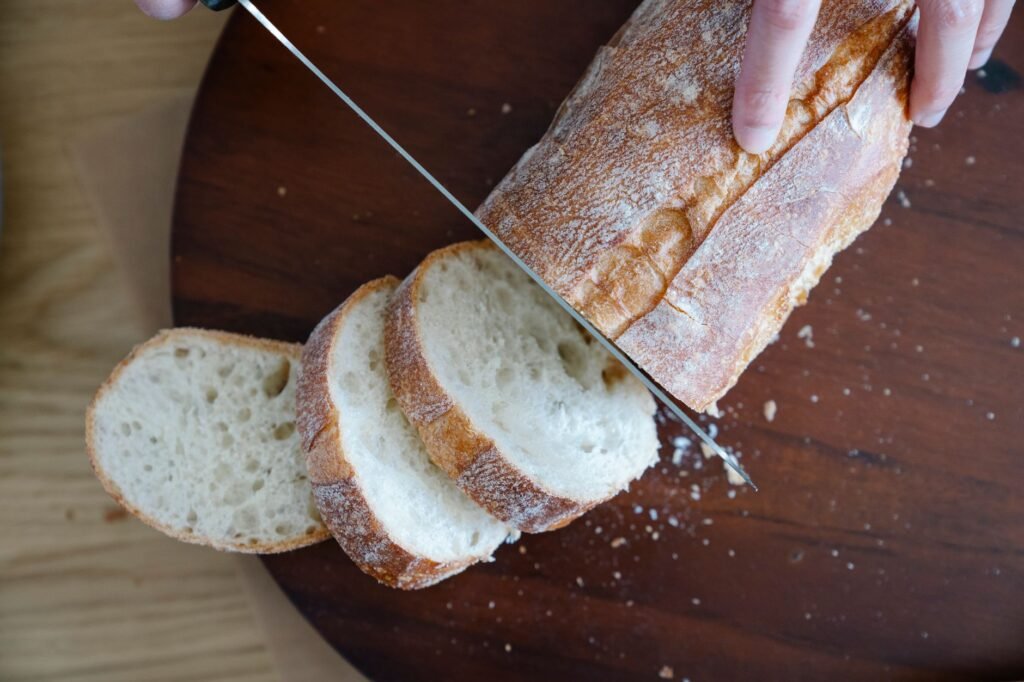
Day-old bread is fine and often better, since a slightly dry crumb toasts faster. Sliced sandwich bread is thin enough to burn quickly, so when sandwich slices are the only bread in the house, drop the heat or watch it closely. Whatever the loaf, cut it lengthwise so you have two long cut faces to cover.
Garlic butter ratio for one baguette
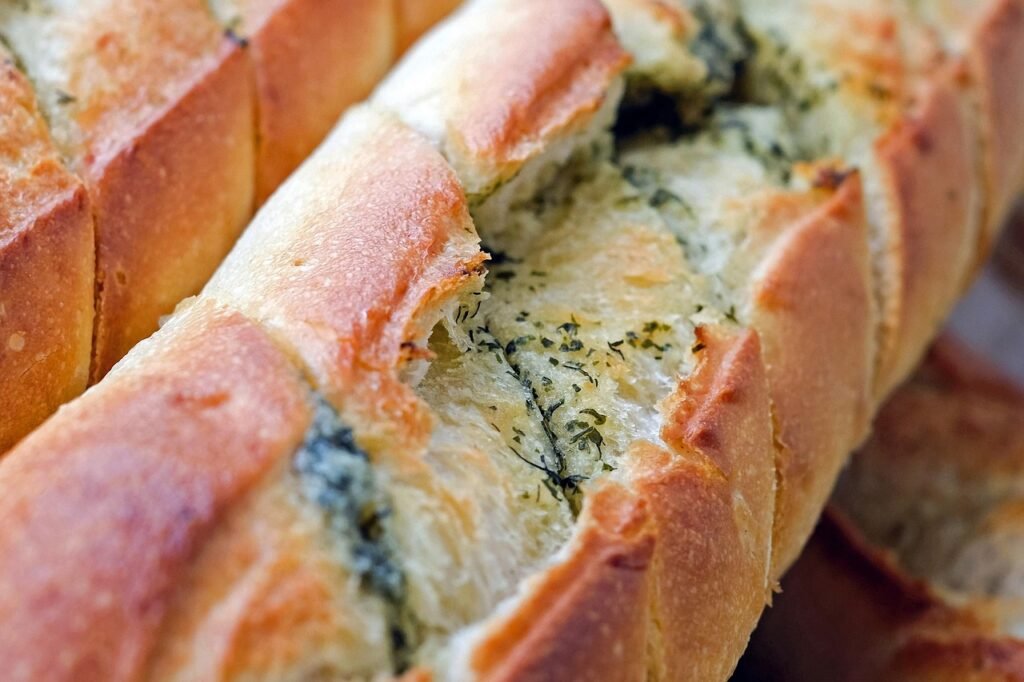
A Purdue Extension 4-H garlic bread recipe makes a good base for one baguette or French loaf. It mixes 4 minced garlic cloves into 1/2 cup (one stick) of softened butter with 1/2 teaspoon of kosher salt, 2 tablespoons of chopped fresh parsley and 1/4 cup of grated parmesan.
Softened butter spreads evenly and stays on the surface, while melted butter soaks deep and can leave the middle greasy. If your butter is salted, leave out the added salt and taste the mix. Dried parsley works in a pinch, and the same recipe converts at 1 teaspoon of dried herbs for every tablespoon of fresh. Finely minced or grated garlic spreads more evenly than chunky pieces, which can burn on the surface.
Oven temperature and time for each style of garlic bread
| Style | Oven setting | Approximate time | Result |
|---|---|---|---|
| Open halves, butter side up, on a foil-lined sheet | 425°F | About 10 minutes | Toasty with golden edges |
| Slices brushed with olive oil, garlic and herbs | 350°F | About 10 minutes | Lighter, drier crunch |
| Whole loaf, sliced not quite through, wrapped in foil | 350°F | 10 to 15 minutes wrapped | Soft, steamy center, pale crust |
| Any style, finished under the broiler | Broil | Watch it the whole time | Browned, bubbly top |
Ovens run differently, so start checking a couple of minutes early the first time. For a wrapped loaf, open the foil for the last few minutes if you want the top to crisp.
Baking garlic bread from start to finish
- Heat the oven to 425°F and line a large baking sheet with foil.
- Mix the softened butter with the garlic, salt, parmesan and parsley until evenly combined.
- Cut the loaf in half lengthwise, then crosswise if needed to fit the pan.
- Spread the cut sides generously, all the way to the edges, since bare edges burn first.
- Bake cut side up on the middle rack for about 10 minutes, until the edges are golden.
- For extra color, switch to broil for the last moments and stay at the oven door.
- Let it rest a minute, then slice into servings.
Fixing garlic bread that turns out soggy or scorched
A soggy center usually comes from too much melted butter or a loaf left wrapped in foil too long. Use softened butter, spread a thinner layer, and unwrap for the final minutes. Burned edges with a pale middle mean the rack is too close to the heat, so move it to the center.
Bitter, dark flecks on top are burned garlic. Mince it finer, press it into the butter rather than scattering it on top, and add any extra cheese near the end. For a sweeter, milder flavor, roasted garlic or garlic confit can replace raw garlic in the same butter.
For a dinner party, you can spread the butter on the loaf a few hours early, wrap it well, and keep it in the refrigerator until the oven is hot. Bread that goes in cold from the fridge may need a couple of extra minutes, so judge by the golden edges rather than the clock.
Frequently asked questions
Should garlic butter be made with salted or unsalted butter?
Either works. The 4-H recipe adds half a teaspoon of kosher salt to a stick of butter, which assumes unsalted. If you only have salted butter, leave the extra salt out, taste the mixture, and add a pinch only if it still needs it once the parmesan is in.
How do you keep garlic bread from burning on the bottom?
Bake on the middle rack rather than the lowest one, and use a light-colored sheet pan, since dark pans brown the underside faster. Lining the pan with foil also makes cleanup easier. If the bottom still darkens first, slide a second baking sheet underneath to buffer the heat.
Can you use garlic powder instead of fresh garlic?
You can, and it spreads evenly with no raw bite, though the flavor is flatter and less sharp than fresh. Stir it into the softened butter so it hydrates before baking. Start with a small amount, taste, and add more, because powder is concentrated and easy to overdo on one loaf.
How do you make garlic bread with regular bread?
Spread softened garlic butter thinly over slices of sandwich bread, lay them on a foil-lined baking sheet and bake until the edges turn golden. Thin slices brown and burn much faster than a split baguette, so lower the heat or watch them closely, and pull them as soon as the edges color.
Can dogs eat garlic bread?
No. The ASPCA lists garlic as toxic to dogs, and eating it can damage their red blood cells, with signs such as vomiting, weakness and panting. Keep garlic bread out of reach, and call your veterinarian or the ASPCA Animal Poison Control Center if your dog eats some.
How do you reheat garlic bread?
Warm it in the oven. Wrap a loaf or large pieces loosely in foil and heat until warmed through, then open the foil for the last few minutes so the top crisps again. Individual slices can go directly onto a baking sheet and need only a few minutes, so check them early to keep the edges from burning.