
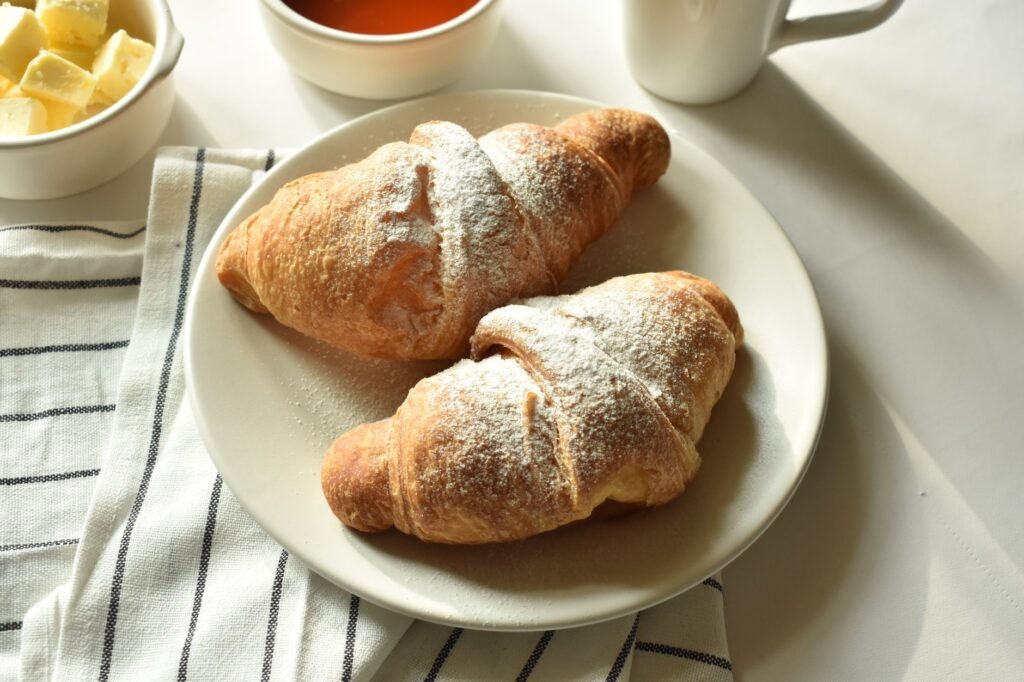
Yes, croissants freeze very well, and the reheat matters more than the wrap. A croissant is dough folded around cold butter dozens of times, and the freezer leaves those layers intact. What ruins them is a microwave, which steams the butter out and leaves you with a damp, chewy pastry.
Butter in layers is the thing you are protecting

The flake in a croissant comes from geometry, not from freshness. Sheets of butter sit between sheets of dough, and in a hot oven the water in that butter turns to steam and pushes the sheets apart. Freezing does nothing to that structure. The layers are still there the day you pull the pastry out.
What the freezer does take is crispness, and it takes it through moisture. Frost forms on any exposed surface, then melts into the crust as the pastry warms. That is why a croissant left out on the counter to thaw tastes limp while the same croissant pushed straight into a hot oven tastes almost new.
Butter also picks up smells faster than most foods, which is a real problem in a freezer that also holds onions and fish. Two layers of wrapping is not fussiness here, it is the difference between breakfast and a pastry that tastes like last week’s dinner.
Baked or unbaked, decide before you wrap
| What you have | How it freezes | How it comes back |
|---|---|---|
| Bakery croissant, already baked | Excellent | Hot oven, no thawing, no cover |
| Homemade, baked that morning | Excellent, freeze once cooled | Same, and it beats a day old one |
| Raw shaped dough, unproofed | Very good for a few weeks | Thaw and proof for hours, then bake |
| Store bought crescent roll tube | Poor | The leavening fades, bake it instead |
| Filled with pastry cream | Fair | Expect a softer base underneath |
Cooling matters on the baked side. A warm croissant sealed in plastic traps its own steam and freezes with a soft, tacky surface it never recovers from, so let them sit uncovered until they are cool to the touch first.
The oven revival, step by step
- Wrap each cooled croissant in plastic film on its own, then group four or five into a freezer bag and press the air out.
- Lay the bag flat rather than standing it upright, because croissants crush easily and a squashed one never puffs back.
- To serve, heat the oven to a moderately hot setting, somewhere around what you would use for baking cookies.
- Put the frozen croissants straight onto a bare tray. No thawing, no foil, no covering of any kind.
- Give them roughly eight to twelve minutes, until the outside is audibly crisp when you tap it and the middle is warm.
- Let them sit two minutes before eating so the inside finishes and stops being gummy.
An air fryer works on the same principle at a lower temperature and a shorter time, and a toaster oven does too. The only appliance to avoid entirely is the microwave.
How long a croissant stays worth eating
You will taste the decline long before any date on the bag tells you about it. At around two months a well wrapped croissant is still excellent. By four or five months the butter starts tasting flat and slightly waxy, the way old shortbread does, and no amount of oven time brings the aroma back.
Raw shaped dough has a shorter run than baked pastry, because the yeast weakens in the cold and a batch frozen too long rises lazily or not at all. Use frozen raw croissants within a few weeks and you will avoid that disappointment.
Once a croissant has been reheated it is finished. It should not go back into the freezer, and the second day will not be kind to it. Turn leftovers into something that wants a stale pastry instead: croissant bread pudding, an almond croissant soaked in syrup and rebaked, or thick slices toasted and used as the bread in a ham sandwich.