

Yes, and it works well as long as you plan to cook with it. Frozen garlic comes out milder, sweeter and softer than fresh, so it slips easily into anything that sees a pan or an oven and disappoints in raw dishes. Whole unpeeled cloves are the easiest format to start with.
Why frozen garlic tastes rounder than fresh
A whole clove sitting on the counter is almost odorless. The smell and the burn appear the moment you cut or crush it, because damage lets a stored compound meet an enzyme that converts it into the pungent sulfur molecules everyone recognises as garlic. That reaction is the entire flavor of raw garlic, and it happens in seconds on a chopping board.
Freezing interferes at both ends of that process. Ice crystals rupture the cells slowly over hours rather than instantly under a knife, so some of the conversion happens quietly inside the freezing clove and the products drift off or break down before you ever cook. The enzyme itself does not survive the process in full working order either. What arrives in the pan is a clove that has already spent part of its chemical budget, which is why the result reads mellow and slightly sweet instead of sharp. The texture softens too, since the same crystals that broke the cells let water out when the clove thaws.
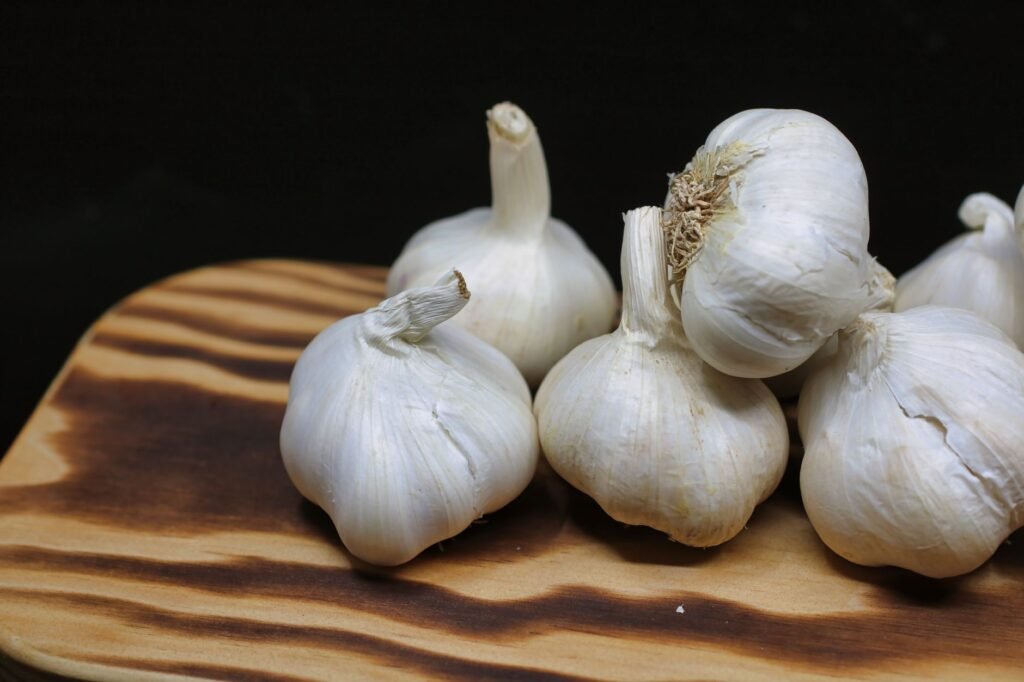
Four formats, from whole cloves to paste
- Whole unpeeled cloves. Break up the head, bag the cloves, freeze. The skin slips off a frozen clove with almost no effort, which makes this the least work of any method.
- Peeled cloves. Peel first, spread the cloves on a lined tray so they freeze separately, then bag them. Best if you cook with garlic several times a week.
- Minced, frozen in portions. Chop or crush, press it flat inside a bag and score it into squares, or fill a small cube tray with a teaspoon in each well. Break off a portion as you cook.
- Roasted garlic paste. Roast whole heads first, squeeze the soft cloves out, and freeze the paste in small scoops. This is the one format where freezing costs you almost nothing, because the sharp compounds were already cooked away.
Which format suits which job
| Format | Works for | Falls short in |
|---|---|---|
| Whole unpeeled cloves | Roasting, braises, stocks, anything where you peel as you go | Quick weeknight cooking, since there is still a peeling step |
| Peeled cloves | Slicing or crushing straight into a hot pan | Recipes needing neat, even dice, as the clove is softer |
| Frozen minced portions | Sauces, soups, stir fries, any fast start to a dish | Dishes where you want visible pieces of garlic |
| Roasted paste | Spreads, mash, dressings, stirring into soup at the end | Anything that needs a raw garlic edge |
| Any frozen garlic | Cooked food across the board | Raw uses like aioli, fresh salsa or a rubbed crouton |
Use it from frozen and skip the thaw entirely
Frozen garlic goes into the pan as it is. Minced portions drop into warm oil and separate within seconds, frozen cloves crush under the flat of a knife almost more easily than fresh ones, and paste melts into a hot liquid on contact. Thawing on the counter gains you nothing and gives you a wet, sticky clove that slides around under the blade. The only case for a short fridge thaw is roasted paste you want to measure precisely.
The oil rule worth knowing
Freezing minced garlic in oil is a genuinely useful trick, and it comes with one condition: keep it frozen. Garlic stored in oil at room temperature is a well known food safety problem and it should never be left out or kept on a shelf, which is why the cube tray goes straight back into the freezer and the portions go straight into the pan. Handled that way, quality holds for around six months for cloves and closer to three for minced formats. Freezer temperature leaves microbes no room to grow at all, so those numbers describe aroma fading rather than anything to do with spoilage.