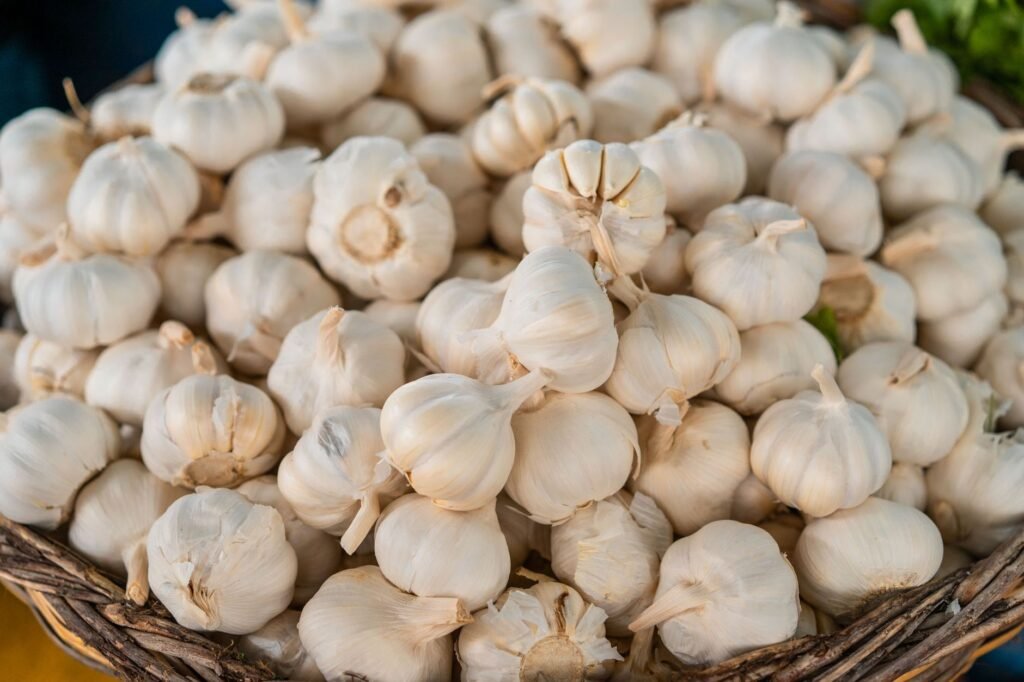
Keep whole garlic heads somewhere cool, dark and ventilated, such as a mesh basket in a pantry, and keep them out of the refrigerator. A bulb of garlic is dormant, not dead, and sustained cold is the exact signal that tells it winter has passed and it is time to sprout.
What a bulb is doing while it sits there
Garlic arrives in the kitchen already packaged. Each clove has a papery wrapper, the head has several more layers around it, and together they hold moisture in while letting the bulb breathe. Damage those layers and the clove starts drying out immediately, which is why a head with intact skins outlasts a head that has been pulled apart.
Dormancy is the other half. The bulb is waiting for conditions that suggest spring, and the two triggers are cold followed by warmth, or moisture. Meet either one and it begins sending a shoot up through the center of the clove, drawing on the clove’s own sugars to do it. The result is a bitter green core and a softer, hollower clove around it.
The setup that works
- Leave the head whole. Break off cloves as you need them and let the remaining skins keep doing their job.
- Choose something open weave. A mesh bag, a slotted ceramic keeper or an open basket all allow airflow. Sealed plastic traps humidity and invites mold at the base.
- Find a dark spot. A pantry shelf or a closed cabinet away from a window. Light encourages sprouting the same way warmth does.
- Stay away from heat and steam. Not above the stove, not beside the dishwasher vent, not on a sunny windowsill next to the tomatoes.
- Check the basket weekly. Pull any head that has gone soft or spotted before it affects the ones touching it.
Where each form of garlic belongs
| Form | Best spot | Rough window | What goes wrong |
|---|---|---|---|
| Whole unbroken head | Cool, dark, ventilated | Several weeks to months | Sprouting, then shriveling |
| Loose cloves, skin on | Same spot, used sooner | Around ten days | Drying at the cut end |
| Peeled cloves | Sealed, refrigerated | About a week | Drying, absorbed odors |
| Chopped or minced | Sealed, refrigerated | A day or two for flavor | Harsh, metallic taste |
| Commercial jarred garlic | Refrigerated after opening | Follow the label | Acidified, so read the jar |
| Roasted garlic | Refrigerated or frozen | Days chilled, months frozen | Softens further, then sours |
Stretching garlic past its natural window
Freezing is the honest answer for a surplus. Whole peeled cloves freeze well in a bag and grate straight from frozen on a microplane. Minced garlic can be pressed into an ice cube tray with a little olive oil, frozen solid, then bagged as portions. Texture changes either way, so frozen garlic belongs in cooked dishes rather than a raw dressing.
Homemade garlic in oil is the one genuine safety issue in this topic. Garlic is a low acid vegetable, and submerging it in oil creates an oxygen free environment, which is why food safety authorities tell home cooks to refrigerate homemade garlic oil and use it within a few days, or freeze it. Commercially jarred versions are acidified during manufacturing to handle that, and that is why a store jar and a kitchen jar are not the same thing. FoodSafety.gov and your state extension service both publish the current guidance, and it is worth reading before you fill a bottle as a gift.