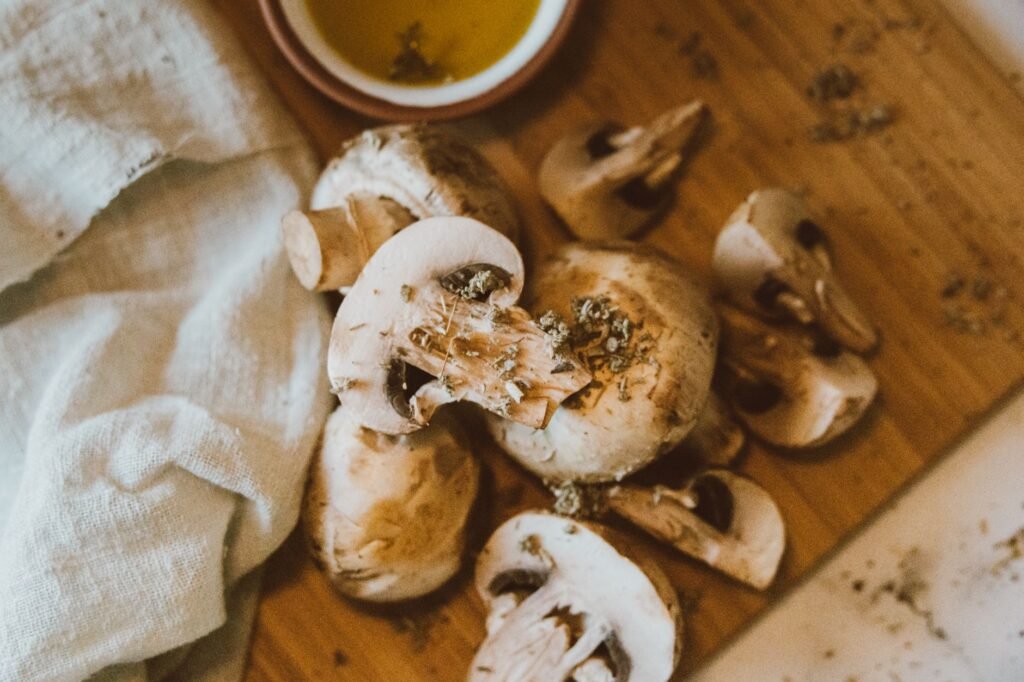
Keep store bought mushrooms in a paper bag in the main body of the refrigerator, not sealed in plastic and not in the crisper drawer. A mushroom is roughly nine tenths water and keeps respiring after harvest, so it needs somewhere for the moisture it releases to escape.
Mushrooms are mostly water and they keep breathing
Fungi have no waxy skin the way an apple does. The cap surface is porous, which means moisture moves in both directions freely, and that single fact explains nearly every storage rule that follows. Wrap a mushroom in plastic and the water it gives off condenses, runs back onto the cap, and sits there. That film is what turns into slime.
The same porosity works in reverse. Mushrooms readily absorb strong smells from whatever shares the shelf, so a package next to cut onion or a container of fish will taste like its neighbors by morning. Paper solves both problems at once, wicking moisture away while still shielding the caps from direct cold air.
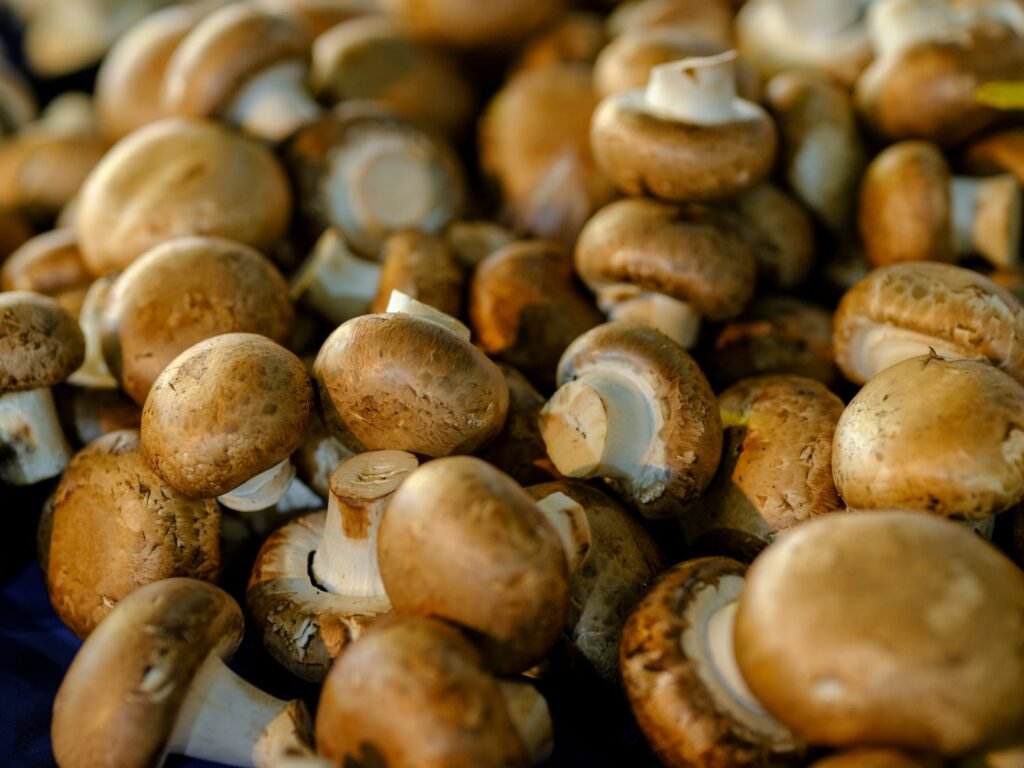
The paper bag method, step by step
- Leave them unwashed. Brush off any growing medium with a dry cloth or a soft brush and stop there.
- Move them into a paper bag. A plain lunch sack works. Fold the top over loosely rather than sealing or rolling it tight.
- Keep the original tray if it helps. If they came on a tray under plastic film, poke several holes in the film or transfer them, either one.
- Store them on a main shelf. The crisper drawer is engineered to hold humidity in, which is the opposite of what these need.
- Give them elbow room. A crowded bag bruises the caps, and bruised tissue darkens and softens first.
Where each variety belongs
| Type | How to keep it | Rough window | First thing to fail |
|---|---|---|---|
| Whole white or cremini | Paper bag, main shelf | Up to a week | Darkening gills |
| Pre sliced | Original pack, used quickly | A few days | Cut faces browning |
| Portobello caps | Paper, gills facing up | Several days | Gills going wet and black |
| Oyster, enoki, delicate types | Paper, handled gently | Shorter than button types | Edges wilting and yellowing |
| Dried mushrooms | Airtight jar, dark cupboard | Many months | Aroma fading, moisture creeping in |
| Cooked mushrooms | Sealed, refrigerated | Three to four days | Sour smell |
All of this assumes mushrooms bought from a store or a market stall. Identifying anything foraged is a separate skill entirely and not something to sort out from a storage article.
When mushrooms have gone too far
Run a finger across a cap. Dry to faintly tacky is normal. Genuinely slippery, with a film that comes away on your skin, means they are finished. Slime is the single most reliable signal these give you, and it usually shows up before any smell does.
Then look underneath and inside. Gills that have gone from tan to wet black, dark sunken patches on the cap, or a stem that squashes flat under light pressure all mean the same thing. A sour or ammonia edge to the smell confirms it. Fresh mushrooms smell faintly earthy and almost sweet, and the change is easy to notice with the bag held close.
If a batch is drying out rather than going slimy, cook it now. Sauté the lot in a hot dry pan until the released water boils off and the edges brown, then refrigerate or freeze the result. That converts a fading ingredient into something with days or months left instead of hours.