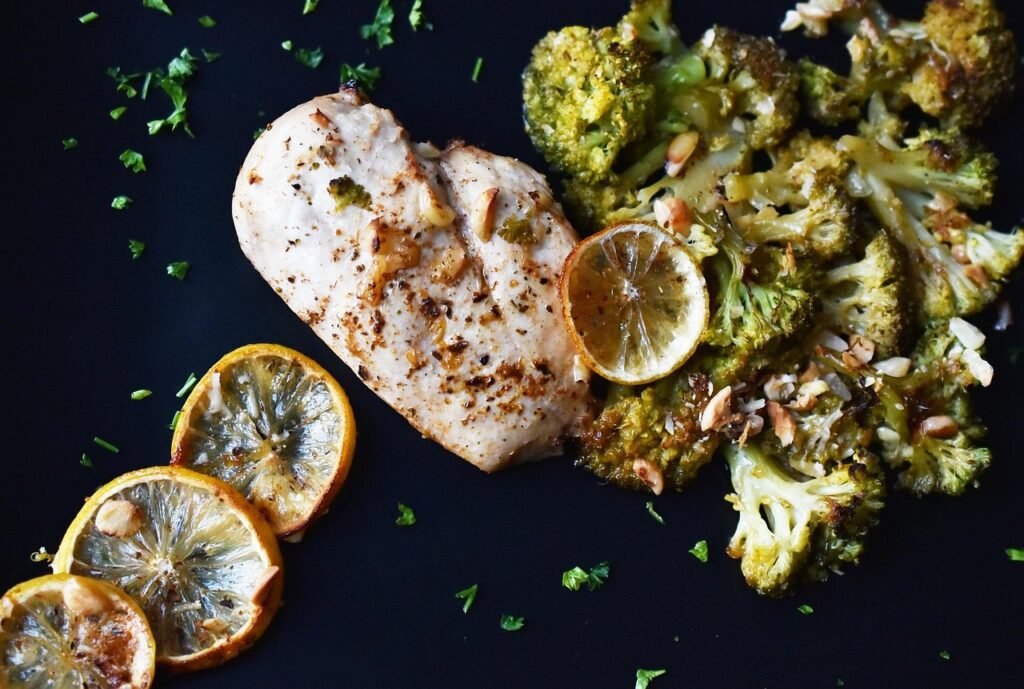
Bake chicken pieces on a sheet pan in a preheated 350 to 375°F oven until a food thermometer reads 165°F in the thickest part, which usually takes 30 to 50 minutes depending on the cut. Breasts finish first, thighs and legs need longer, and the thermometer settles every argument about doneness.
Why 165°F is the only number that counts
Cooking times are estimates. The thickness of a breast, how cold it was going in, whether the bone is still there and how accurate your oven runs all push the real time around. The one fixed target is internal temperature, and the CDC advises using a food thermometer to make sure chicken reaches 165°F.
Push the probe into the thickest part of each piece from the side, and keep the tip off the bone, which can give a misleading reading. Check more than one piece, because a sheet pan rarely cooks evenly from edge to center. Clear juices and white meat are rough hints, not proof, and plenty of chicken looks done a few minutes before it actually is.
Baking times for chicken pieces at 350 to 375°F
| Cut | Oven temperature | Typical time |
|---|---|---|
| Breasts, including skinless | 350 to 375°F | 30 to 40 minutes |
| Drumsticks | 350 to 375°F | 35 to 45 minutes |
| Thighs | 350 to 375°F | 40 to 50 minutes |
| Whole legs | 350 to 375°F | 40 to 50 minutes |
| Wings or wingettes | 350 to 375°F | 30 to 40 minutes |
These ranges come from a poultry producer’s baking chart. Start checking at the low end of the range and keep going until the thermometer agrees. Very large breasts can run past the top of the window. A reliable instant read thermometer makes the range far less stressful, since you are checking a number instead of cutting into pieces to peek and letting the juices escape.
Getting chicken pieces ready for the oven
- Heat the oven fully before the pan goes in, so the outside starts browning right away.
- Skip the rinse. The CDC says raw chicken is ready to cook and does not need washing, and rinsing can splash germs around the sink.
- Pat the pieces dry with paper towels, which helps the surface brown instead of steam.
- Even out thick breasts by pounding the fat end between sheets of plastic wrap, or slice them in half horizontally.
- Rub with a little oil, then season with salt and whatever spices you like.
- Arrange the pieces with space between them. Crowded chicken sits in its own juices and turns pale.
- Wash your hands, the cutting board and anything else the raw chicken touched.
Bone in, boneless, skin on or skinless
Each choice changes how forgiving the cut is. Boneless, skinless breasts are lean and thin, so they cook fastest and dry out soonest once they pass 165°F. Skin acts as a shield, basting the meat as its fat renders and slowing moisture loss. Bones slow cooking near the center, which usually means a few extra minutes and juicier meat around the joint.
Thighs and drumsticks are dark meat, with more fat and connective tissue than breasts. They stay tender even when they climb a little past the target, which makes them the easier cut for anyone new to baking chicken. If you keep ending up with dry breasts, try bone in, skin on pieces before you blame the recipe.
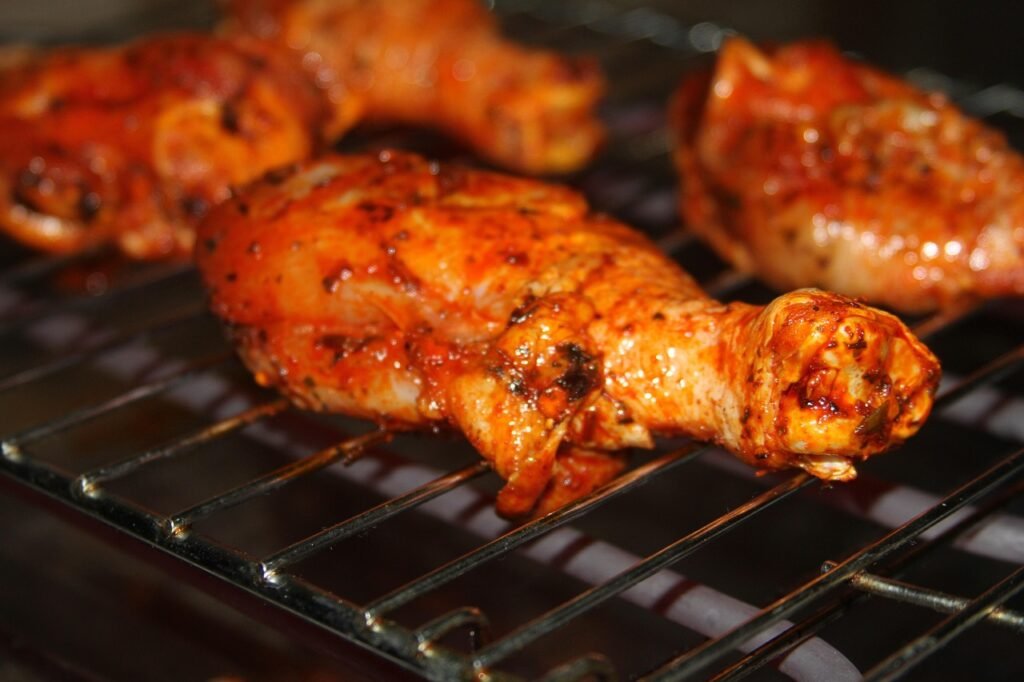
Want crisper skin without changing the oven temperature? Set the pieces skin side up on a wire rack over the sheet pan. Hot air reaches the underside, the fat drips away instead of pooling, and the bottoms stop turning soggy.
Handling a pan of mixed breasts and thighs
Breasts and thighs cooked together will not finish at the same moment. Put the thighs and drumsticks in first and add the breasts partway through, or bake everything together and pull each breast as soon as it reads 165°F while the dark meat keeps going.
Let the pieces sit on a board for a few minutes before cutting, so the juices settle instead of running out. Get leftovers into the refrigerator promptly. For a whole bird rather than pieces, roasting works differently, from the timing to where you probe.
Frequently asked questions
Should I bake chicken covered or uncovered?
Uncovered is the usual choice for pieces, since dry oven air browns the surface and crisps any skin. Covering with foil traps steam, which keeps lean breasts moist but leaves the outside pale and soft. A good middle ground is baking uncovered and checking the temperature early instead of covering.
Can I bake chicken from frozen?
Frozen pieces can go into the oven, but they take noticeably longer than thawed chicken and seasoning does not stick well to an icy surface. Separate pieces that are frozen together, bake until a thermometer reads 165 F in the thickest part, and expect the outside to brown less evenly.
Why is my baked chicken rubbery?
Rubbery chicken is usually overcooked lean breast meat or pieces that steamed on a crowded pan. Pull breasts right at 165 F, pound thick ends to an even thickness, and leave space between pieces. Skin that stays flabby usually needs a drier surface before baking and a little more heat.
How do you reheat baked chicken?
Warm it until the thickest piece reads 165°F on a food thermometer, the reheating temperature USDA gives for leftovers. In the oven, cover the pan with foil so lean meat stays moist, then uncover it for the last few minutes to crisp any skin. Slicing breasts first helps them heat evenly.
What goes well with baked chicken?
Almost any vegetable, grain or starch works. Roasted vegetables can share the oven with the chicken, and rice, potatoes, pasta, a green salad or steamed green beans round out the plate. Pan juices spooned over the rice or potatoes add flavor without making a separate sauce.