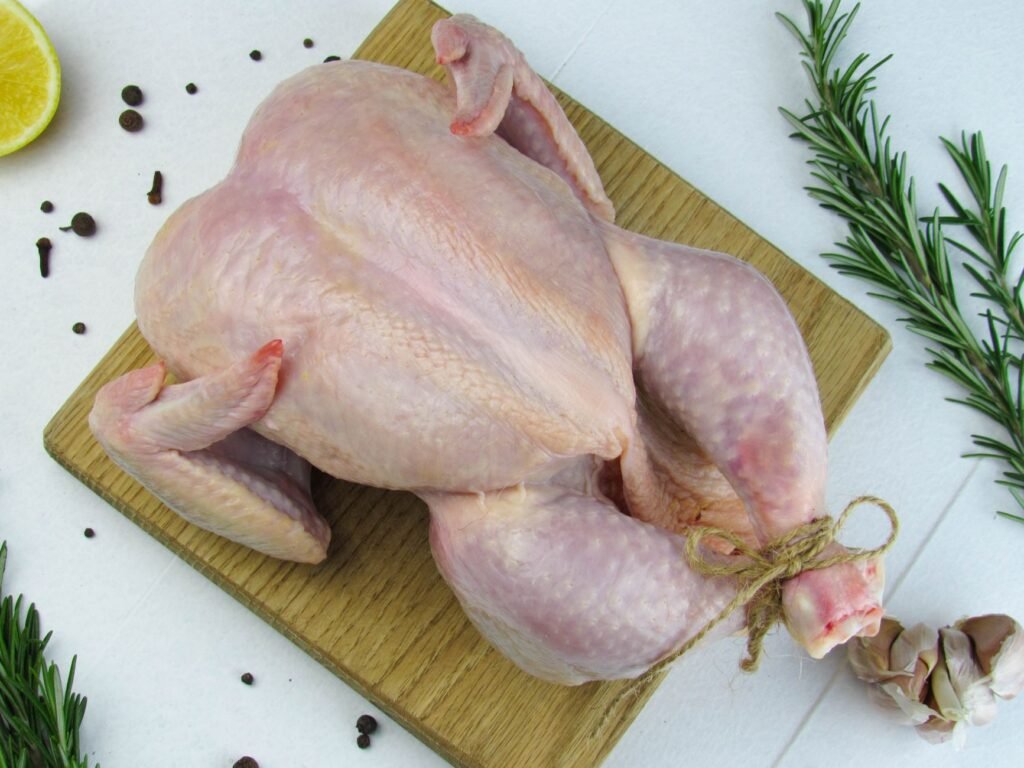
To roast a chicken, pat the whole bird dry, season it, and roast it breast side up until a food thermometer reads 165°F in the thigh and the thickest part of the breast. At 350°F, a 3 to 4 pound bird takes roughly 1¼ to 1½ hours. Let it rest before carving.
Getting the bird ready without rinsing it
Let a frozen chicken thaw slowly in the fridge and keep it off the kitchen counter. A whole bird needs a day or more, so plan ahead. Pull out the bag of giblets from the cavity and check the neck end too, since packers sometimes tuck it there.
Skip the rinse. UConn’s food safety program explains that washing raw poultry under the tap splashes bacteria onto the counters, the faucet and anything nearby. The oven kills those germs anyway. Instead, blot the skin all over with paper towels, then throw them away and wash your hands.
Dry skin browns and crisps. Wet skin steams. If you have time, salt the chicken and leave it uncovered in the refrigerator for several hours or overnight, which dries the surface further and seasons the meat.
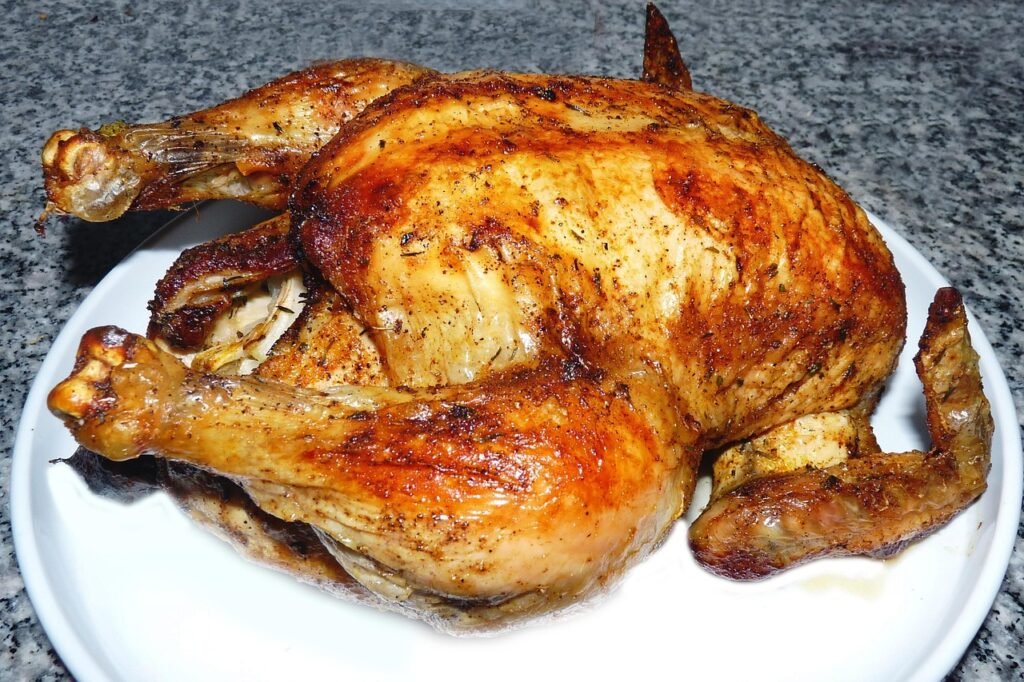
Oven temperature and roasting time for a whole chicken
Times from extension services are estimates for planning. Ovens run hot or cold and birds vary in shape, so the thermometer decides when it is done.
| Source | Oven | Bird | Approximate time |
|---|---|---|---|
| Clemson extension timetable | 350°F | Whole broiler fryer, 3 to 4 lb, unstuffed | 1¼ to 1½ hours |
| Clemson extension timetable | 350°F | Whole broiler fryer, 3 to 4 lb, stuffed | 1¾ to 2 hours |
| UNH Extension roast chicken recipe | 375°F | Whole chicken | About 1½ hours |
The Clemson poultry fact sheet gives the full timetable. Larger roasting hens take longer, so start checking early and keep going until the numbers line up.
Where the thermometer goes and what 165°F means
Every poultry safety guide lands on the same number, 165°F. The trick is measuring in the right place. Slide the thermometer tip deep into the meatiest section of the thigh, near where it meets the breast, keeping it off the bone, because bone conducts heat and gives a false high reading. Then check the thickest part of the breast.
Juices running clear and skin turning brown are not reliable signs. A bird can look finished while the thigh joint is still under temperature. If you stuffed the cavity, the center of the stuffing must also reach 165°F, which is why many food safety programs suggest baking stuffing in a separate dish.
Trussing, seasoning and the pan underneath
Tying the legs together with kitchen string gives a neater shape and helps the bird cook more evenly, though an untied chicken still roasts well. Tuck the wing tips under the back so they do not burn.
Rub the skin with oil or softened butter, then season with salt and pepper. A halved lemon, an onion or a few garlic cloves in the cavity add aroma. Set the chicken on a rack, or on a bed of thick sliced onions and carrots, so the oven heat can circulate beneath the bird. Pieces such as thighs and drumsticks cook on a different schedule, which a separate baked chicken guide covers.
Some cooks start in a hotter oven for crisper skin. If you do, begin checking the thermometer earlier than any timetable suggests, since higher heat shortens the cook.
Resting and carving the roast chicken
Resting lets the juices settle back into the meat instead of running onto the board. UNH Extension’s recipe calls for about 15 minutes before carving.
- Set the bird breast side up on a cutting board with a groove for juices.
- Slice through the skin between leg and body, then press the leg outward until the joint pops, and cut through it.
- Separate each drumstick from its thigh at the joint.
- Cut down along one side of the breastbone and follow the ribs to lift each breast off whole.
- Remove the wings at the shoulder joint, then slice the breasts across the grain.
Pour the pan juices into a cup, let the fat rise, and spoon the juices over the sliced meat. Refrigerate leftovers promptly in shallow containers so they cool quickly.
Frequently asked questions
Should you cover a chicken while roasting it?
Usually not. Roasting uncovered lets the skin dry and brown. If the breast or wing tips darken too fast before the thigh reaches 165°F, lay a loose piece of aluminum foil over just those areas and keep roasting until the thermometer confirms the bird is done.
Is it safe to stuff a whole chicken before roasting?
It can be, but it adds time and risk. The stuffing in the middle heats slowly and must reach 165°F, and by then the breast may be overcooked. Many food safety programs recommend cooking stuffing in a separate dish and filling the cavity with aromatics like lemon or onion instead.
Why is my roast chicken still pink near the bone?
Color is not a reliable test for poultry. Meat near the bone can stay pink even when it has reached a safe temperature, and meat can also look done when it is not. Trust a food thermometer reading of 165°F in the thigh and the thickest part of the breast.