
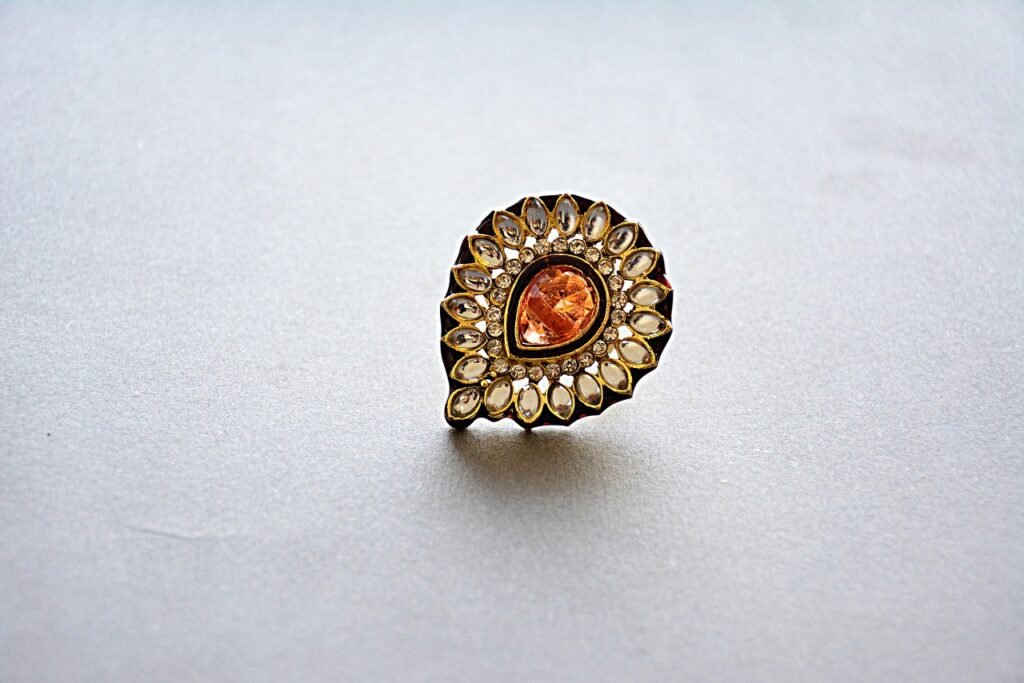
For a hard stone in a solid metal setting, soak ten minutes in warm water with one drop of dish soap, brush gently behind the stone with a soft baby toothbrush, rinse over a closed drain, and pat dry. For pearls, opals, turquoise and anything glued, skip the soak entirely and use a barely damp cloth.
A dull diamond is an optical problem, not a dirty one
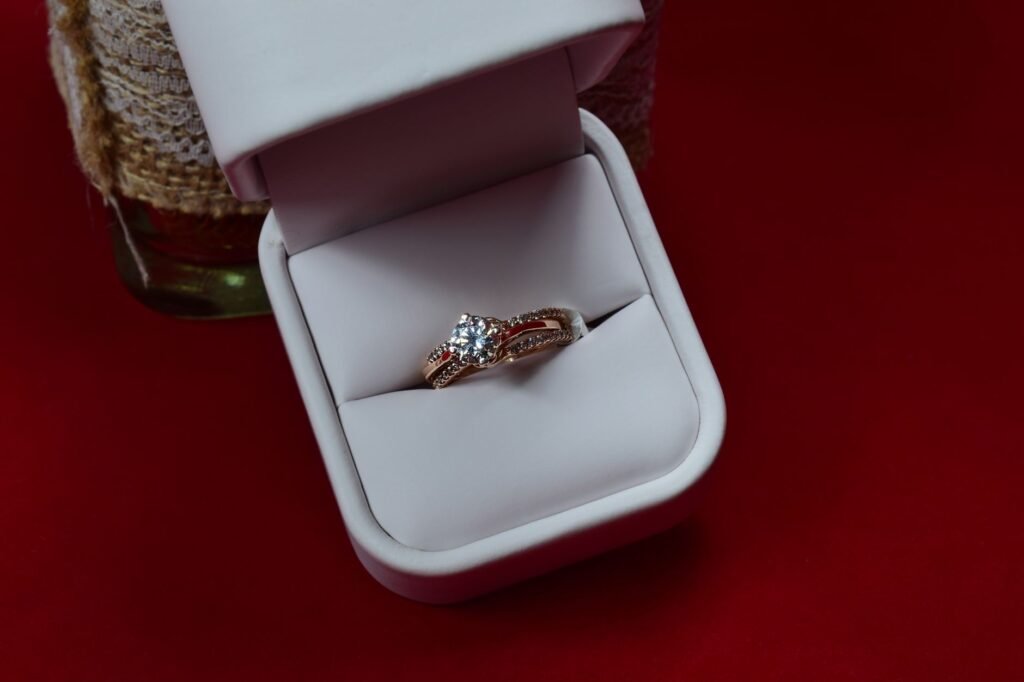
A faceted stone looks alive because light enters the top, bounces off the back facets and returns to your eye. That bounce depends on a clean boundary between the stone and the air around it. Skin oil, hand lotion and soap scum build a film on the underside of the stone, where you never look, and that film changes how light behaves at the surface so less of it comes back. The stone reads gray and tired.
Which is why the important part of cleaning jewelry is the part you cannot see. Brushing the top of a ring accomplishes almost nothing. Getting a soft brush up under the setting, where the film collects and where the mounting traps lint, is what restores the sparkle. That single detail explains why a professional cleaning looks so dramatic compared with a wipe at home.
The stone decides, not the metal
Hardness and toughness are not the same property. A sapphire is very hard but a hard knock can still chip it. An opal is moderately hard and full of water in its structure, so a sharp change in temperature or humidity can craze it into fine internal cracks that never heal. Pearls are not minerals at all, they are layers of nacre laid down by a mollusk, and they are thin, porous and readily damaged by acid, ammonia, alcohol and perfume.
Setting matters just as much. Opal doublets and triplets are glued assemblies, and a soak separates them. Emeralds are commonly treated with oil or resin to fill surface reaching fractures, and hot water or an ultrasonic bath can drive that filler out and leave the stone looking cloudier than before. Ultrasonic machines are the most misused tool in the drawer, because the same cavitation that shakes dirt loose will also shake a worn prong loose, and people lose stones that way.
A safe home routine
- Identify the stone and the setting before anything touches water. Uncertain means treat it as fragile.
- Check the prongs by running a fingertip over them and listening for a rattle if you tap the piece gently. A loose stone goes to a jeweler, not into a bowl.
- Mix warm water with a single drop of dish soap. Warm, never hot.
- Soak hard stones in solid settings for about ten minutes to loosen the oil film.
- Brush with a soft baby toothbrush, concentrating on the back of the stone and inside the gallery.
- Rinse in a bowl of clean water or over a plugged sink, never over an open drain.
- Pat dry with a lint free cloth and let the piece air dry completely before storing, since trapped moisture under a setting causes trouble later.
Match the method to the material
| Piece | Do this | Never do this |
|---|---|---|
| Diamond, sapphire, ruby in prongs | Warm soapy soak and a soft brush underneath | Ultrasonic on a setting with worn prongs |
| Pearls, strung or set | Wipe with a barely damp soft cloth, lay flat to dry | Soaking, since it stretches and rots the silk thread |
| Opal, especially doublets | Dry soft cloth only | Hot water, soaking, sudden temperature change |
| Emerald | Quick cool rinse and a gentle wipe | Ultrasonic or steam, which strips fracture filler |
| Turquoise, amber, coral, malachite | Dry or barely damp cloth, kept away from chemicals | Any soak, these are porous and absorb what they touch |
| Gold plated or gold filled | Light wipe and prompt drying | Brushing, which wears through a very thin layer |
| Costume pieces with glued stones | Damp cotton swab around the stones | Immersion, adhesive gives way and stones drop out |
One habit prevents most of this. Jewelry goes on last, after lotion, perfume and hairspray, and comes off before swimming, cleaning and gardening. Less film means less cleaning.