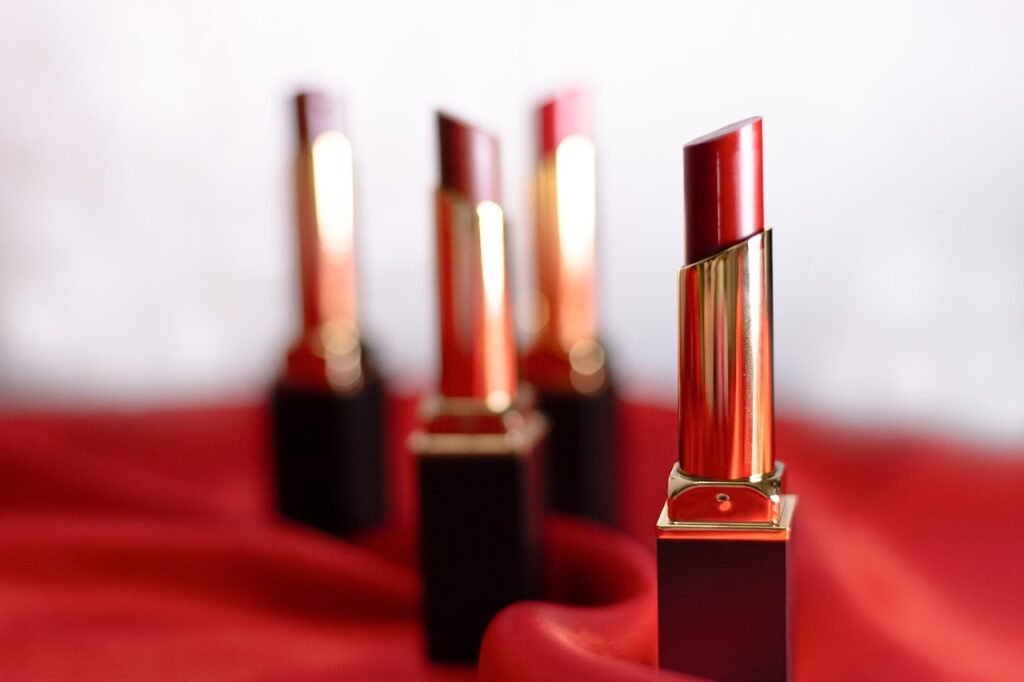
Identify the formula before you wet anything, because powder, wax, oil and silicone based makeup each need a different opening move. Dry pigment brushes away, lipstick wants scraping then a degreaser, and long wear liquids want a surfactant heavy cleanser worked in before water ever arrives.
Makeup is four unrelated stains sharing one name
A pressed powder is mostly mineral pigment with talc or mica and a trace of binder. Almost nothing holds it to cloth, so it sits in the surface as loose dust until someone adds water, at which point the pigment disperses, wicks along the fibers and becomes an actual stain. Wetting powder is the single most common way a removable problem turns into a permanent one.
Lipstick and mascara are wax systems, closer to a candle spill with dye in it. Liquid foundation is pigment suspended in oil or in silicone such as dimethicone, and silicone is the awkward case, since it resists water and does not surrender to plain oil either. Layer film forming polymers on top, as transfer proof formulas do, and you have something engineered specifically to shrug off water and rubbing. A wash cycle offers nothing but water and rubbing.
Matching the product to the first move
| What spilled | What it is | Open with |
|---|---|---|
| Powder, blush, eyeshadow | Dry mineral pigment | Shake, brush or lift with tape while dry |
| Lipstick | Wax, oil and heavy dye | Scrape the deposit, then dish soap |
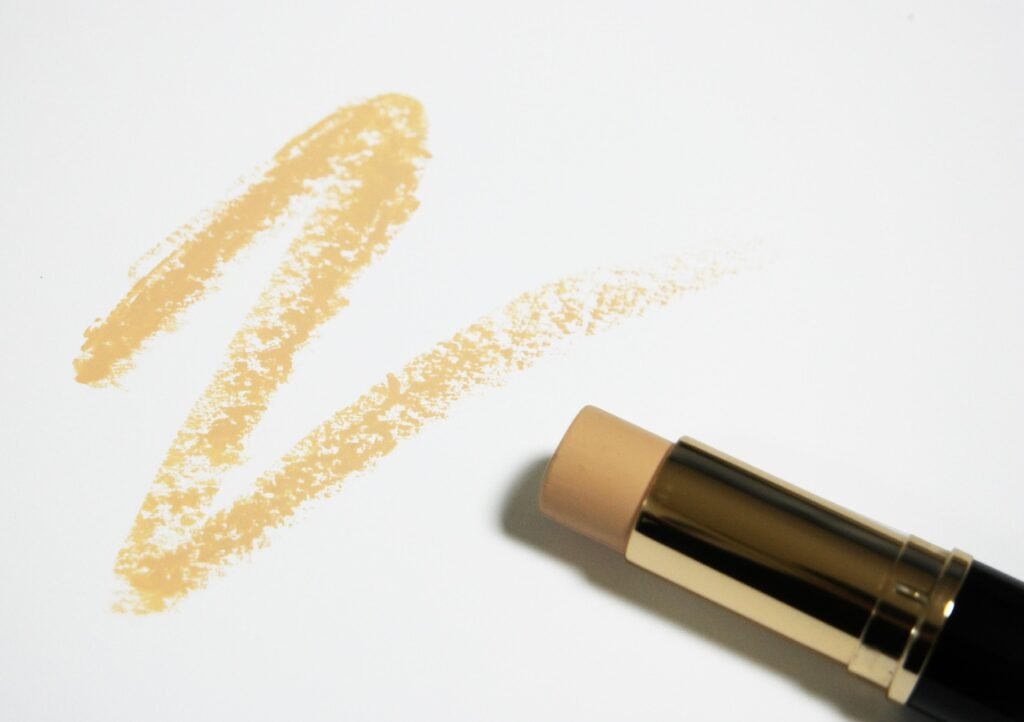
| Liquid foundation | Pigment in oil or silicone | Micellar water or a cleansing balm |
| Mascara | Wax plus film formers | An oil based remover, then soap |
| Self tanner | A dye reaction on the surface | Cool rinse, then oxygen bleach if safe |
The routine for a typical foundation mark
- Knock off any loose material first by holding the garment away from you and flicking the back of the fabric.
- Pick a hidden test area such as the seam allowance inside a side seam, apply your chosen cleanser there, and let it dry fully before going near the visible mark.
- Lay the item face down on a folded towel so anything lifted has somewhere to land.
- Apply micellar water or a light cleansing balm to the back of the stain, moving from the outer edge in toward the middle. Pushing from the center outward simply enlarges the mark.
- Press with a clean cloth instead of rubbing, and reposition the towel underneath each time it shows pigment.
- Follow with a small amount of dish soap for the oily fraction, then rinse from the reverse.
- Launder as the care label directs, air dry the garment and inspect it in daylight.
The right opening move for each formula
| Right first move | What sets the stain |
|---|---|
| Deal with powder while it is still dry | Rinse a blush smudge under the tap |
| Use a remover suited to the formula | Reach for the same product on every kind of makeup |
| Blot with steady pressure | Rub the fabric against itself |
| Prove your cleanser on a hidden seam | Trial an unknown solvent on a visible panel |
| Hang it up and check it dry | Put it through a hot dry cycle to find out |
Two closing cautions. Foundation is designed to survive a full day of sweat and friction, so a single wash rarely finishes it, and the temptation is to let the dryer sort it out. Tumble heat sets whatever pigment is left into the fiber and removes the option of a second attempt, which makes the inspection on dry fabric the most valuable minute in this whole process. And if a white shirt sends you toward chlorine bleach, keep every ammonia containing cleaner well away from it, since that combination forms chloramine gas, a genuine respiratory hazard in a small room.