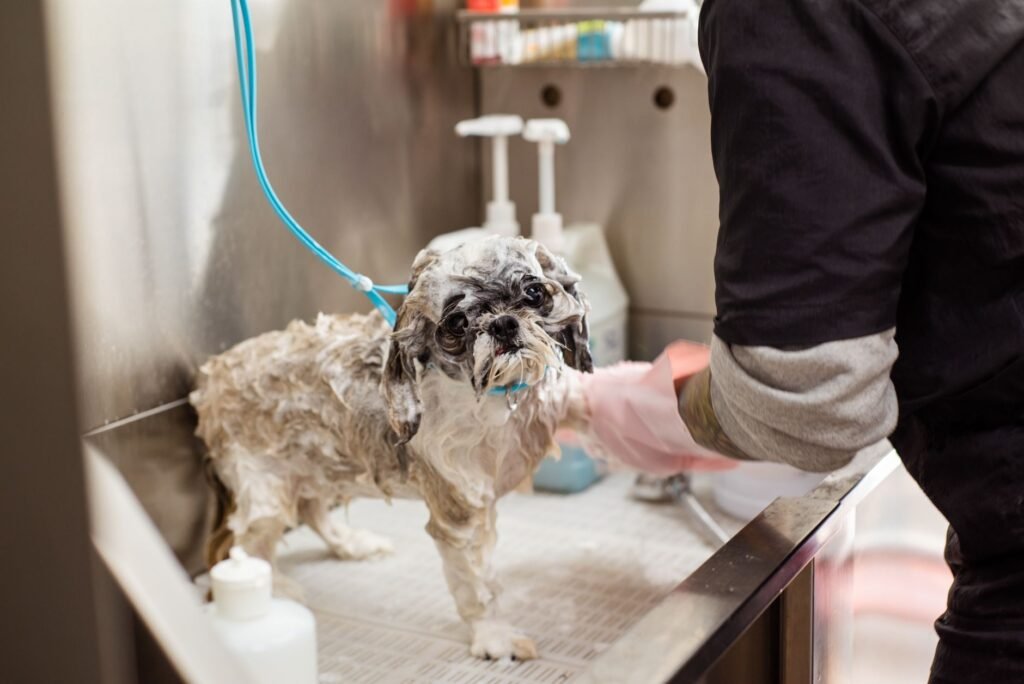
Skunk spray is a mix of sulfur compounds called thiols, and the only thing that removes the odor is a reaction that oxidizes those thiols into something odorless. That means a peroxide based wash. Tomato juice, perfume and air freshener cover the smell for a few hours while the sulfur sits there untouched.
Why the smell keeps coming back on humid days
Skunk spray carries two families of sulfur compounds. The thiols are the sharp, immediate stink. Riding alongside them are thioacetates, which barely smell at all when they land. Water slowly breaks thioacetates apart and turns them into fresh thiols. That is why a dog that seemed fine after a quick rinse reeks again the next time it rains, swims, or walks through wet grass at dawn.
It also explains why waiting it out is a bad plan. You are not waiting for one smell to fade. You are waiting for a slow reaction to finish handing you more of it.
The wash that neutralizes instead of covering
The mix most people land on is hydrogen peroxide from the drugstore, baking soda, and a small squirt of grease cutting dish soap. The peroxide does the oxidizing. The baking soda keeps the reaction moving. The soap breaks up the oily carrier so the peroxide can reach the sulfur underneath it.
- Mix in an open bucket and use it right away. Never seal it in a bottle, because it gives off oxygen and pressure builds.
- Work it into dry fur or dry fabric. Soaking the item in plain water first just floats the oil around and spreads the problem.
- Let it sit a few minutes, then rinse hard with plain water until the water runs clear.
- Repeat on any spot that still smells rather than leaving the mix on for longer.
Peroxide lightens color. Test a hidden corner of dark fabric, or a small patch of a dark coat, before you commit to the whole thing.
If your dog took the hit
Keep the mix well away from the eyes, nose, and mouth, and flush with plain water if any gets close. A dog that is squinting, pawing at its face, drooling heavily, or vomiting needs a veterinarian rather than a second scrub. If your dog actually tangled with the skunk or bit it, call your vet and your local animal control. At that point it is a rabies exposure question, not a laundry question.
Clothes, the car, and whatever is living under the deck
| Where it landed | What tends to work |
|---|---|
| Washable clothing | Peroxide soak or an enzyme laundry detergent, then line dry outdoors. Dryer heat can lock in whatever is left. |
| Car seats and carpet | Blot, treat the spot, then run the fan with the windows down. The cabin air filter holds odor and is cheap to swap. |
| Siding, decking, tile | Wash, rinse, repeat. Nonporous surfaces give the smell up fastest. |
| A den under the structure | Stop. This is a wildlife question with rules attached. |
If a skunk has moved in under a porch, deck, or shed, your odor problem is really a housing problem. Trapping, handling, and relocating wildlife are regulated differently in every state, and some of the methods floating around online are illegal where you live. Look up your state wildlife agency before you touch anything, and bring in a licensed wildlife control operator if the den already has young in it. Sealing the entry while a mother is inside goes badly for everyone.