Treat the mildew, not the odor. Soak the load in oxygen bleach and the hottest water the label allows, rinse with white vinegar, then dry it completely in sun or moving air. Anything short of bone dry lets the colony restart, and the smell returns within days.
The smell is a byproduct, not a residue

Mustiness is not dirt you failed to rinse out. It is gas. Mildew and mold growing on damp fabric feed on the fibers and the soils in them, and as they metabolize they release small airborne compounds. Geosmin is the one most people would recognize, since it is the same molecule behind the smell of wet soil after rain. Those compounds are made continuously by something alive, which changes the whole approach.
It explains the pattern everyone finds confusing. A load smells fine coming out of the wash, then sour again by midweek. Detergent removed the gas that had collected, along with a portion of the colony, and left enough behind to start producing again the moment the closet warmed up. Fabric softener and scent beads make it worse by adding a coating and doing nothing to the organism. The target is the colony itself, and the strongest weapon against it is not a product at all. It is dryness.
Clearing a musty load, step by step
- Take the items outside and shake them hard. Any powdery bloom on the surface belongs outdoors, not in your machine.
- Check the label for the highest safe water temperature, and test any color for fastness by wetting an inside hem and blotting it with a white cloth.
- Soak for several hours in warm water with dissolved oxygen bleach. Overnight is better than a quick dip.
- Wash on the longest cycle at the warmest safe temperature, with detergent and roughly half a cup of baking soda in the drum.
- Add a cup of white vinegar to the rinse compartment. Skip the fabric softener entirely.
- Dry outdoors if you can. Sunlight and moving air do more against mildew than any additive in the wash.
- Check for gray or black speckling before folding. If speckles remain, treat each one from its faint outer halo toward the center, then repeat the soak.
What each treatment is actually doing
| Treatment | Mechanism | Limitation |
|---|---|---|
| Oxygen bleach soak | Oxidizes the odor compounds and damages the colony | Needs warmth and hours to work properly |
| White vinegar rinse | Drops the pH so growth is unwelcome | Does not remove staining or heavy growth |
| Baking soda in the drum | Adsorbs odor molecules already released | Handles smell, not the source |
| Full sun drying | Ultraviolet light and total dryness stop growth | Fades colored fabric over repeated sessions |
| Chlorine bleach | Kills growth on white cotton | Wrecks color, weakens fibers, and has a hard rule attached |
That hard rule: chlorine bleach and any ammonia based cleaner must never meet, in a bucket or in a machine, because the pair releases chloramine gas. Choose one product per load and rinse the drum before you consider the other.
The machine is often the real culprit
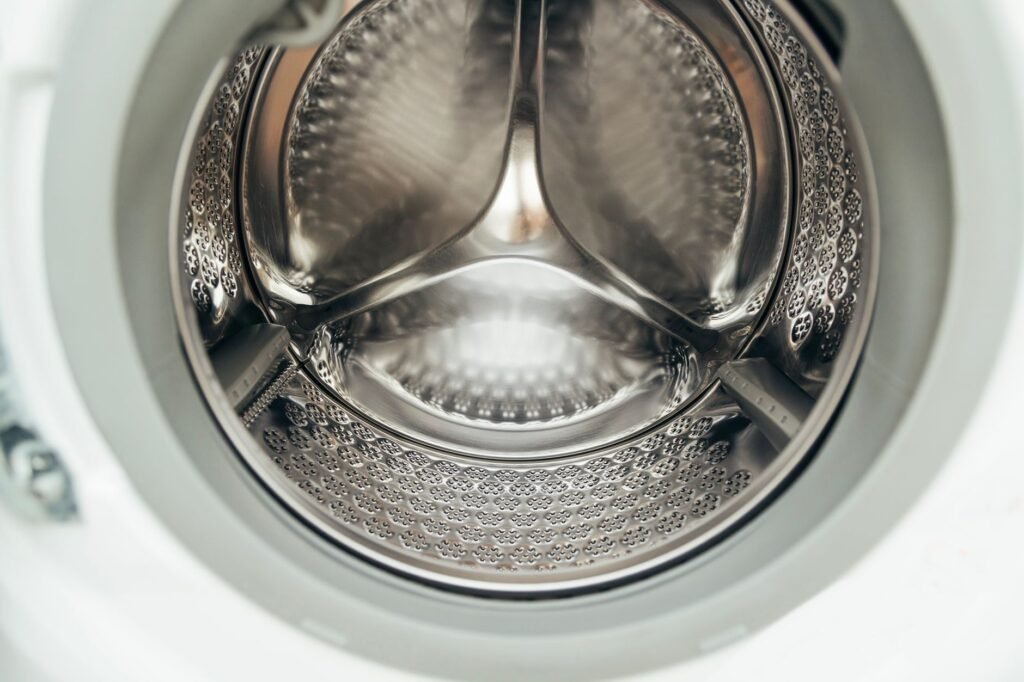
If every load smells faintly musty, stop blaming the laundry. Front loaders in particular grow a biofilm in the rubber door gasket, the detergent drawer and the drain filter, and every clean load passes through it. Peel the gasket back and look, pull the drawer out, and open the filter hatch at the base over a shallow pan.
Clean those three, then leave the door and the drawer open between loads so the interior dries. Excess detergent and softener feed the film, so cutting back on dose helps more than people expect.
Storing clothes so it does not return
Moving a load from the drum to the basket and leaving it an hour is enough to start this over. Hang wash promptly, and give anything thick, such as towels, jeans and hoodies, longer drying than the cycle suggests.
One thing not to do is send a still sour load through the machine dryer to finish it. Warm air arriving while the odor compounds are still present seals them into the fiber instead of driving them off, and the next humid week releases the lot again. Rewash first, dry second.
In storage, plastic bins and vacuum bags trap whatever moisture the fabric held when you sealed them. Store clean and fully dry, use breathable cotton bags for long term items, and keep boxes off concrete floors, which wick damp upward all year.