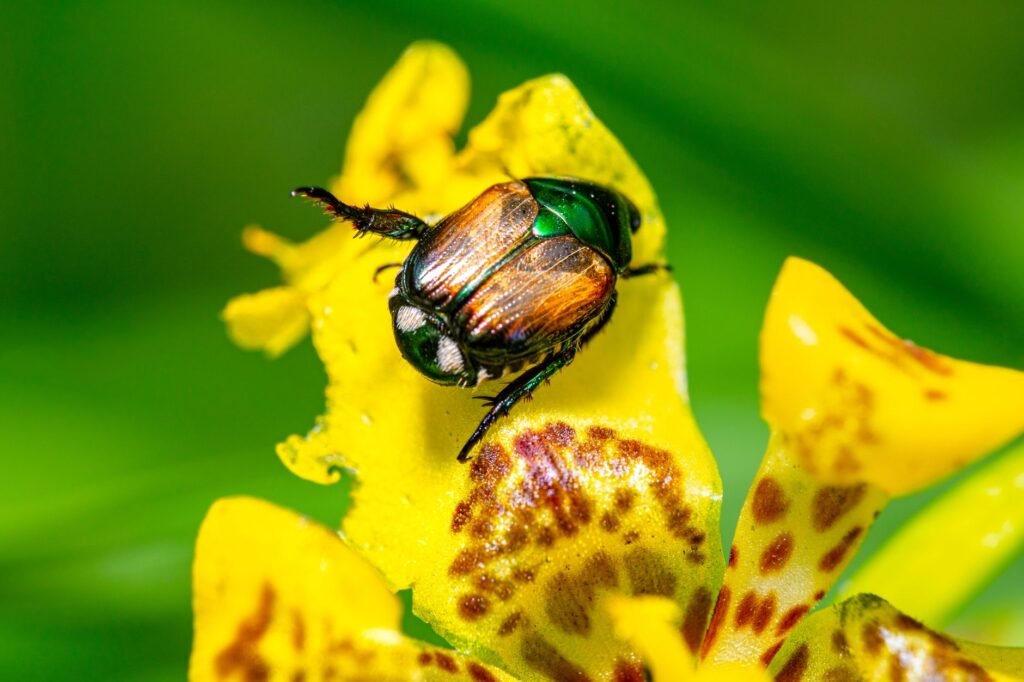
Japanese beetles feed in crowds because damaged leaves and the beetles already on them release scents that pull in more beetles, so the fastest way to keep a few from becoming a swarm is knocking the early arrivals into soapy water. Lure traps do the opposite and advertise your yard.
Why three beetles turn into three hundred
Two signals stack up. A feeding beetle tears leaf tissue, and torn leaves give off volatile compounds that carry downwind. On top of that, the beetles themselves release an aggregation scent that says the food and the mates are here. The result is a feedback loop: the longer you let the first arrivals chew, the louder your yard broadcasts.
That is the whole strategic point. Early beetles are worth far more of your time than late ones. Ten minutes on the first two mornings beats an hour in week three.
Hand picking is boring and it works
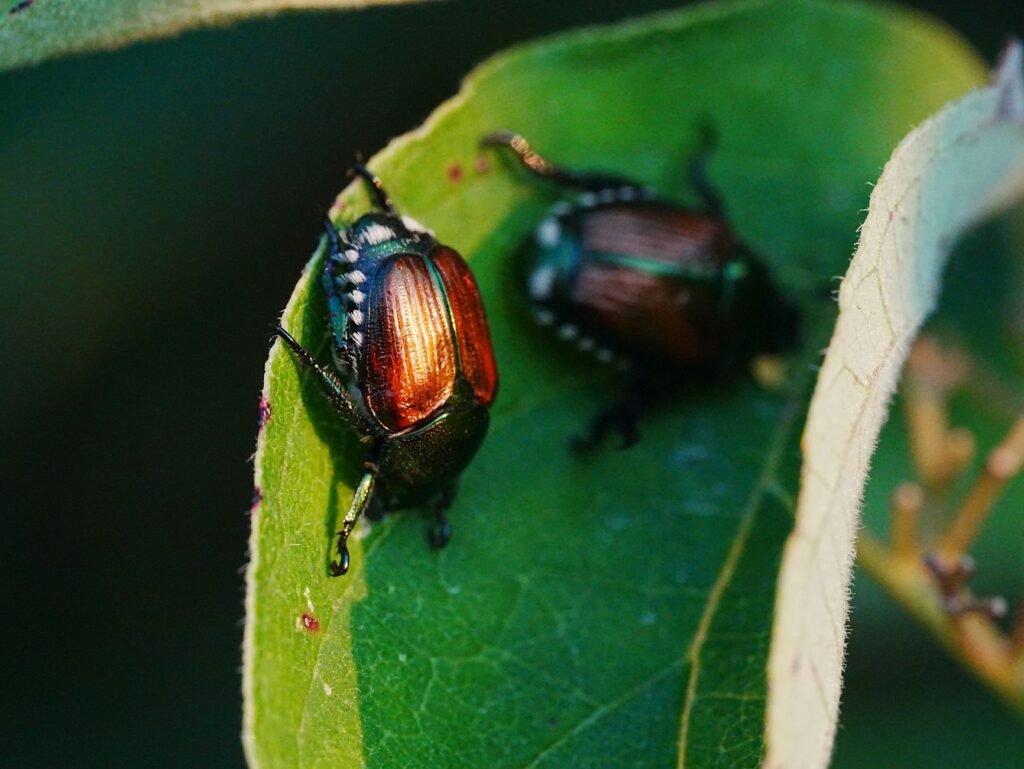
Beetles are sluggish when it is cool. Go out early, hold a bucket of water with a little dish soap in it under the leaf, and tap. They drop rather than fly when they are startled, so the bucket catches most of them. Soap breaks the surface tension so they sink instead of crawling out.
- Go at first light or at dusk, not in the afternoon heat.
- Work the plants you care about most first, then the perimeter.
- Do it daily during the emergence weeks. Skipping three days undoes the week.
- Dump the bucket away from the garden, not on the compost pile next to it.
Fine mesh row cover over vegetables works during the flight period, as long as you lift it when something needs pollinating.
The grubs in your lawn are the other half of the animal
Adults lay eggs in moist turf, and the grubs spend the rest of the year eating grass roots. A lawn that gets light, frequent watering all summer is close to ideal nursery conditions. Letting cool season turf go dormant during the hottest weeks makes the soil a much worse place to be an egg. Beneficial nematodes and milky spore get recommended for grubs, but results are slow and uneven, so treat either one as a multi season project rather than a fix.
Change the menu and you change the pressure
| Beetle magnets | Usually left alone |
|---|---|
| Roses, grapes, raspberry canes | Boxwood, lilac, forsythia |
| Linden, birch, Japanese maple | Red maple, oak, magnolia |
| Hibiscus, hollyhock, zinnia | Hosta, ornamental grasses, ferns |
You do not have to rip out a rose bed. But if you are replacing a tree anyway, picking one off the left column removes a beacon from your yard permanently. If you decide to use an insecticide labeled for beetles, read the label section on bloom time, because several of the common ones are restricted while plants are flowering to protect bees. The label is the legal instruction, not a suggestion.