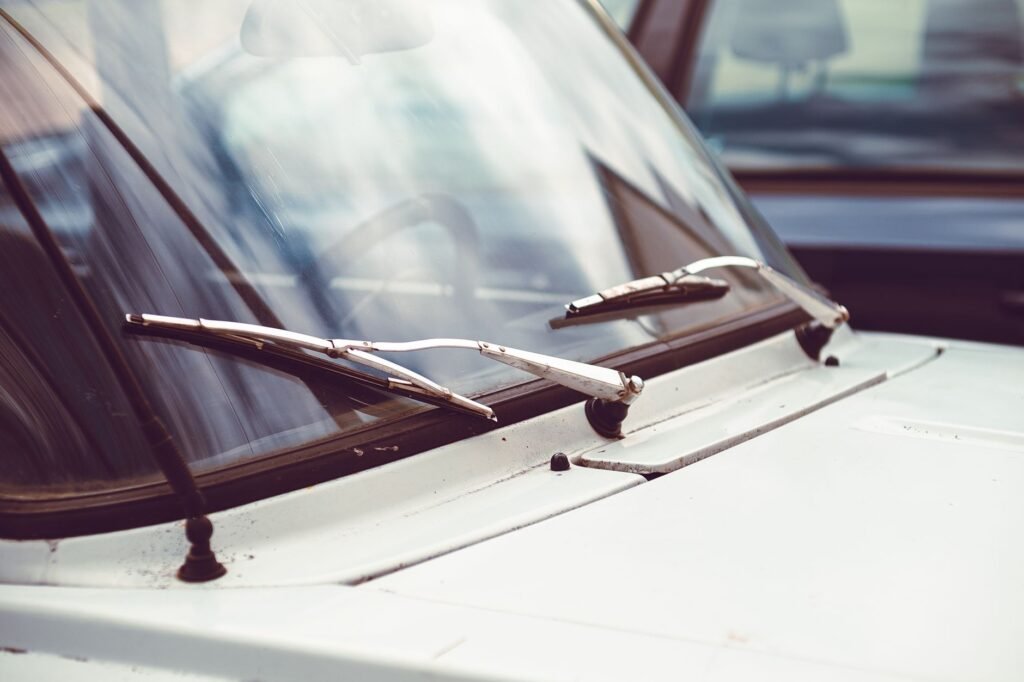
To replace windshield wipers, lift the arm away from the glass, press the release tab where the blade meets the arm, slide the old blade off, and push the new one on until it clicks. Buy the correct length first, because the driver and passenger blades are often different sizes.
Finding the right blade length for your car
Your owner’s manual lists the wiper sizes, usually in the maintenance or specifications section. If the manual is gone, measure the rubber edge of each old blade with a tape measure, tip to tip. Auto parts stores also keep lookup tools by year, make and model, and most blade makers run the same kind of finder on their websites.
Check three blades, not two. Many hatchbacks, wagons and SUVs have a rear wiper, and it wears out on its own schedule. While you are at the counter, you will also see two broad styles. Conventional blades have a metal frame with several pressure points along the rubber, and beam blades are a single curved strip that follows the curve of the glass more evenly.
Signs the old wiper blades are done
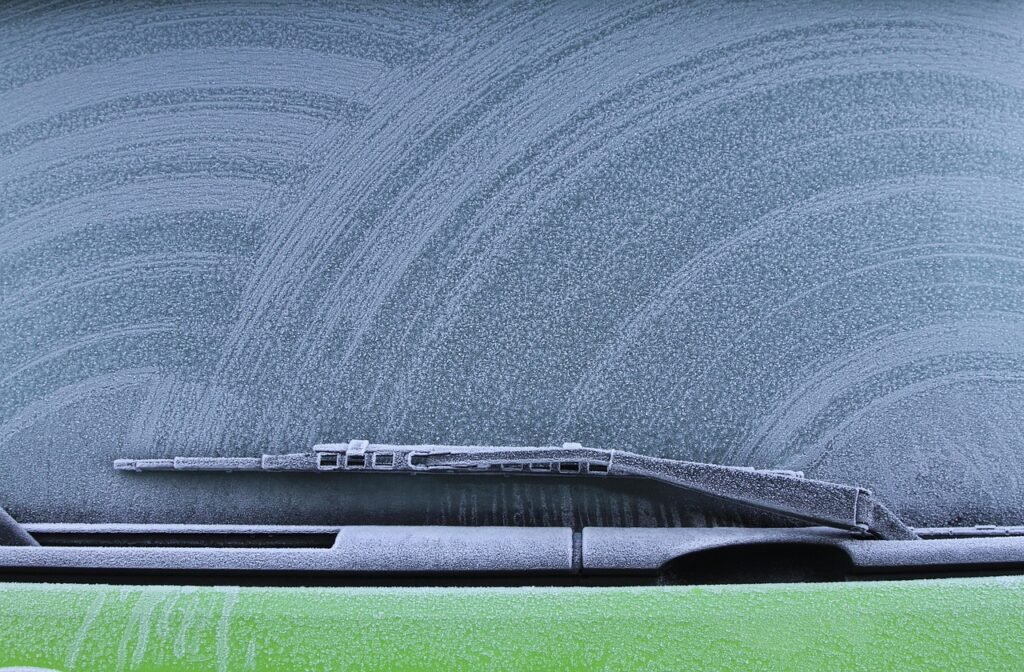
Mechanics and manufacturers generally suggest new blades every six to twelve months, but the rubber tells you more than the calendar does. Sun, road salt and freezing nights all shorten that timeline.
| What you notice | What is going on | What to do |
|---|---|---|
| Streaks or smeared bands | The edge is worn or dirty | Clean it once, replace if streaks return |
| Squeaking or chattering | Rubber has hardened and no longer glides | Replace the blade |
| Skipping across the glass | Cold or age has stiffened the rubber | Replace the blade |
| Cracks, tears or a loose flap | The rubber is physically failing | Replace right away |
A streak that appears in the same spot on every pass usually means a nick in the rubber, and cleaning will not fix that.
Swapping a blade on a hook style arm
- Lay a folded towel on the windshield under the wiper. If the arm slips, it lands on cloth instead of glass.
- Pull the arm up and away from the windshield until it stays in the raised position on its own.
- Find the small tab or latch where the blade joins the hooked end of the arm. Press or lift it.
- Slide the blade down, toward the base of the arm, so the hook comes out of the connector. Then lift the old blade free.
- Thread the hook through the connector on the new blade and pull upward until you hear a click.
- Tug the blade gently to confirm it is locked, then lower the arm softly onto the glass.
Repeat on the other side and run the wipers with washer fluid to check for a clean, quiet sweep.
When the new wiper blade will not lock on
The hooked arm is common, but it is not the only design. Some cars use a pin, a side post or a push button latch, and many replacement blades ship with a bag of small adapters for exactly that reason. The instruction sheet in the package shows which adapter matches which arm, though people often overlook it when it sits folded under the cardboard.
If nothing seems to fit, confirm you bought the right length for that side and that the blade is facing the correct direction. The curve of a beam blade should follow the curve of the glass, and the connector usually has a small arrow or label showing which end points toward the arm pivot. Forcing it can snap the plastic, so stop and compare it with the old blade.
Making fresh wiper rubber last longer
Wipe the rubber edge with a damp cloth when you fill up with gas, since grit on the blade acts like sandpaper on both the rubber and the glass. Always use washer fluid rather than running the wipers on a dry windshield. In winter, clear ice with a scraper and free frozen blades by hand before switching them on, because a blade stuck to the glass can tear or strain the wiper motor. Parking in shade or a garage slows the sun damage that hardens rubber over a summer.
Frequently asked questions
Can I replace just the rubber insert instead of the whole blade?
Some conventional blades accept replacement rubber refills, and they cost less than a full blade. They take more patience to install, and beam blades usually do not use them. Check the packaging or the blade maker's fitment chart to see whether refills exist for your blade before buying one.
Do the driver and passenger wipers use the same size?
Often they do not. Many cars pair a longer driver blade with a shorter passenger blade, and some use a different connector on each side. Look up both sizes separately in the owner's manual or a parts store finder so you do not come home with two matching blades that fit only one arm.
Is it safe to drive with streaky windshield wipers?
Streaks cut visibility most at night and in heavy rain, when glare spreads across the smeared bands. Clean the blades first, and if the streaks come back, replace them before the next storm. A torn blade can also let the metal frame touch the glass and scratch it.
How long do windshield wipers last?
Usually 6 to 12 months. Rain-X says its blades typically last that long, depending on conditions such as weather, and recommends replacing any blade that has been on the car longer than 12 months. Heat and sun break rubber down faster, and streaking on a clean windshield, squeaking or skipping means it is time regardless of the calendar.
What kind of windshield wipers do I need?
First match the lengths and arm connector your car calls for, using the owner's manual or a parts store lookup. Then pick a style. Conventional blades cost the least, beam blades have no exposed metal frame to rust or trap ice, and hybrid blades combine the two designs. Rain-X notes that silicone blades usually outlast natural rubber.