
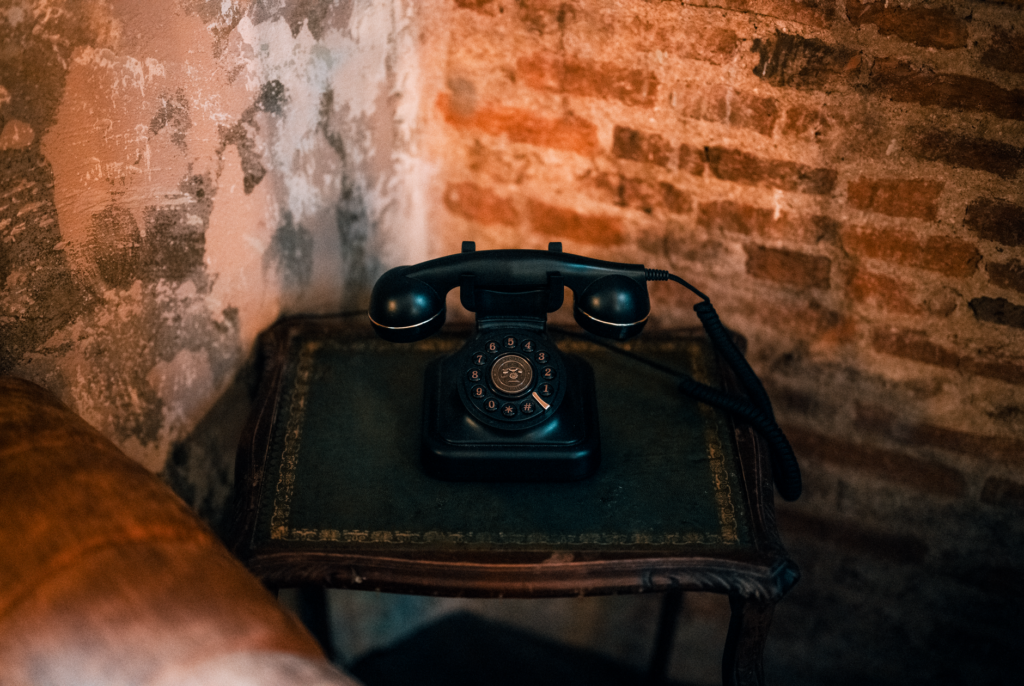
No. The Black Phone is fiction, adapted from a short story rather than drawn from any real abduction case. Joe Hill published the story in 2005, and Scott Derrickson and C. Robert Cargill expanded it into a feature. What is real is the texture around the plot, because Derrickson built the neighborhood out of the one he grew up in.
Joe Hill’s story and the film it became
| Question | Answer |
|---|---|
| Based on a true story? | No, adapted from fiction |
| Based on a book? | Yes, Joe Hill’s short story in the collection 20th Century Ghosts (2005) |
| Written by | Scott Derrickson and C. Robert Cargill |
| Directed by | Scott Derrickson |
| Lead cast | Ethan Hawke, Mason Thames, Madeleine McGraw |
| First shown | Festival premiere in 2021, wide US release in June 2022 |
Where the story actually came from
The Black Phone began as a short story of roughly twenty pages in 20th Century Ghosts, Joe Hill’s 2005 collection. Almost all of it happens in one room. A boy is taken, locked in a soundproofed basement, and a disconnected wall phone begins to ring with the voices of the boys who were held there before him. Hill has said in interviews that the story grew out of fears attached to the old house he grew up in, and to its basement in particular, rather than out of a case he researched.
That matters for the credit chain. There is no opening card claiming real events, and no source case named anywhere in the film. The line runs from a short story to a screenplay, which is what an adaptation looks like when there is nothing factual underneath it.

The Grabber is not one real person
Ethan Hawke’s character has no documented counterpart. He is an amateur magician who works out of a van, uses black balloons as cover, and wears a mask built in interchangeable pieces. None of that maps onto a specific offender, and the film never suggests it does.
People search anyway because the film is set in 1978, and that decade produced a long run of heavily reported child abduction cases in the United States. The period carries a residue of real crime, and a well made film set inside it inherits the feeling. Derrickson has spoken about growing up around violence in working class suburban Denver and about being aware of a local case as a child. That is influence at the level of atmosphere. It is not a character modeled on a named person.
Why the 1978 setting feels documented
Production detail is what sells the illusion. Rotary phones, wood paneling, bikes dumped on front lawns, children walking to school unaccompanied, a missing persons story that travels by playground rumor and local news rather than by phone alert. Derrickson placed the film in the North Denver area he knew, and the decade is rendered with the specificity of memory rather than of research.
Audiences read that specificity as evidence. It is a standing trap with period horror: the more accurately a film reproduces a time and place, the more readily viewers assume the events inside it were reproduced too.
What the film added to the short story
Twenty pages cannot carry a feature, so the adaptation builds outward from the basement. The sister becomes a parallel storyline rather than a background presence. The father, the school and the bullies all get scenes. The earlier victims are given names, faces and distinct personalities instead of being voices on a line. A police investigation becomes visible.
What stays is the core Hill invented: the soundproofed room, the phone that should not work, and the rule that each caller can hand over only one usable piece of help. None of the expanded material draws on reporting or case files. It follows the internal logic of the story rather than any external record.
The checkable difference between era and case
Two claims get collapsed into one when people ask this question. A film can be set in a real time and a real place, use real social conditions, and still have a completely invented plot. Titles that dramatize an actual crime name a source in the credits, usually a book, an article or a court record, and the marketing says so plainly because it sells tickets.
The Black Phone names a short story and nothing else. If you want to settle a question like this in under a minute, read the credit block on the poster and the writing credit on the film. Based on the short story by is a complete answer, and it is the only source credit this film carries.