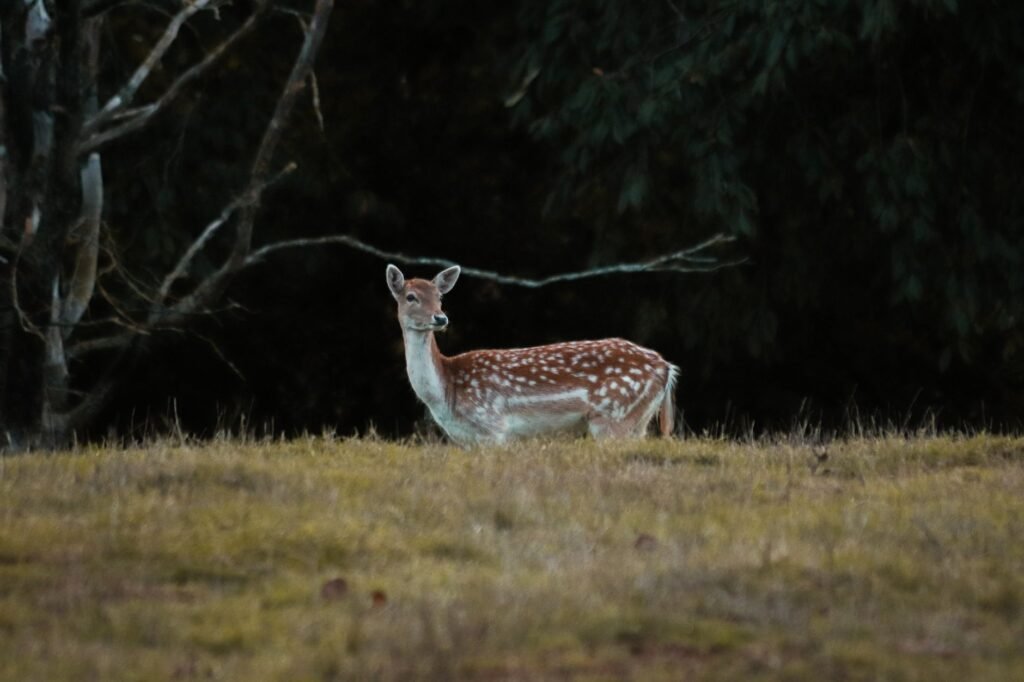
The answer is FAUNA, five letters. It means the animals of a particular region or period considered as a group, and it is the counterpart of FLORA, the plant life. BIOTA also has five letters but covers plants and animals together, and WILDLIFE fills eight squares.
A Roman goddess lent fauna its name
The term is younger in English than it looks. Fauna was a rustic Roman fertility goddess associated with Faunus, and her name became a scientific word thanks to the Swedish naturalist Carl Linnaeus. He had published a catalog of Swedish plants in 1745 under the title Flora Suecica, borrowing the name of the Roman goddess of flowers, and in 1746 he followed it with a companion catalog of Swedish animals, Fauna Suecica. English took up fauna as a general noun in 1771. Linnaeus is the same naturalist best known for the two-part scientific names, such as Homo sapiens, that biology still uses, and the Romans had honored Flora with a festival of her own, the Floralia, held from late April into early May.
That is why the two words travel as a pair, and why one dictionary sense of fauna is still a catalog of the animals of a region or period, the same kind of book Linnaeus wrote. The pairing also sets up the main trap in this clue.
FLORA and BIOTA are the five-letter traps
Two five-letter words cause most of the trouble. FLORA is the plant life of a region, the exact counterpart, and it shares its first and last letters with FAUNA, so a crossing at either end cannot tell them apart. BIOTA is broader. It means the animal and plant life of a region together, a term English picked up in 1901. A clue that says only animal life rules both out, but they fit the squares, and that is enough to fool a quick solver.
The middle three squares are where the answer lives. FAUNA runs A, U, N through the center, FLORA runs L, O, R and BIOTA runs I, O, T. A crossing in the second or fourth square separates all three, and the third square alone separates FAUNA from the other two, since both of them carry an O there. BIOME, a community of plants and animals in a habitat, is another five-letter near miss.
Squares, spellings and the plural question
| Letters | Answer | When it fits |
|---|---|---|
| 5 | FAUNA | The default, animals of a region or period |
| 5 | BIOTA | Plants and animals together |
| 6 | FAUNAE | Latin-style plural, for plural wording |
| 6 | FAUNAS | English plural, same situation |
| 6 | FAUNAL | Adjective form, for adjective wording |
| 7 | ZOOLOGY | The study of animal life, not the animals |
| 8 | WILDLIFE | Everyday word, usually wild animals |
Dictionaries accept both plurals, and they differ only in the final square, so a plural clue leaves you exactly one crossing short of certainty.
Prefixes that narrow the animals down
Biologists rarely leave fauna on its own. They attach prefixes to split the animal life of a place into groups. Avifauna is the birds of an area or period, and ichthyofauna the fish. Megafauna is the large animals, the term used for the mammoths and giant ground sloths of the last ice age, while microfauna covers animals too small to see without a microscope. Infauna are animals that live inside the sediment of a seabed or lake bottom, and epifauna are the ones living on its surface. None of these are likely fills for a plain animal life clue, but they show how the word works: fauna is always a collection, never a single creature.
A line on the map where the fauna changes
The clearest demonstration of fauna as a regional idea is a boundary in Indonesia. In the nineteenth century the naturalist Alfred Russel Wallace recorded a sharp change in mammals and birds across a line running between Bali and Lombok and north between Borneo and Sulawesi. West of it, islands such as Sumatra, Java and Borneo have animals like those of mainland Asia, including tigers, rhinoceroses and apes. East of it, marsupials and Australasian birds take over. The islands are close together, yet the animal life on either side is strikingly different, and the boundary is still called the Wallace Line.