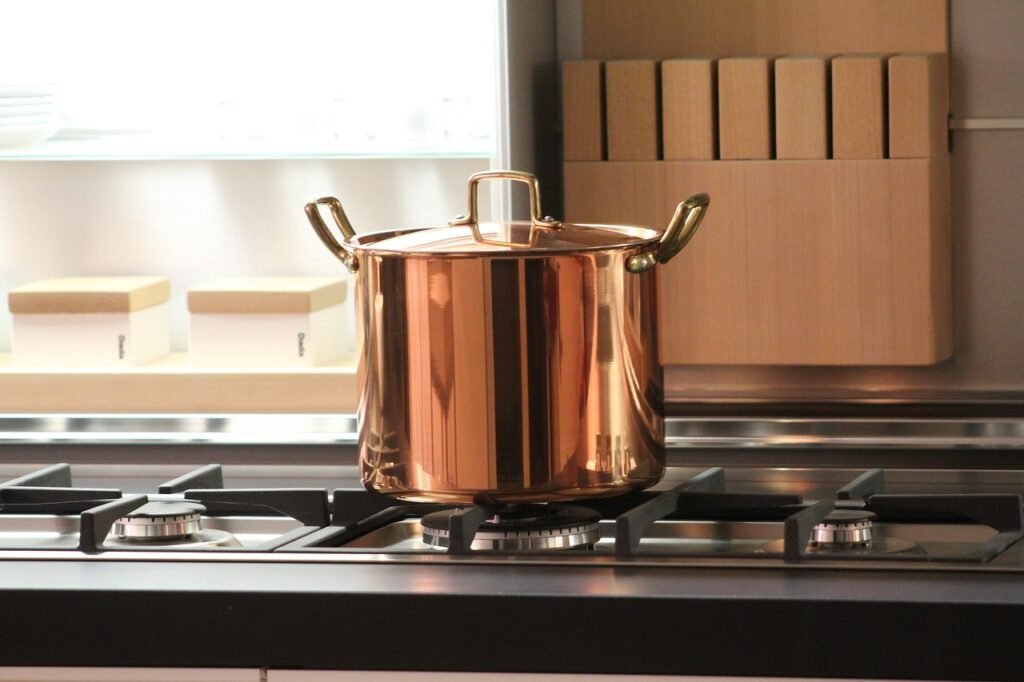
Rub bare copper with half a lemon dipped in table salt, or a paste of salt, flour and white vinegar, then rinse under running water and dry it completely right away. The acid strips the tarnish layer chemically while the salt gives it just enough grit to work with.
Brown and green are chemistry, not grime
Copper does not get dirty in any ordinary sense. It reacts. Exposed to air it forms a thin copper oxide film that reads as dull pink, then brown, then almost black. Add years, moisture and sulfur in the air and you get the blue green crust seen on roofs and statues. Both layers are compounds of the copper itself, which is why scrubbing with dish soap does nothing at all.
That also explains the trade off nobody mentions. Removing the layer means removing a little copper with it, and the freshly bared metal has no film left to slow the next reaction. A piece you polish back to a mirror will start turning again within days. On an outdoor fixture the patina is genuinely protective, and stripping it is a downgrade.
Test for lacquer before any acid goes near it
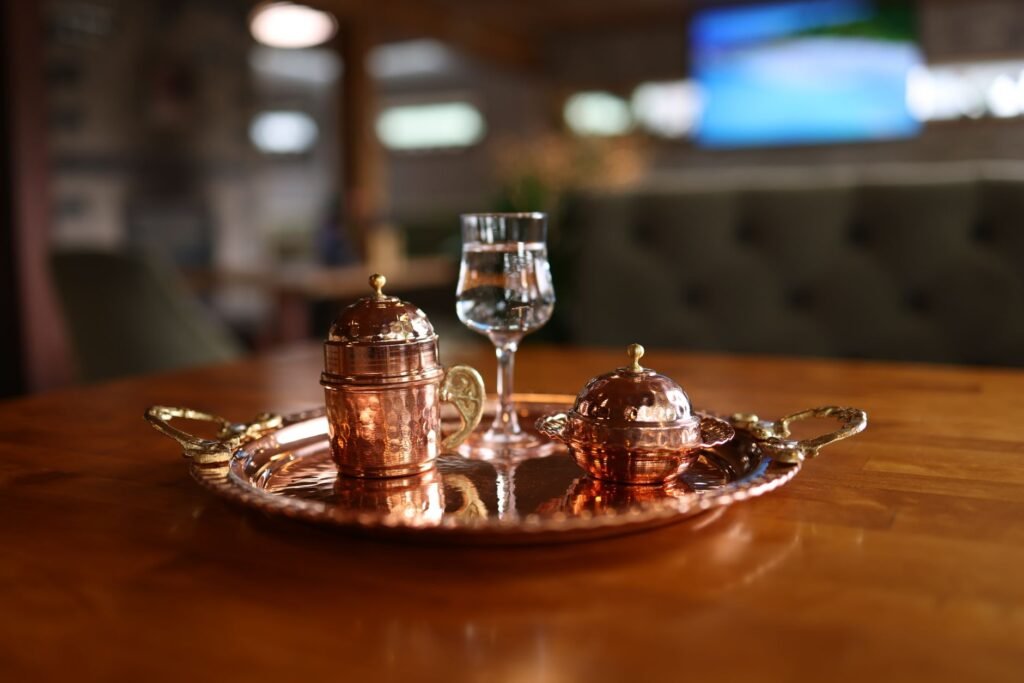
A lot of decorative copper leaves the factory under a clear lacquer. Acid will not reach the metal through an intact coating, but it will haze and lift the coating itself, leaving blotches that look far worse than the tarnish did.
Two quick tells. Lacquered copper tarnishes in patches, usually starting at scratches and rim edges, while bare copper darkens evenly all over. And a dab of acid paste on a hidden spot will lighten bare metal within a minute and do nothing visible on lacquer. If it is lacquered, warm soapy water and a soft cloth is the whole job, and a stripper plus recoating is the only route to a full restoration.
The acid and salt method
- Wash the piece in warm soapy water first, so you are not grinding dust into the surface.
- Make your abrasive. Half a lemon dipped in salt suits curved pieces, while a thick paste of equal parts salt and flour mixed with white vinegar clings better to flat panels and handles.
- Work in small circles with steady light pressure. Dark spots usually give way in under a minute. Longer contact does not clean better, it just eats more metal.
- Rinse under running water immediately and thoroughly. Salt left in a seam will pit the copper.
- Dry with a soft towel right away and finish with a dry cloth buff. Air drying leaves water spots that are harder to remove than the original tarnish.
What each approach actually does
| Method | Effect on copper |
|---|---|
| Lemon and salt | Dissolves the tarnish film fast. Best for cookware exteriors and small items |
| Salt, flour and vinegar paste | Same reaction, slower and more controllable on large flat surfaces |
| Ketchup | Works because of its acidity. Slow, and the sugar needs a real rinse |
| Commercial copper cream | Consistent results and usually leaves a mild protective film. Check the label for cookware approval |
| Steel wool or scouring pads | Copper is soft. This leaves permanent swirl scratches that trap tarnish |
| Bleach or chlorine cleaners | Pits and blackens copper. Never combine with an acid, because that mix releases chlorine gas |
| Dishwasher | Hot alkaline detergent dulls and discolors copper, often permanently |
Making the shine last
Skin oils and moisture are what restart the reaction, so handling a polished piece with bare hands is the fastest way to undo the work. Wipe fingerprints off display pieces with a dry cloth, keep copper out of damp cabinets, and store seasonal items in a closed bag with the air pushed out.
On copper bottomed pans, wipe the base dry before it goes away and accept some discoloration, since heat marks are baked in rather than sitting on top. Decorative pieces can be waxed with a microcrystalline wax after polishing, which slows air contact for months. Do not wax anything that will meet a flame or food.