
If a coin might have collector value, do not clean it at all, because collectors price the original surface and any cleaning is visible and permanent. For ordinary pocket change, dug finds and craft coins, warm soapy water and a soft cloth are enough, with acid reserved for copper you have already decided has no premium.
Toning is a chemical layer, not grime
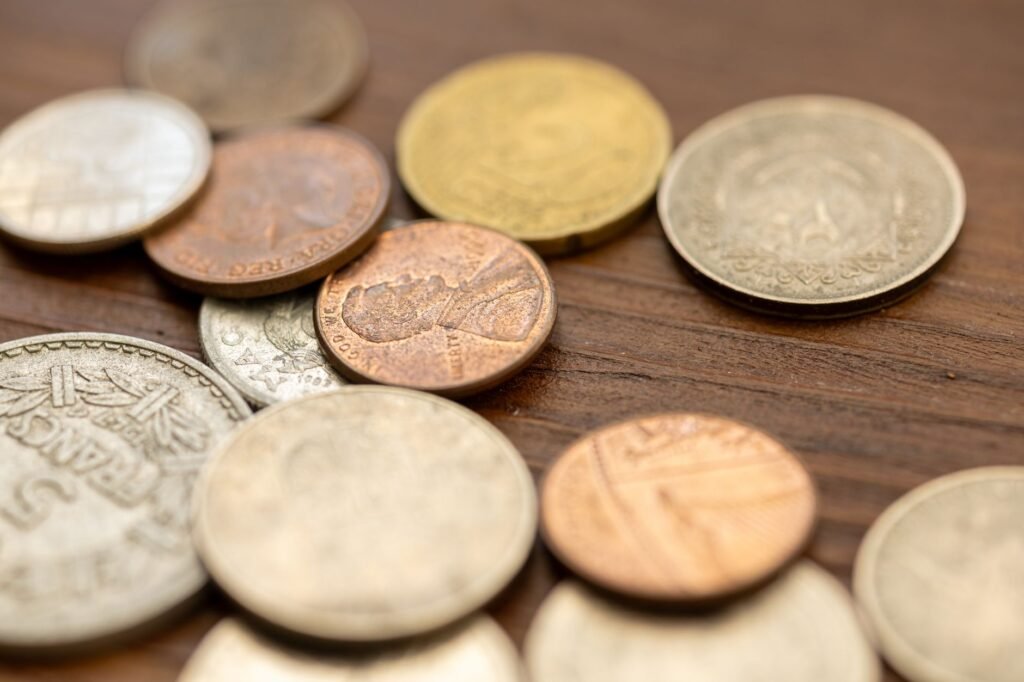
The soft gray or rainbow cast on an old silver coin is silver sulfide, formed where the metal met sulfur compounds in air, paper and cardboard over decades. The green or chocolate brown on copper is a family of copper oxides and carbonates. Neither is sitting on the surface the way dirt does. Both are the surface, converted, and the only way to take them off is to take metal with them.
That is the reason the hobby treats cleaning as damage. A polished coin reads as bright, but under angled light it shows hairlines, fine parallel scratches that no amount of care avoids, and the original luster from the mint’s dies is gone for good. Graders note cleaned coins separately, and a cleaned example of a scarce date typically trades well below an untouched one. The honest advice for anything you suspect is scarce is to leave it and get an opinion first.
What each metal will and will not survive
Copper is the least forgiving. It reacts fast, so any acid that brightens it also leaves it chemically raw, and it will retone within weeks into a blotchy orange that looks worse than what you started with. Silver is softer than most people expect and marks easily under a cloth. Cupronickel, the alloy in modern dimes and quarters, is tougher and tolerates soap and water without drama.
Cents struck from 1982 onward are the special case. They are a zinc core with a thin copper plating, so any nick in the plating lets liquid reach the zinc underneath, and zinc corrodes quickly and visibly. Soaking a modern cent in vinegar can leave it pitted and gray from the inside out. Older solid bronze cents do not have that failure mode.
A safe routine for coins with no premium
- Handle every coin by its edges, since fingerprints etch into metal over time.
- Line a bowl with a soft cloth and use distilled water if your tap water is hard, so you do not trade dirt for mineral spots.
- Soak in warm water with a drop of mild dish soap. Give caked dirt hours rather than minutes.
- Roll the coin gently between soft fingertips or dab with a soft cloth. No circular rubbing, no brushes, no pencil erasers.
- Rinse in clean distilled water.
- Pat dry with a lint free cloth, then air dry face up. Never rub a coin dry.
- Store in an inert holder rather than a paper envelope or a PVC flip, since both accelerate new toning.
Methods ranked by what they cost you
| Approach | Effect on the coin |
|---|---|
| Doing nothing to a possibly scarce coin | Preserves the one thing the market pays for, the original surface |
| Warm water and mild soap | Removes loose soil and oils without touching the metal itself |
| Vinegar and salt on copper | Strips oxide fast, leaves a raw surface that retones blotchy within weeks |
| Ketchup or acidic sauces | Same acid attack with sugar and salt residue left in the details |
| Baking soda paste or toothpaste | Abrasive, cuts visible hairlines into soft silver and copper |
| Electrolysis with a battery charger | Can pit the field and burn detail, and belongs only on worthless dug metal |
| Ultrasonic cleaner | Fine for keys, too aggressive on coin luster and on anything with a coating |
If you are not sure which category a coin falls into, the cheap move is to photograph it and ask at a coin club or a reputable dealer before you touch it with anything. Dirt can be removed later. A cleaned surface cannot be put back.