
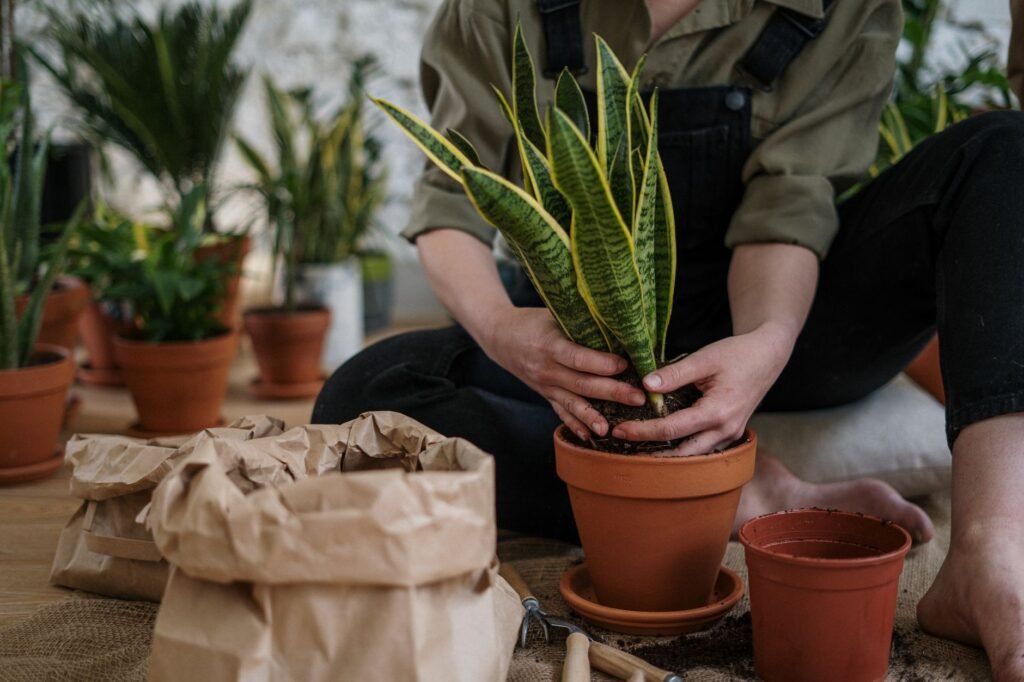
Snake plants propagate two ways, and the choice decides whether the new plant keeps its yellow edge. Splitting the root mass gives you an exact copy. Rooting a cut leaf is easier and produces more plants, but a variegated parent almost always throws plain green pups from a leaf.
A cut leaf loses the yellow margin, a split clump keeps it
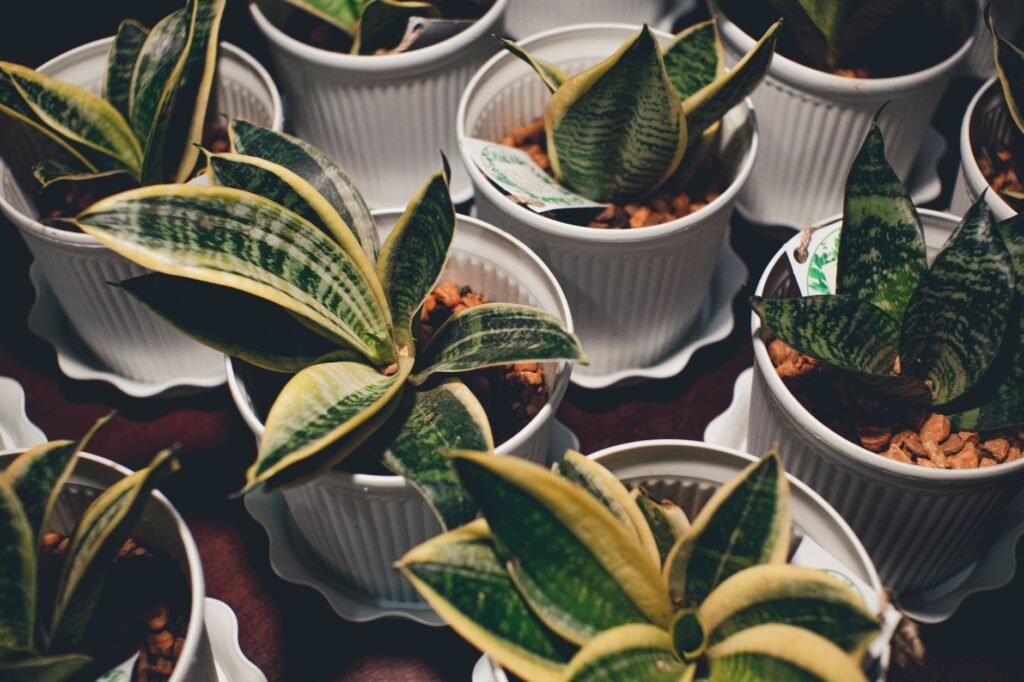
The golden border on the popular striped varieties is not a pigment spread through the leaf. It is a separate layer of tissue sitting along the outer rim, and it is genetically distinct from the green core underneath. Cut the leaf into pieces and the new shoot grows from callus tissue formed by that inner green layer, so the border simply has no source to come from.
The result surprises people months later. The cutting roots, a pup appears, and it is uniformly green with none of the edge that made you buy the plant. Nothing went wrong and no care mistake caused it. The plain green form is what leaf tissue produces.
So the rule is short. Want the stripe, divide the clump. Want quantity from one leaf and do not mind plain green, take cuttings.
Splitting a crowded clump without wrecking the rhizome
Snake plants spread by a thick underground stem that pushes new fans up around the parent. Those fans are already independent plants, which is why this route is close to foolproof.
- Tip the plant out of its pot and crumble the mix away from the base by hand until the pale rhizomes show.
- Find a fan with at least three leaves and its own roots hanging below it.
- Cut the rhizome between that fan and the parent with a clean blade. Tearing crushes the tissue and invites rot.
- Leave the cut surfaces in open air for a day so they seal.
- Pot each piece into a gritty mix, then hold off on water for several days.
Repotting day is the moment to do this, because the plant pays the price of root disturbance once instead of twice.
Leaf cuttings, in a jar or straight into mix
Slice a healthy leaf across into sections the length of your hand, or root a whole leaf in one piece. Either works. What matters is orientation, since a section rooted upside down will sit there for months and do nothing. The end that was closer to the soil is the only end that makes roots, so notch a small V into it before you cut anything apart.
Let every cut surface dry until it feels papery to the touch. This step is not optional for a succulent leaf, and skipping it sinks more cuttings than any other shortcut.
For water, stand each piece upright so only its bottom edge sits under the surface, and refresh whenever the jar clouds. For mix, push the base into damp gritty medium deep enough to stand upright. Water rooting is more fun to watch and soil rooting skips the transition, so pick by temperament rather than results.
Why the timeline feels so slow, and when to worry
Roots come first, and a pup follows only later from the base of the rooted piece. Expect months rather than weeks, with warm bright conditions speeding things up and a cool dim windowsill stretching the wait out considerably. A cutting that has roots but no pup yet is working, not stalled.
Three failures account for most losses.
- A soggy medium. These are dry country plants, and a wet base turns mushy and brown well before it roots.
- An unsealed cut. Fresh tissue placed straight into moisture is an open invitation to rot.
- Impatience. Pulling a piece out repeatedly to inspect it snaps the fragile new roots every time.
If a section turns soft and smells sour, trim back to firm tissue, dry the new cut again, and restart. Plenty of cuttings recover from one bad start.
Frequently asked questions
Why did my snake plant cutting come back all green?
The yellow border sits in its own outer tissue layer rather than being mixed through the leaf. New growth from a cutting forms out of the inner green layer, so the margin has nothing to regrow from. Division is the only home method that reliably carries the variegation forward.
How long does a snake plant leaf take to root?
Plan in months rather than weeks. Roots usually appear well before any new shoot does, and warmth and bright light shorten the wait noticeably. A piece sitting in a cool dim spot through winter can stay firm and rootless for a long stretch without anything being wrong.
Does a snake plant cutting need rooting hormone?
No. These root readily without it, and the powder does nothing to fix the two things that actually sink cuttings, which are a soggy medium and a cut surface that was never allowed to dry. Drying the base properly matters far more than any product.