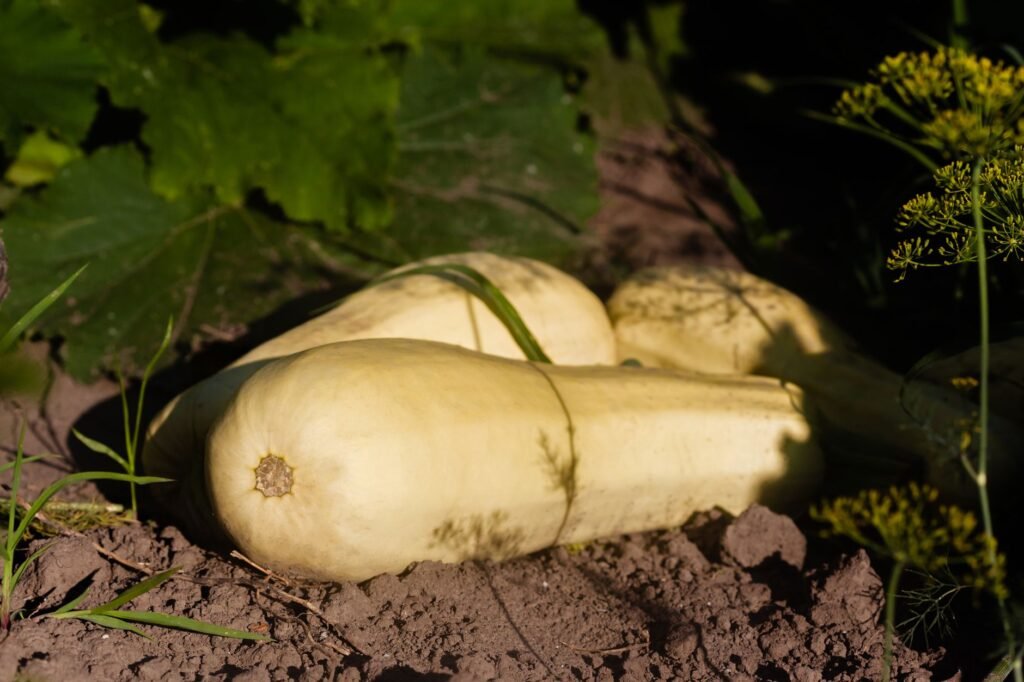
Pick butternut squash when the stem has turned dry and corky and your fingernail will not pierce the skin. Color helps, but those two checks decide it. A squash that passes both stores for months. One picked on a calendar date alone tends to shrivel or rot in the pantry.
Four signs the fruit is finished, and a date is not one of them
Days to maturity printed on a seed packet assume weather that your yard probably did not deliver. A cool cloudy stretch stalls ripening, a hot dry one speeds it up, and shade from neighboring plants pushes some fruits weeks behind others on the same vine. Read the squash instead.
- The stem where it joins the fruit has gone tan, dry and cracked, rather than green and juicy.
- The skin has darkened to a solid matte tan with no green striping and no shine left on the surface.
- The little tendril on the vine closest to that fruit has withered and gone brown.
- The rind resists a fingernail pressed hard into the thick end.
All four usually arrive together. If three agree and one holds out, give the plant another week and look again, since a few more warm days cost nothing and ripening cannot be undone once you cut.
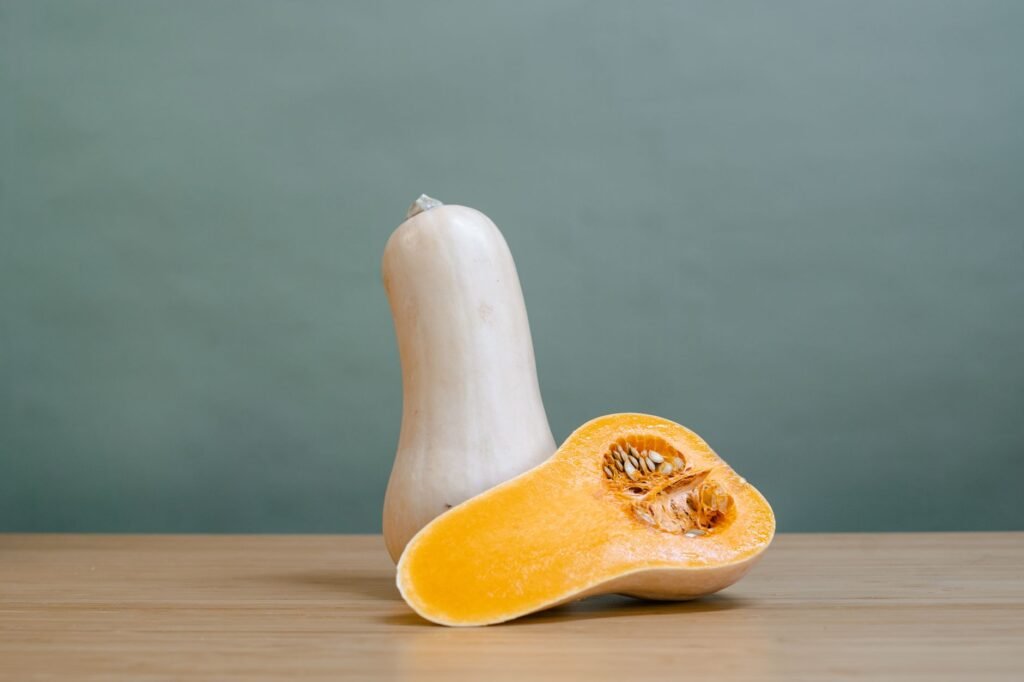
The fingernail check, and why it outranks color
Push a thumbnail firmly into the fat end. If it slides in or leaves a dent that stays, the rind is still soft and the fruit is not ready. If your nail skids off and leaves nothing, the wall has hardened into the barrier that keeps moisture in and rot organisms out. That barrier is the entire reason winter squash keeps while summer squash does not.
Color can lie in both directions. Some fruits color up early while the rind stays thin, and a squash grown in heavy shade can hold a pale patch where it rested on the ground yet still be perfectly hard everywhere else. Tan skin with a soft rind is a squash to eat this week, not one to store.
Cutting it loose without shortening its life
The stub of stem left on the fruit is a plug. Tear the fruit off and you open a wound straight into the flesh, and that wound is how most otherwise sound squash spoil indoors.
- Use pruners or a sturdy knife, not your hands, and cut on a dry day if you can.
- Leave a generous handle of stem attached, roughly the length of your thumb.
- Carry each fruit cradled underneath. The stem is a plug, never a handle, and a snapped one cannot be reattached.
- Brush off soil rather than washing. Water on the skin invites the exact rot you are trying to avoid.
- Set aside any fruit with a gouge, a soft spot or a broken stem, and cook those first.
Frost is the one deadline the plant imposes. A light frost that kills the leaves does little to a thick rind, but a hard freeze reaches the flesh and quietly ruins its keeping quality. Bring everything in before a hard freeze is forecast, ready or not.
Curing, and what that week actually changes
Curing means holding the harvested fruit somewhere warm and airy for a stretch, commonly a week or two, before it goes into storage. The exact length depends on how warm the space is and how much airflow reaches every side.
Two things happen. Small scratches seal over with a corky layer, closing the doors that mold would otherwise walk through. At the same time some of the starch converts, which is why a cured butternut tastes sweeter and less watery than one cooked the day it was cut.
A spare bedroom, a sunny porch or a garage that stays warm all work. Space the fruits so air touches every surface, and turn them once partway through. After curing, move them somewhere cool and dry with no direct sun. Refrigeration is the wrong destination for whole winter squash, since cold damp storage shortens rather than extends the life of a properly cured fruit.
Frequently asked questions
Will butternut squash ripen after you pick it?
Only partly. A fruit cut slightly early can deepen in color and sweeten a little during curing, but a rind that was still soft at harvest never fully hardens off the vine. That squash should be cooked within a few weeks instead of going into long storage.
What happens if you harvest butternut squash too late?
An overdue fruit is usually still edible, though the flesh can turn stringy and the seeds inside start to swell. The bigger risk is weather, because a squash sitting out through a hard freeze or repeated soaking rain develops soft patches that spread quickly once indoors.
Can you eat the squash right after cutting it from the vine?
Yes, and nothing about it is unsafe. The flavor is simply flatter and more watery than it becomes later, since the starch has not yet had time to convert. Cooks who want the sweetest result wait through curing and hold the fruit longer before roasting.