Store kale dry, loosely wrapped, with a little airflow, and do not wash it until you are ready to cook. A dry paper towel inside a partly open bag in the crisper handles most bunches. Water sitting on the leaves is what turns the edges black, and a nearby bowl of ripening fruit is what yellows them.
The paper towel wrap, and why it works
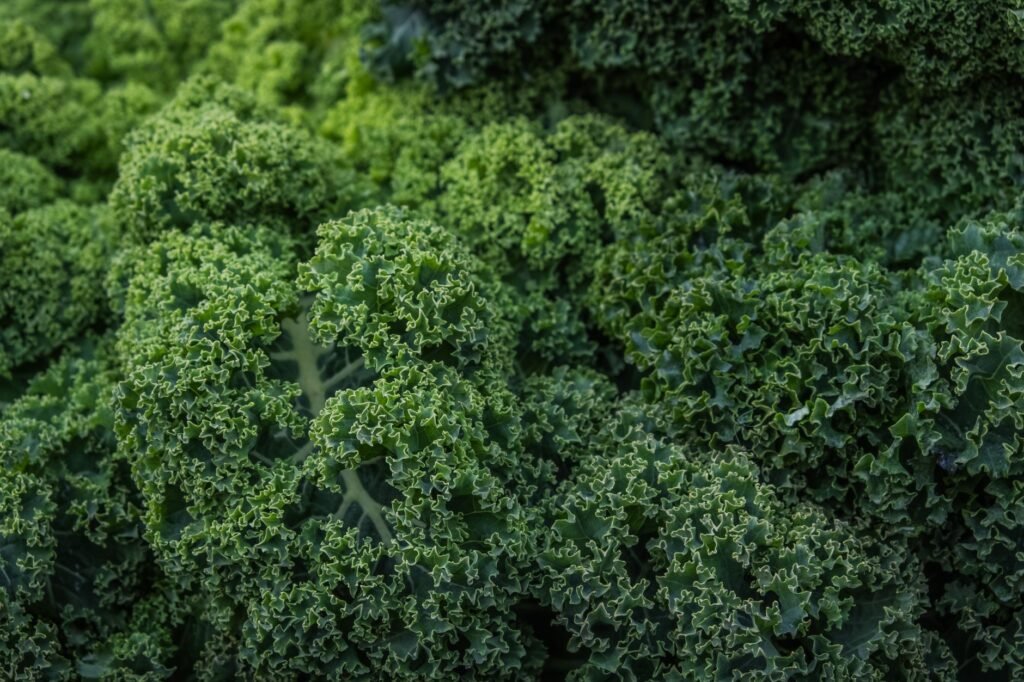
Kale is tougher than lettuce but it fails the same two ways: it dries out, or it drowns. The paper towel splits the difference. Lay the unwashed bunch on a dry towel, roll it up without compressing it, and slide the roll into a produce bag with the top folded over instead of sealed.
The towel absorbs whatever moisture the leaves give off so it never pools. The bag keeps the air around the leaves humid enough that they do not go papery. The open top lets the gases kale releases escape instead of building up. Swap the towel if it feels damp.
Bunched kale versus the bagged chopped kind
| What you bought | Best handling |
|---|---|
| Whole bunch with stems | Towel roll, or stems in water with a bag tented over |
| Bagged pre chopped kale | Add a dry towel to the bag, reseal loosely |
| Kale you chopped yourself | Dry it thoroughly first, use it soonest |
| Baby kale in a clamshell | Towel in the clamshell, keep it off the coldest wall |
| Kale from a garden or market | Shake off soil dry, do not rinse, store immediately |
Bunched kale with the stems intact keeps noticeably better than anything pre cut, because every cut is an opening. If you have the choice and the space, buy it whole.
Keep it away from the fruit bowl
Apples, bananas, pears and tomatoes give off ripening gas as they sit. Leafy greens are sensitive to it, and the visible result on kale is yellowing that starts at the leaf tips and works inward. A bunch stored in the crisper directly under a bowl of ripening bananas will yellow noticeably faster than the same bunch on the other side of the fridge.
This is a free fix. Fruit in one drawer, greens in the other, and do not park the fruit bowl on the counter right beside a bag of greens waiting to be put away.
What turns kale to slime
Washing it on the way home and bagging it before it is truly dry. A salad spinner helps but does not get water out of the ruffled parts of curly kale, which is where the first slick patch always shows up.
Then: sealing it in an airtight container with no towel and no air gap, so the bunch sits in its own condensation. Chopping it days ahead. Pushing it against the back wall of the refrigerator where things freeze and thaw, which leaves translucent water soaked patches. Leaving it in the thin store bag that sweats. And stacking a milk jug on top of it, which bruises the ribs and starts breakdown from the crease.
Limp, yellow or finished
Limp and still green is a water problem, not a spoilage problem. A bath in very cold water for fifteen or twenty minutes brings most of it back, and it will hold up fine in a hot pan afterward.
Yellow leaves have moved on and will not come back, though you can pick the green ones out around them. Slimy, sour smelling, or dark and soft at the ribs means the bunch is done. Trust the smell over the look, since kale often looks worse than it is and occasionally smells worse than it looks.