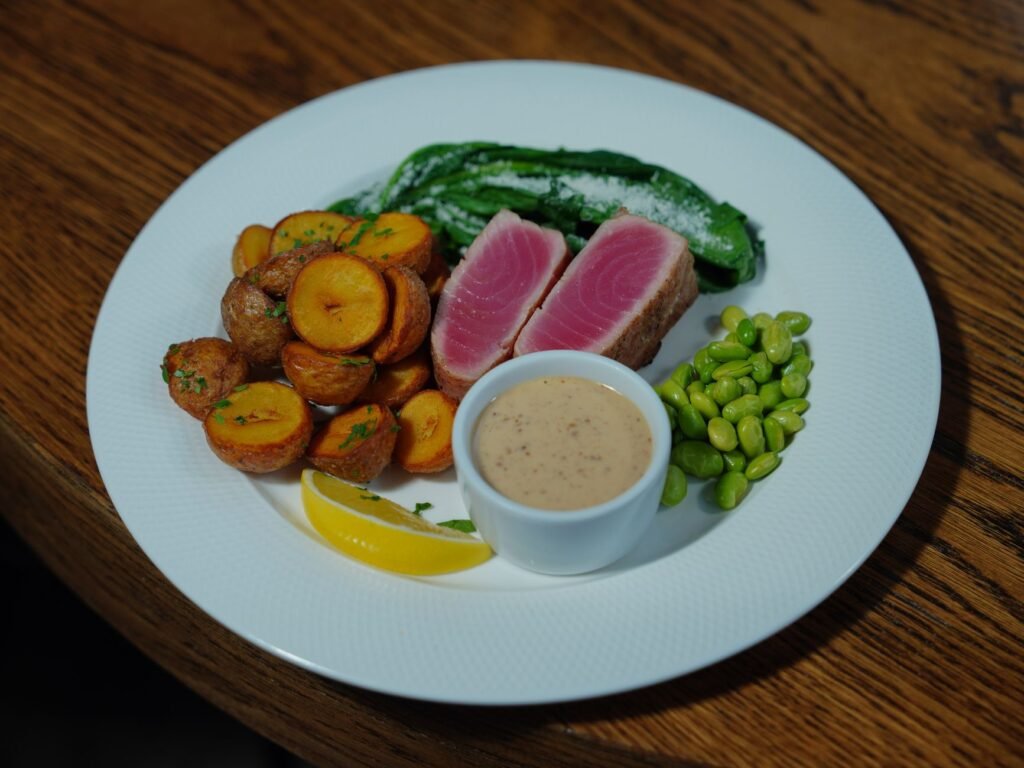
The answer is AHI, three letters. It is the Hawaiian name for yellowfin and bigeye tuna, and it is the standard short fill for this clue. Longer slots want a species name instead: BIGEYE at six squares, BLUEFIN at seven, and ALBACORE or SKIPJACK at eight.
Ahi names two fish, not one
In Hawaii, ahi refers to two species, the yellowfin tuna and the bigeye tuna. The Hawaii Seafood Council describes the yellowfin as the slimmer fish, with bright yellow soft dorsal and anal fins and finlets, and the bigeye as plumper, with a larger head and unusually large eyes. It also notes that for less discriminating consumers the two species are interchangeable. So a Hawaiian menu that says ahi is telling you the fish is one of those two, not which one.
For solvers, the practical point is that AHI is not a species name at all. It is a market name, and that looseness is exactly why it answers a clue built on the vague word variety. Crossword answer databases rank it as the top answer for this exact wording, so when you see this clue with three blanks, you can write it in and move on.
Albacore is the only white tuna in a can
ALBACORE, eight letters, has a legal distinction none of its relatives share. Under the federal standard for canned tuna, the color designation white is limited to a single species, Thunnus alalunga, which is albacore. Everything else is sold as light, dark or blended. A can labeled white tuna is therefore telling you the species, while a can labeled light is telling you only the color of the meat. The species name itself, alalunga, means long wing, a reference to pectoral fins so long that another common name for the fish is longfin tuna.
SKIPJACK, also eight letters, is the species most often found in cans labeled light. It is also the fish behind katsuobushi, the dried, smoked flakes used with kelp to make Japanese dashi stock, which are usually sold in English as bonito flakes.
Species names from three squares to nine
| Letters | Answer | What sets it apart |
|---|---|---|
| 3 | AHI | Hawaiian market name, the default |
| 4 | MELT | Only for a blank after tuna, the sandwich |
| 6 | BIGEYE | The plumper of the two ahi species |
| 6 | BONITO | Skipjack wording, as in bonito flakes |
| 7 | BLUEFIN | The largest tunas, prized for sushi |
| 8 | ALBACORE | The only white tuna in a can |
| 8 | SKIPJACK | The mainstay of light canned tuna |
| 9 | YELLOWFIN | The slimmer ahi, named for its fins |
Splitting ALBACORE from SKIPJACK
The two eight-letter answers cause the most trouble, because both are canned and both are common. Set them side by side, though, and A, L, B, A, C, O, R, E never matches S, K, I, P, J, A, C, K square for square, so whichever crossing lands first decides the slot. Wording can help before the crossings do. A clue that mentions white meat points at ALBACORE, and one that mentions light meat or bonito flakes points at SKIPJACK. If neither hint is there, put in the crossing you trust most and let it decide.
Bluefin and bigeye, the sushi counter fish
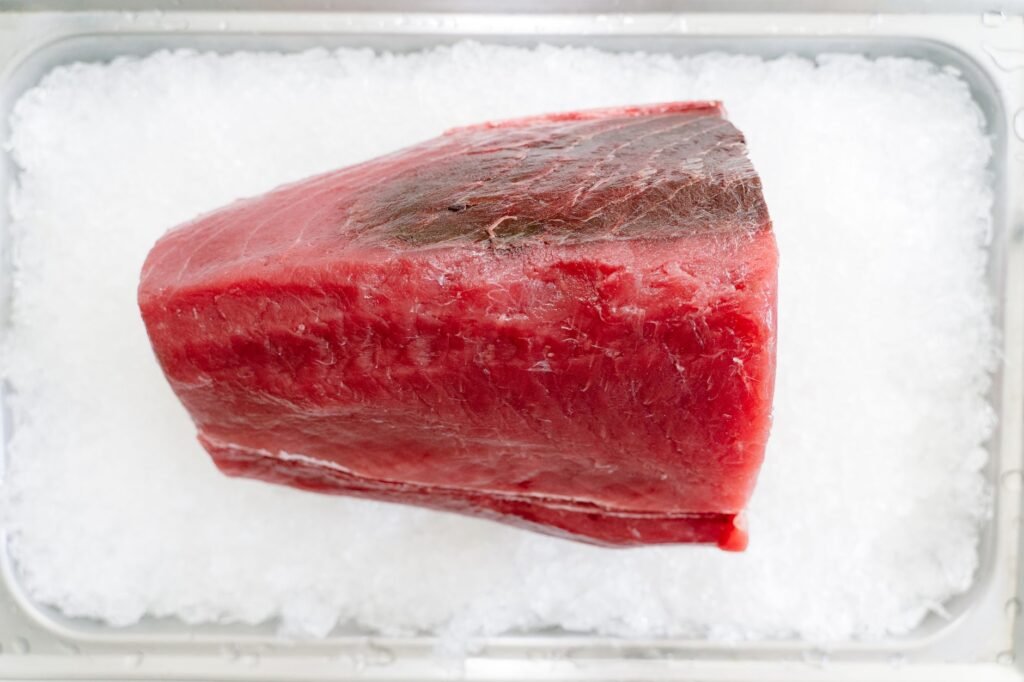
BLUEFIN, seven letters, covers the giants of the group, and the Atlantic bluefin is the largest tuna species of all. At sushi counters the lean loin along the spine is served as akami, while the fatty belly is toro, the prized cut. BIGEYE, six letters, is the other ahi species. Its name is literal, since its eyes are larger than a yellowfin’s, and in Hawaii it is sold under the same market name as its slimmer cousin. That shared name is the reason a three-square slot never has to choose between them.
Hawaiian names for the rest of the list
The Hawaiian market has names for the other tunas as well. The Hawaii Seafood Council lists aku for skipjack and tombo ahi for albacore, alongside ahi for the yellowfin and bigeye pair. AKU is also three letters, so if a clue names skipjack and Hawaii together, that is the word to test before AHI. A plain tuna variety clue, with neither hint, still points at AHI. The same council lists ono for the wahoo and opah for the moonfish, two more short Hawaiian names for fish that are not tunas at all.