

Yes, and draining it first is what separates a usable thaw from a chalky one. Ricotta is a very fine wet curd, so the more water you pull out beforehand, the fewer crystals form to wreck it. Whole milk ricotta survives the trip noticeably better than part skim does.
Why ricotta turns sandy instead of watery
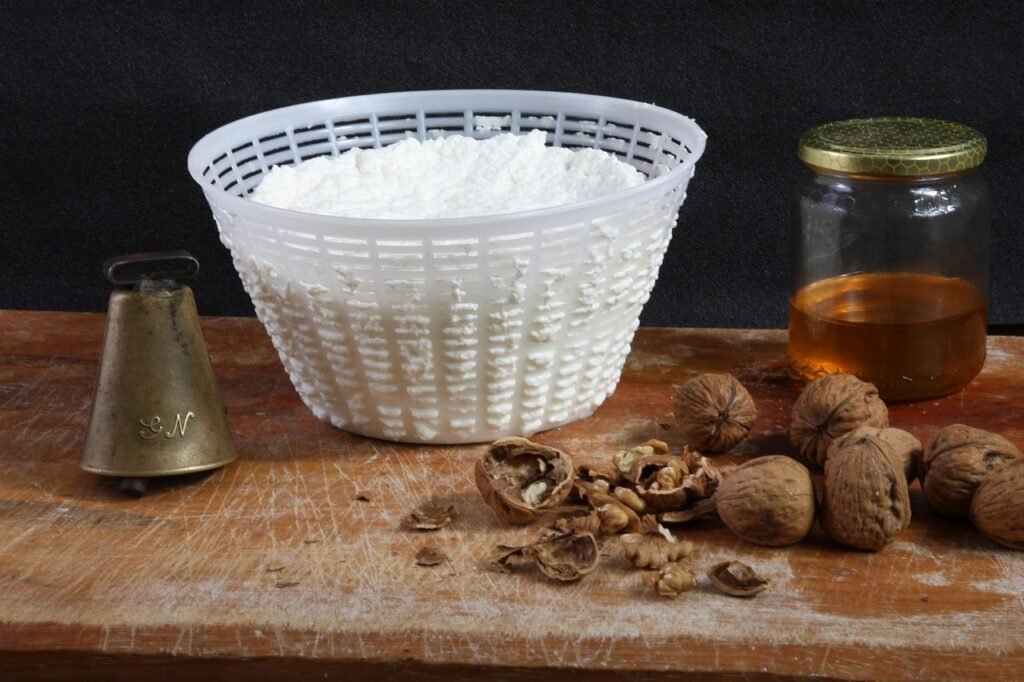
Ricotta is made by heating whey until the proteins left in it clump into tiny, delicate flakes. Those flakes are small enough that a spoonful feels smooth even though it is technically curd. Freezing makes the flakes stick to one another, and clumped flakes read on the tongue as sand. That is the signature complaint about thawed ricotta, and it is a different failure from the watery split you see in cottage cheese.
Fat is the buffer. Whole milk ricotta carries enough butterfat around each flake to keep the clumping mild. Part skim has less of that protection, and the fat free versions come back resembling wet plaster. If you already know a tub is heading for the freezer, buy the rich one.
Strain it overnight before it goes near the freezer
- Line a sieve with cheesecloth or a double layer of coffee filters, then set it over a bowl with room underneath.
- Spoon the ricotta in and cover the top loosely so the fridge air does not dry the surface into a skin.
- Let it drip overnight. A standard tub gives up a surprising amount, and everything in that bowl is water that will never become an ice crystal.
- Pack it tight into a small container with film pressed directly onto the surface, leaving no air pocket above it.
- Portion by recipe. A cup and a half fills most stuffed shell recipes, so freezing in that size spares you from thawing the lot.
Where thawed ricotta works and where it fails
| Dish | Verdict |
|---|---|
| Lasagna filling | Works well, especially bound with an egg |
| Stuffed shells and manicotti | Works well |
| Baked ziti | Works well |
| Ricotta pancakes and fritters | Works, the batter hides everything |
| Meatballs and meatloaf | Works, it is a binder there anyway |
| Whipped ricotta on toast | Fails, smooth texture is the entire dish |
| Cannoli or cheesecake filling | Fails, turns gritty and weeps |
| Spooned over pasta at the table | Fails |
Bringing it back after it thaws
Move the container to the fridge a day ahead and never rush it under warm water, which cooks the outer layer into a rubbery skin. Once it is soft, pour off whatever pooled and beat it hard with a fork or a spatula for a full minute. That mechanical work breaks up the clumps the freezer built, and it does more good than any ingredient you could add.
If the texture is still coarse, a tablespoon of heavy cream or one beaten egg smooths it out inside a filling. Three months is a fair quality window. Safety is not the limiting factor here, cold suspends microbial growth for as long as the power stays on, so texture is the thing you are tracking. A tub held longer is still usable, it simply needs to land in a baked dish rather than anywhere it gets tasted on its own.