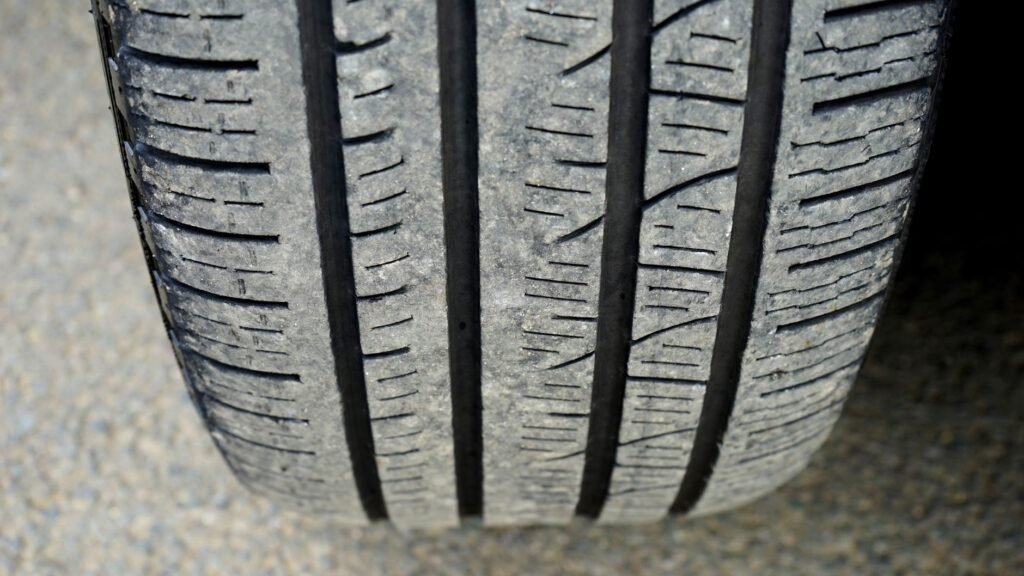
Slide a penny into a main tread groove with Lincoln’s head pointing down; if you can see the top of his head, that tire has 2/32 inch of tread or less and should be replaced. Repeat the check in several grooves on every tire, since tread rarely wears evenly.
What the penny, the quarter and a gauge each tell you
A coin works because the distance from its rim to the top of the portrait happens to line up with depths that tire people care about. Tread is measured in 32nds of an inch in the US, so every tool below reports in those units, even when the coin only gives a yes or no answer.
| Tool | Threshold it shows | What a bad result means |
|---|---|---|
| Penny, Lincoln upside down | 2/32 inch | Worn out, replace now |
| Quarter, Washington upside down | 4/32 inch | Still legal in most places, but grip on wet roads is fading |
| Wear bars in the grooves | 2/32 inch | Tread flush with the bars means the tire is done |
| Tread depth gauge | Exact reading | Lets you track wear over months instead of guessing |
The coins are free and always in the car. A gauge is inexpensive at any auto parts store and removes the squinting, which helps when the answer sits right on the line.
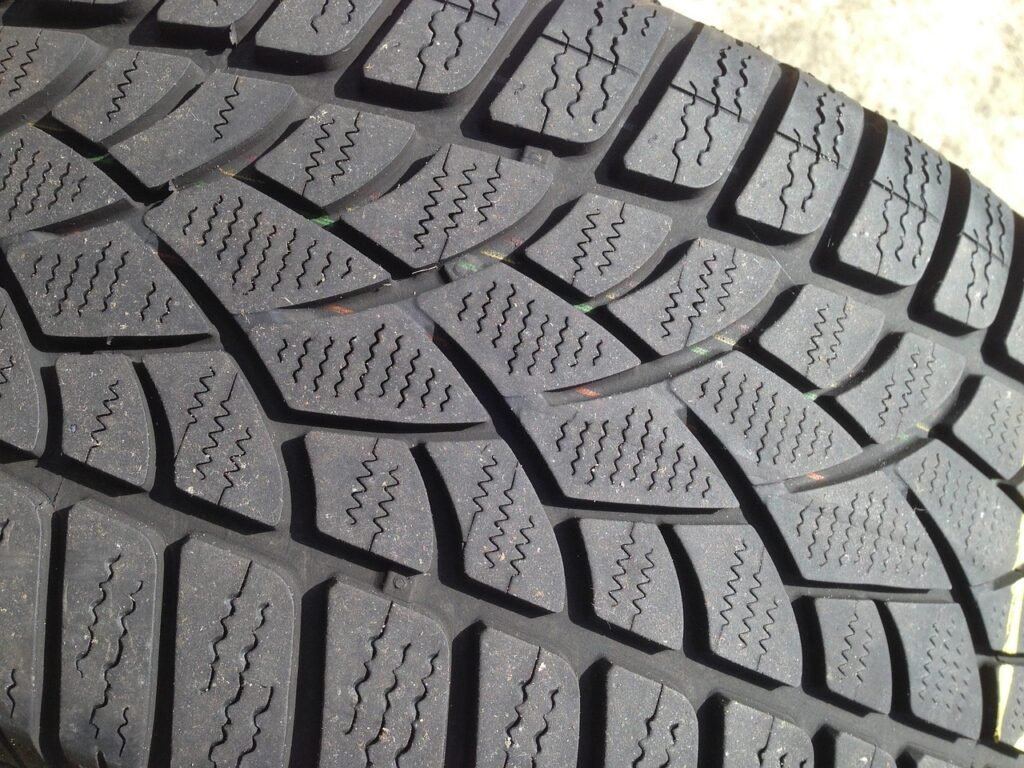
Finding the wear bars molded into the grooves
Every passenger tire sold in the US has small raised ridges sitting across the bottom of the main grooves. New tires hide them deep down. As the tread wears, the ridges come closer to the surface until they line up with the tread blocks and form a solid stripe running across the tire.
Look for a tiny triangle or the letters TWI on the shoulder of the sidewall, which marks where a bar sits. Once the tread is level with any bar, the tire has reached the end of its safe life, whatever the mileage says.
Taking a reading at the spots that wear first
- Park on level ground and turn the steering wheel fully to one side so the front tread is easy to reach.
- Pick the deepest main groove, not the shallow sipes cut into the blocks.
- Check the outer edge, the center and the inner edge of each tire, since a single reading can miss one worn side.
- Move a hand’s width around the tire and repeat, then do the same on all four tires and the spare if it is a full size one.
- Write down the lowest reading for each tire so you can compare next month.
The inner edge is the spot people skip most often, and on front tires it is frequently where the tread goes first.
Why 2/32 inch is the legal line and 4/32 is the wet road line
Most states treat 2/32 inch as the minimum, and Ford’s tire guidance cites NHTSA’s recommendation to replace tires at that depth, with a note that drivers who want more traction in rain or snow can replace at 4/32 inch or earlier. A few states write their rules differently, so check with your state DMV if you need the exact legal figure where you live.
Shallow tread still grips on a dry road. The trouble starts in rain, when grooves that have worn down cannot move water out from under the tire fast enough, and the car begins to ride on a film of water. That is why many drivers start shopping when the quarter test fails rather than waiting for the penny.
Uneven tread is a message about the car
Depth is only half of what the grooves show you. If one edge is much lower than the other, or the tread feels like shallow scallops when you run a hand across it, something beyond normal wear is going on. Inflation that has been off for months, worn suspension parts and alignment that has drifted all leave their marks in different spots.
A tire shop can read these marks quickly and tell you whether an alignment, a rotation or new suspension parts will stop the next set from wearing the same way. Fixing the cause before mounting new tires protects the money you just spent.
Frequently asked questions
How often should I check my tire tread?
Once a month is a good habit, and it pairs easily with checking tire pressure. Check again before a long road trip and ahead of winter, since those are the times shallow tread causes the most trouble. Writing down each reading shows you how fast the tires are wearing.
Can I use the penny test on truck or SUV tires?
Yes, the penny marks the same 2/32 inch point on any tire. Light truck and SUV tires often start with deeper tread, so they may pass the penny test for a long time. A gauge or the quarter test gives a better sense of how much useful tread remains.
Does new tread depth vary between tire types?
It does. All season car tires, winter tires and off road truck tires leave the factory with different depths. The tire maker usually lists the original depth on its product page, which helps you work out how much of the tread has already been used up.
How long do tires last?
There is no single mileage figure, since tread wear depends on the tire, your driving, inflation and alignment, which is why regular depth checks are the best guide. Age counts too. NHTSA notes that some vehicle and tire manufacturers recommend replacing tires that are six to 10 years old, regardless of how much tread remains.
How often should you rotate your tires?
NHTSA's general guidance is every 5,000 to 8,000 miles, or sooner if uneven wear appears, when your vehicle maker recommends rotation. Check the owner's manual first, since some vehicles, including many with different size tires front and rear, cannot be rotated the usual way. Checking tread at each rotation shows whether wear stays even.