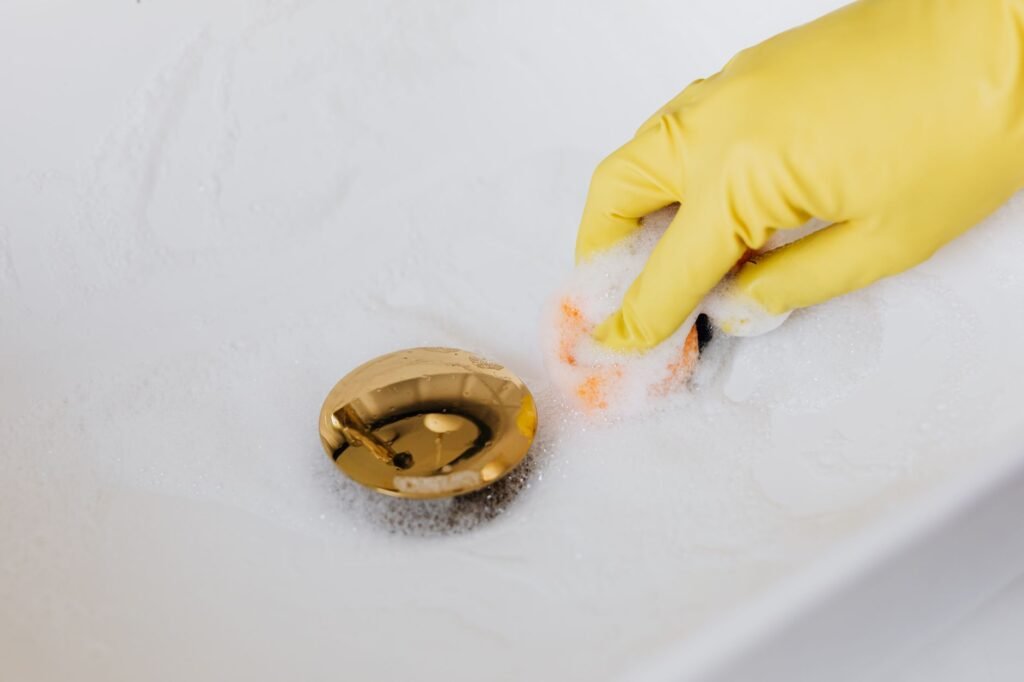
To clean a sink drain, pull out the stopper and wipe off the gunk, run hot water, then clear what is left with a plastic drain snake or by opening the P-trap under the sink. Baking soda and vinegar can freshen a smelly drain, but hair and grease clogs need to be pulled out by hand.
Why kitchen and bathroom drains clog differently
The two sinks in most homes fail for different reasons, which is why one cleaning method rarely fixes both. Kitchen drains collect grease, coffee grounds and bits of food that stick together as the fat cools. Bathroom drains catch hair that knots around the stopper and gets coated in soap and toothpaste.
| Sink | Usual culprit | First thing to try |
|---|---|---|
| Bathroom | Hair wrapped in soap scum | Pull the stopper and use a plastic drain snake |
| Kitchen | Grease, grounds and food scraps | Hot water with dish soap, then the P-trap |
| Laundry or utility | Lint and grit | Open the trap and rinse it outside |
Bathroom sinks also have an overflow hole near the rim, and the channel behind it collects its own slime and smell. Push a bottle brush into the opening, work it around, and rinse with hot water.
Getting the pop-up stopper out of a bathroom sink
Many bathroom stoppers lift out once you twist them a quarter turn. If yours will not budge, look under the sink behind the drainpipe for a horizontal rod held by a small nut. Loosen that nut, slide the rod back, and the stopper comes free from above.
Expect a gray slime coating the stem. Wipe it into a paper towel, rinse the stopper, and before putting it back push a plastic drain snake down the opening, twist, and pull slowly. The barbed strip brings up the hair clump that sits just below where the stopper was.
No snake in the house? An unbent wire hanger with a small hook shaped into the tip does a rougher version of the same job, though it can scratch the finish on the drain, so go gently.
What baking soda and vinegar can and cannot do
This is the method people reach for first, and it has a real but limited job. The fizz loosens film on the pipe walls and helps with odor. It will not dissolve a solid wad of hair or a plug of cooled fat.
- Run hot tap water for a minute to warm the pipe and soften grease.
- Pour baking soda into the drain, about half a cup, and push it down the opening with a spoon handle.
- Follow with about a cup of white vinegar and cover the drain with a wet rag so the foam works downward.
- Wait fifteen minutes or so, then flush with more hot tap water.
If the water still drains slowly afterward, the clog is physical and needs a snake or a trap cleanout.
Opening the P-trap under the sink
The curved pipe under the sink holds a little water to block sewer smells, and it is also where most clogs that sit past the stopper end up. Clear the cabinet, set a bucket under the curve, and lay a towel down.
Plastic traps usually have two large slip nuts you can turn by hand. Loosen both, lower the trap into the bucket, and scrub the inside with an old bottle brush. Check the short pipe going into the wall as well, since debris often lodges right there. Reassemble with the washers facing the right way and run water while you watch for drips.
When a store drain opener or a plumber is the better call
Chemical openers can work on stubborn grease, but read the whole label first and follow it exactly. Never combine one with another cleaner, and do not plunge or open the trap right after pouring it in, because the liquid can splash back. Wear gloves and eye protection.
Call a plumber if several drains in the house slow down at once, if water backs up into a tub or shower when you run the sink, or if the clog comes back within days. Those signs point to a blockage farther down the line than a household tool can reach.
Frequently asked questions
How often should I clean a bathroom sink drain?
Pulling and wiping the stopper every few weeks keeps hair from building into a real clog. Households with long hair or several people sharing one sink may need to do it more often. A slowing drain is your cue, so act when water starts pooling instead of waiting for it to stop.
Why does my sink drain smell even when it drains fine?
Odor usually comes from slime on the stopper and pipe walls, or from a trap that has dried out in a sink nobody uses. Cleaning the stopper and running water for a minute refills the trap. If a smell persists, the vent pipe may need a plumber to look at it.
Is it safe to pour grease down the sink with hot water?
It is a common cause of kitchen clogs. Hot water keeps grease liquid for a short distance, then it cools and sticks farther down the pipe where it is harder to reach. Let grease cool in a can or jar and throw it in the trash instead.
How do you drain a clogged sink?
Scoop the standing water into a bucket with a cup, then sponge out the rest. Pull the stopper and clear any hair, or set the bucket under the P-trap and open it. If a chemical opener is already in the water, leave the trap closed and call a plumber, since the liquid can splash back.