
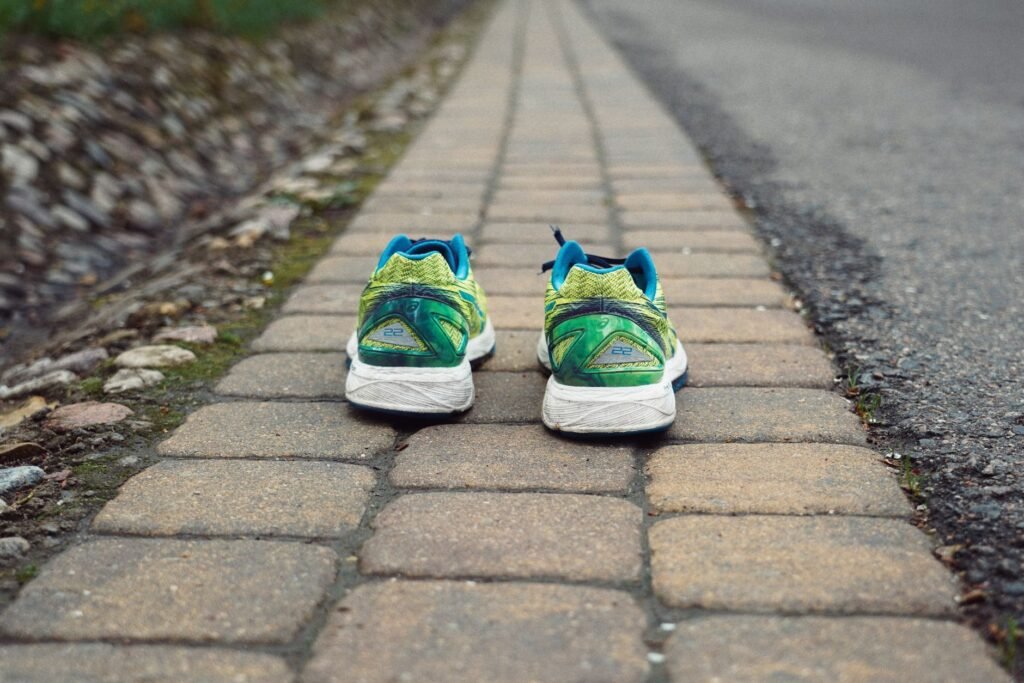
The best running shoe is the one that fits your foot, suits the ground you run on, and feels comfortable from the first few strides. Shop late in the day, wear your usual running socks, try on both shoes, and treat online rankings as a shortlist rather than a verdict.
Fit comes first, and your feet are bigger by evening
A shoe that tops every review list still fails if it pinches. Fit is the one thing nobody else can judge for you, so start there and let the rest follow.
The American Academy of Orthopaedic Surgeons gives a short checklist. Try shoes on at the end of the day or after a workout, because feet swell as the day goes on. Wear the same kind of sock you run in. Try on both the left and the right shoe, since few people have identical feet. Leave at least half an inch between your longest toe and the tip of the shoe.
That last point surprises people who buy their everyday size. Your foot slides forward on downhills and swells over a long run, and toes that touch the front in the store tend to get sore a few miles in.
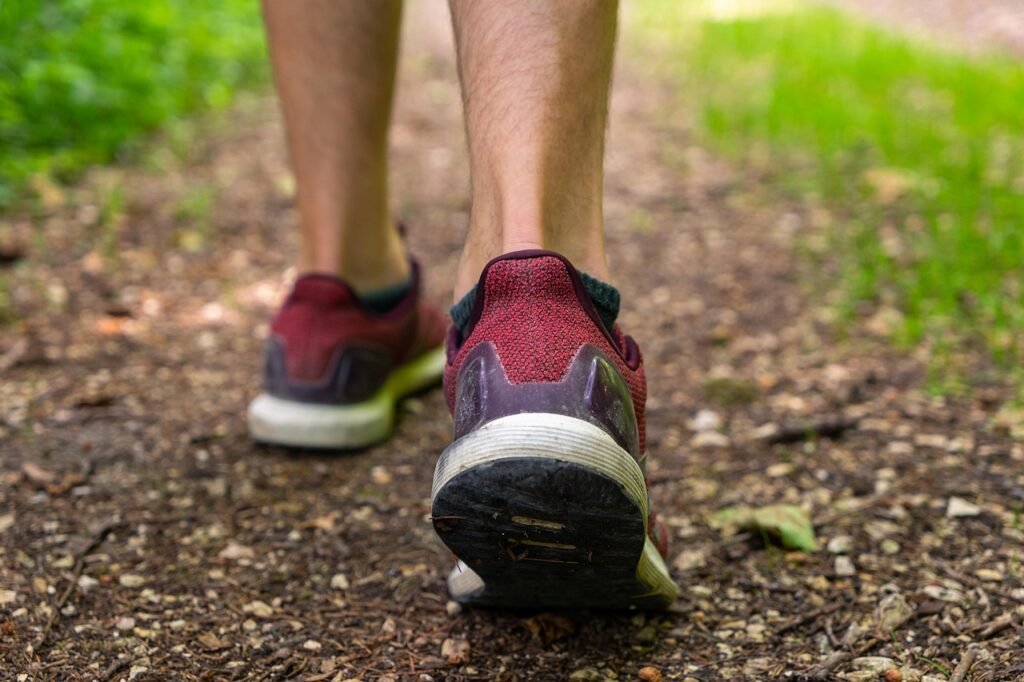
Road, trail or treadmill decides the outsole
Where you run shapes the bottom of the shoe more than anything else. Match the tread to the surface you use most, not the one you visit twice a year.
| Where you run | What to look for | What to skip |
|---|---|---|
| Pavement and sidewalks | A smooth, durable rubber outsole and enough cushion for hard ground | Deep lugs, which feel clumsy on asphalt |
| Dirt trails and gravel | Lugged tread for grip and a tougher upper | Thin road outsoles that slide on loose ground |
| Treadmill | A breathable upper and whatever cushion feels good | Heavy trail shoes that trap heat indoors |
| A mix of all three | A road shoe with a grippier outsole, often sold as road to trail | A specialist racing shoe as your only pair |
If your running splits evenly between pavement and dirt, a pair for each surface usually beats one shoe that compromises on both.
Cushion, stability and what your arch suggests
Running shoes come in two broad families. Neutral shoes let your foot move as it wants. Stability shoes add firmer material or a wider base to limit how far the foot rolls inward. Within each family, cushion ranges from firm and close to the ground up to thick and soft.
AAOS describes a quick home check. Wet your foot and step on a paper bag or a dark floor. A wide, flat print suggests a pronated foot, one that rolls inward. A print missing the inside edge, where the arch never touched, suggests a supinated foot. The same group notes that a professional gait analysis is the dependable way to see how your foot actually behaves while running.
Treat the footprint as a starting point for a conversation at a running store, not a prescription. If you have ongoing foot, knee or hip pain, see a doctor or podiatrist before you pick a shoe to solve it.
A test jog before you hand over your card
- Lace both shoes fully, the way you would for a run, and stand up. Press where your longest toe ends to check for that half inch.
- Jog for a few minutes, on a store treadmill if there is one or on the sidewalk if the staff allow it.
- Watch your heel. It should stay put rather than lifting out of the shoe on each stride.
- Notice any seam, edge or tight spot. A small rub in the store can become a blister over several miles.
- Compare two or three models back to back, since comfort is relative.
- Ask about the return or exchange policy for shoes worn outside, and get the terms in writing.
Buying online works fine once you know your model and size. For a first real pair, trying shoes on in person saves a lot of repackaging and return trips.
When your current pair has run its course
Cushioning foam wears out long before the upper looks tired. AAOS notes that common EVA foam begins to show structural damage after about 120 miles, and that by 500 miles a shoe has lost 45 percent of its initial shock absorption.
A running app or a note on your phone makes the mileage easy to track. Other signs include an outsole worn smooth in patches, midsole creases that stay deep, or new aches after runs that used to feel easy. When you shop for the replacement, bring the old pair along, because the wear on the sole shows a fitter how you land.
Frequently asked questions
Should running shoes be a half size bigger than regular shoes?
Your running size may differ from your everyday size, and sizing varies between brands, so fit beats the number on the box. Aim for at least half an inch of space past your longest toe while standing, with your heel held firmly. Fit the larger of your two feet.
Are expensive running shoes better for beginners?
Not automatically. A higher price often pays for newer foams or lighter materials that do little for someone just starting out. A shoe that fits well and suits your usual surface serves a beginner better. Compare current prices at a local running store and online before you decide what to spend.
Can I wear running shoes for walking or gym workouts?
Walking in running shoes is usually fine, and plenty of people do it every day. For lifting or side to side sports like basketball and tennis, a soft running shoe can feel unstable because it is built for forward motion. A court or training shoe suits those activities better.
What are running shoes?
Running shoes are athletic shoes built for the repeated impact of running, which orthopedic surgeons at the AAOS put at three to five times body weight through the legs. A typical pair has a cushioned foam midsole and a heel sitting 10 to 12 millimeters higher than the toe, in neutral or stability designs.
How do you break in new running shoes?
A pair that fits well should need little breaking in. The orthopedic surgeons' group AAOS advises against buying shoes that must be stretched or padded to fit. Still, wear new shoes on a few short, easy runs before a long run or race, so any seam or tight spot shows up while it is only a minor rub.